
You have not yet added any article to your bookmarks!
Join 10k+ people to get notified about new posts, news and tips.
Do not worry we don't spam!
Post by : Anis Farhan
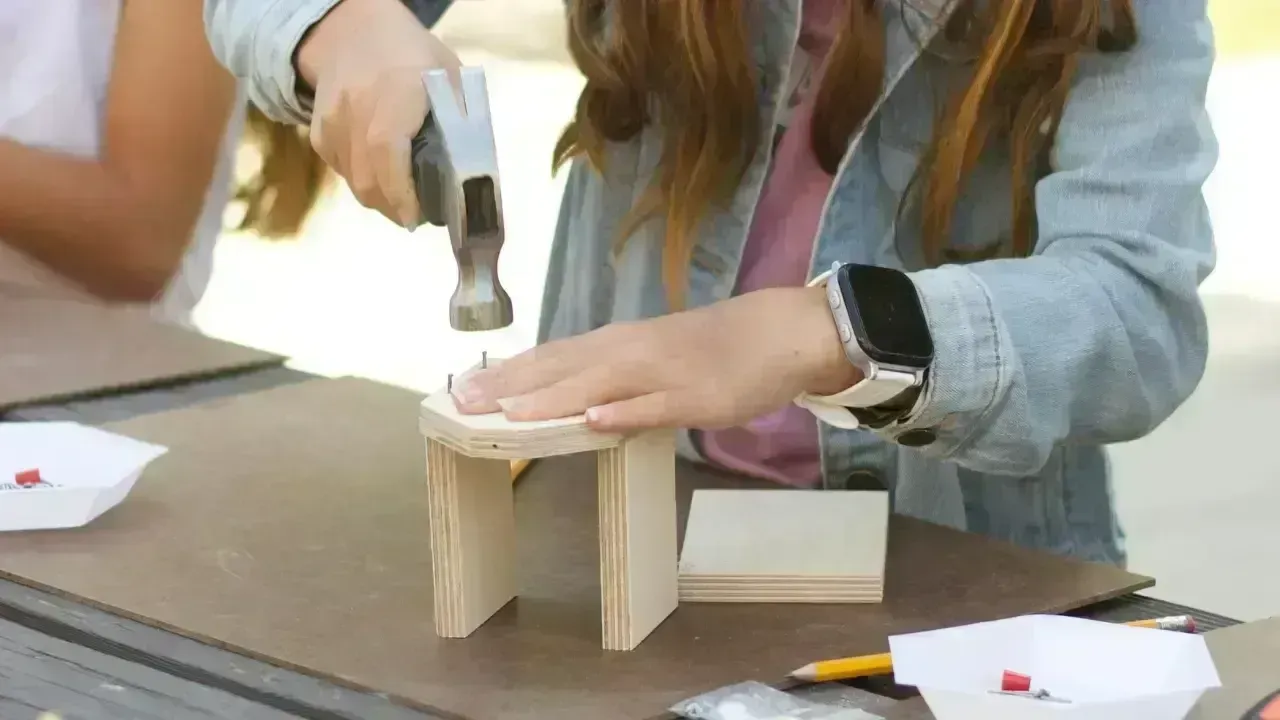
For generations, education adhered to a structured format: students needed classrooms, teachers delivered lectures, and knowledge belonged to institutions. This model is now experiencing a significant transformation. All over the world, countless learners are opting for self-directed, do-it-yourself education instead of traditional settings.
DIY education encompasses self-initiated, flexible, and often informal learning avenues. This includes online courses, video resources, peer networks, open-access materials, and independent study pathways. What was once regarded as an asset is now turning into the primary mode of learning, particularly for adults, professionals, and younger scholars.
This transition stems not only from discontent with traditional schools but is also influenced by technological accessibility, evolving job markets, escalating education expenses, and an increasingly popular viewpoint that learning should be personalized and applied continuously.
The emergence of DIY education springs from foundational shifts in society rather than fleeting trends. Central to this movement is access. With smartphones and affordable internet, knowledge that was once confined to academic institutions is now accessible worldwide.
Economic factors heavily influence this shift. In many regions, the cost of formal education has skyrocketed, while its guarantees of success have decreased. Degrees no longer automatically lead to stable jobs, driving individuals to acquire skills that directly enhance employability. DIY education provides an alternative that is often less expensive, quicker, and more immediately applicable.
Additionally, a cultural transformation is underway, with learners increasingly valuing control over their educational journeys. They seek flexibility in what, when, and how they learn, a characteristic often neglected by traditional education systems.
The internet has broken down numerous barriers to education. Tutorials, lectures, and collaborative learning communities can now reach individuals instantly, allowing someone in an outlying area to access resources at par with those available in major metropolitan areas.
This democratization empowers learners to curate individualized educational experiences. Rather than obeying a rigid curriculum, they can gather knowledge from diverse sources and adjust their learning paths as their aspirations evolve.
Importantly, DIY education promotes lifelong learning. As career paths become diverse, continual upskilling is essential. Traditional institutions often struggle to meet this demand, but DIY learning fills that crucial void.
Today’s learners are focused on outcomes. They desire education leading to concrete achievements: job readiness, innovation, independence, or expertise in a targeted skill. DIY learning aligns itself with these objectives by emphasizing practical application over mere certification.
Attention spans have also altered in this age. Many desire smaller, modular content rather than lengthy academic programs. They welcome prompt feedback and real-world relevance. DIY platforms fulfill these requirements, while many traditional schools lag behind.
This does not signify that learners entirely reject structured learning. They still appreciate adaptable structures catering to individual speeds and interests instead of fixed deadlines.
A significant driving force behind DIY education is the contemporary skills economy. Employers now prioritize demonstrable skills over formal degrees. Practical experiences, portfolios, and projects carry significant weight in this new landscape.
DIY learners tend to concentrate on in-demand skills like coding, design, marketing, data analytics, communication, and entrepreneurship, which evolve at a fast pace, rendering traditional curricula obsolete quickly.
In contrast, DIY education empowers learners to continuously refine their skills. They can swiftly adapt to shifting market demands, giving them a distinct advantage in rapidly changing fields.
As DIY education gains recognition, universities and colleges are under increasing strain. Enrollment patterns are decidedly shifting, especially among adult learners who no longer believe that traditional degrees guarantee a good return on investment.
Educational institutions are responding in various ways; some develop hybrid models merging online and in-person learning, while others introduce micro-credentials and shorter course offerings. However, this adaptation often lags behind learner expectations.
The traditional authority held by institutions over knowledge is diminishing. Their value now increasingly relies on community building, mentorship, research, and accreditation rather than solely on content delivery.
The effects of DIY education extend to younger demographics as well. More children are exploring alternative educational routes such as homeschooling, unschooling, and blended learning formats.
Parents are increasingly enhancing or replacing standard schooling with digital resources, especially when traditional schools do not address personal learning needs. DIY education permits personalization in alignment with learning styles and interests.
This trend brings forth vital issues of equity and guidance. While DIY education fosters independence, it also necessitates self-discipline, supportive structures, and digital literacy. Traditional schools continue to play a crucial role in providing foundational skills and social interaction.
Despite its evident advantages, DIY education presents challenges. Self-directed learning requires high levels of motivation, critical analysis, and the ability to discern quality information, which not every learner possesses equally.
Moreover, there’s the question of how credentials are recognized. Though skills are essential, many industries still demand formal qualifications. DIY education can complement traditional education but often falls short in entirely replacing it.
Access discrepancies also remain persistent. Although digital learning has become widespread, reliable internet access and devices are not universally available. Without thoughtful policy interventions, DIY education may exacerbate existing inequalities.
As the landscape of DIY education expands, educators’ roles are shifting. Teachers are transitioning from being mere information providers to becoming mentors and facilitators.
In this evolving environment, educators assist learners in navigating information, foster analytical thinking, and ethically apply knowledge. Their worth stems from context, feedback, and human connection rather than just content delivery.
Schools that embrace this evolving role can stay relevant; those that resist change may struggle to maintain engagement among students.
One significant challenge for traditional schools lies in assessment methodologies. DIY education emphasizes learning itself over testing, whereas institutions commonly depend on standardized evaluations.
With the rise of alternative credentials, fresh assessment formats are emerging. Project-based assessments, peer evaluations, and skill exhibits are becoming more prevalent.
This evolution pressures schools to reconsider how they gauge learning achievements. Conventional exams may not effectively reflect real-world competencies any longer.
Education has transitioned away from being a singular life phase and is increasingly viewed as an ongoing journey. DIY education reinforces this paradigm by encouraging continual learning throughout life.
This cultural shift is altering how societies perceive credentials, careers, and success. Learning evolves into a personal experience rather than a strict framework.
Traditional schools must embrace this mindset by nurturing curiosity, adaptability, and lifelong learning practices instead of solely concentrating on course completion.
The global workforce is undergoing transformation driven by automation, artificial intelligence, and teleworking. DIY education empowers individuals to adapt more swiftly than formal educational systems can.
Governments and employers are increasingly valuing informal learning. They are beginning to incorporate DIY credentials within hiring and training frameworks, thus reducing reliance on conventional degrees.
This evolution places added pressure on schools to align education with economic realities while still honoring depth, ethics, and critical analysis.
The rise of DIY education does not signify the demise of traditional schools. Instead, it advocates for transformation. Schools that adopt flexibility, personal learning, and promote collaborative experiences can thrive alongside DIY education.
Partnerships between institutions and digital platforms can boost accessibility and relevance. Updating curriculums, integrating experiential learning, and focusing on student-centric approaches can help restore confidence in formal education.
Most importantly, schools must engage with learners. Understanding the motivations behind the shift toward DIY education is essential for impactful reform.
The future of education lies not in choosing between DIY education and traditional institutions, but in fostering a cohesive environment where structured institutions, self-directed learning, and digital platforms work in tandem.
DIY education is set to expand as it addresses genuine needs, while traditional schools will continue to be crucial for providing structure, equity, and a sense of community.
The key challenge is achieving integration. Educational systems must adapt to foster autonomy while ensuring guidance, quality, and inclusiveness.
Disclaimer:
This article is intended for educational and informational purposes. Perspectives on educational systems may vary across different regions, policies, and cultural contexts.



Google Signs 3.6-GW Power Deal With Constellation Energy in US
Google signs a 3.6-GW power deal with Constellation Energy, including nuclear power upgrades to supp

Harmanpreet Kaur Steps Down as India Captain Across All Formats
Harmanpreet Kaur steps down as India captain across all formats after a remarkable leadership journe

Michael Bracewell Chooses Casual Contract, Targets BBL Opportunity
Michael Bracewell moves to a casual contract as he eyes a BBL opportunity while remaining available
Tuchel Says Alex Scott Can Challenge Declan Rice for England Midfield Spot
Thomas Tuchel says Alex Scott can challenge Declan Rice for an England midfield place after his impr
Air Quality Turns Unhealthy in Central and Western Singapore Amid Haze
Singapore haze pushes PSI above 100 in central and western areas as smoke from regional hotspots rai

PM Modi Pays Tribute to Mahatma Gandhi, Urges People to Support Khadi
PM Modi pays tribute to Mahatma Gandhi on Gandhi Jayanti and urges citizens to support Khadi and the

