You have not yet added any article to your bookmarks!
Join 10k+ people to get notified about new posts, news and tips.
Do not worry we don't spam!
Post by : Saif Rahman
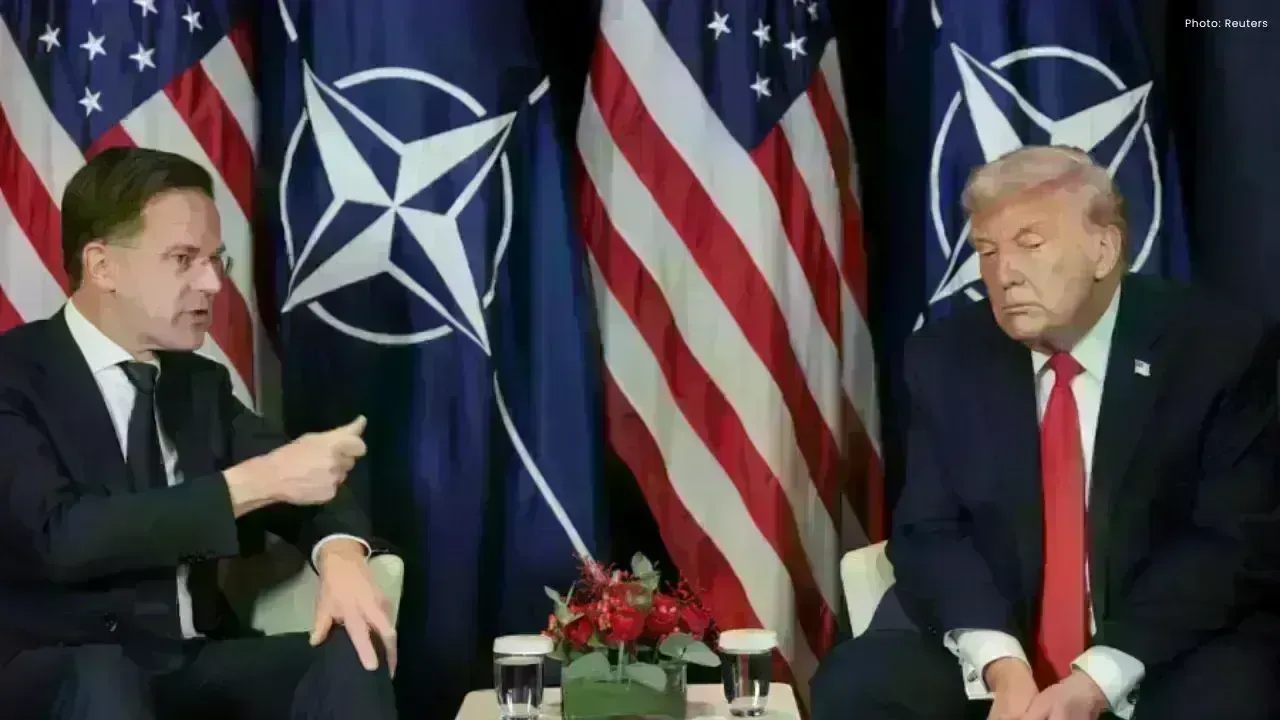
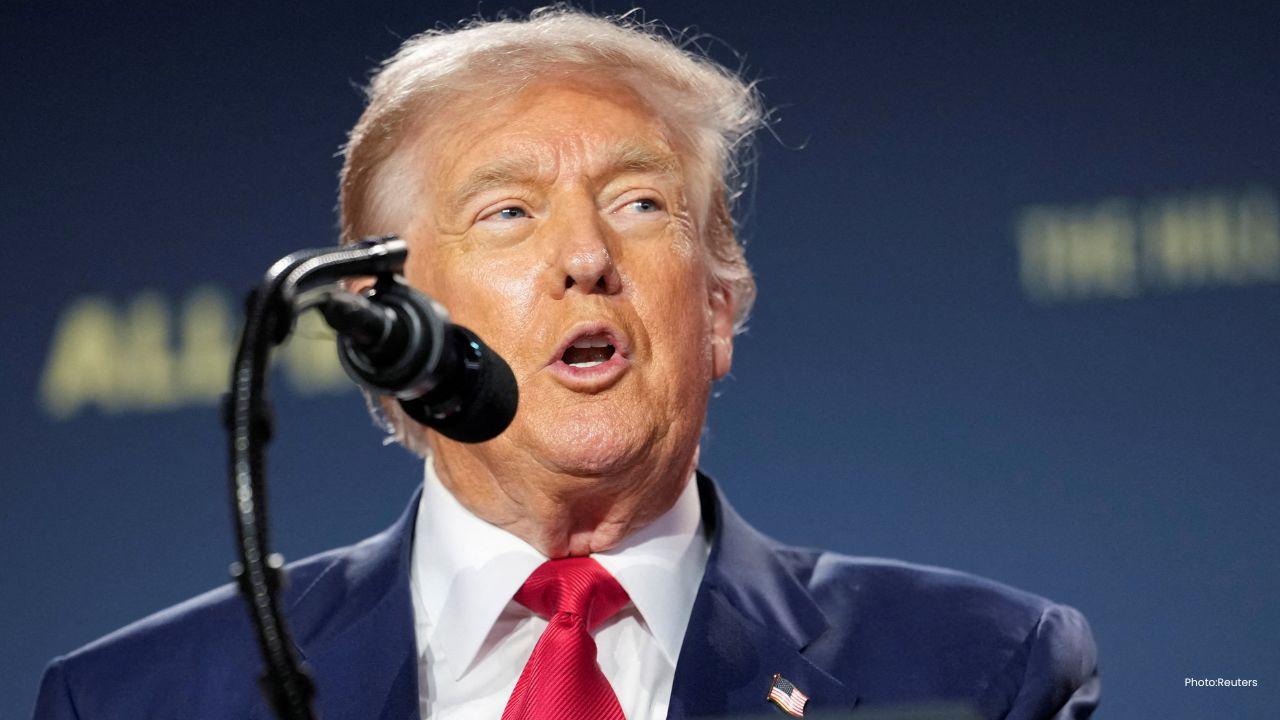
In a noteworthy statement, U.S. President Donald Trump proclaimed that the United States has obtained “total and permanent access” to Greenland through a framework deal presented during NATO discussions. This revelation comes at a time when NATO leaders are emphasizing the need to respect sovereignty and enhance Arctic security in response to increased pressures from Russia and China. The statements made by Trump at the World Economic Forum in Davos have alleviated some immediate concerns but have also generated further inquiries across both Europe and Greenland.
Trump characterized the agreement as granting the U.S. extensive and enduring access to Greenland, which he underscored as essential for national security. He conveyed to journalists that the deal would be timeless and provide the U.S. with the freedom to act as desired. Additionally, he claimed that the proposed arrangement would be “much more favorable to the United States” while sidestepping direct queries regarding any changes to sovereignty.
This sentiment follows widespread anxiety in Europe after Trump openly entertained the idea of acquiring Greenland, which is a semi-autonomous region of Denmark. These remarks alarmed NATO allies and European leaders who feared potential strains in transatlantic relationships. However, tensions somewhat abated when Trump ruled out military action and averted further threats of new tariffs on Europe, which helped stabilize markets and led to a recovery in European stocks and U.S. markets.
Despite these developments, Denmark and Greenland were quick to assert their positions. Danish Prime Minister Mette Frederiksen emphasized that discussions regarding Greenland’s sovereignty had not taken place and reaffirmed that it was not up for negotiation. Meanwhile, Greenland’s Prime Minister Jens-Frederik Nielsen expressed openness to dialogue on cooperative ventures but made it clear that sovereignty remains a “red line.” He highlighted that while Greenland is receptive to improved partnerships, its territorial integrity and respect for international law must be upheld.
NATO Secretary General Mark Rutte indicated that talks with Trump concentrated on bolstering Arctic security rather than altering territorial boundaries. Sources familiar with the discussions noted that Trump and Rutte agreed to advance conversations among the U.S., Denmark, and Greenland to revise a 1951 agreement guiding U.S. military access to the territory. This existing agreement permits U.S. operations and movement in Greenland, provided that Danish and Greenlandic authorities are kept informed.
The proposed framework appears to center on strengthening security cooperation and thwarting economic or military advancements by Russia and China in Greenland. Rutte expressed optimism that NATO’s military leadership would finalize details for enhancing Arctic security and aims to implement concrete measures by early 2026.
The geopolitical significance of Greenland has escalated, with melting ice unveiling new shipping routes and global powers seeking resources and security in the north. The United States maintains a military base at Pituffik in northern Greenland, and analysts point out that U.S. military activity in the region was far more extensive during the Cold War than it is today.
European leaders remain vigilant about these developments. EU foreign policy chief Kaja Kallas remarked that relations with the United States have seriously deteriorated in recent days, cautioning that public disagreements among allies serve only to empower rival nations. Leaders from Finland, the UK, and other NATO countries have advocated for a stronger NATO footprint in the Arctic, demanding a clear strategy ahead of the alliance’s forthcoming summit.
In Greenland, community reactions have been mixed and often tinged with apprehension. Protests erupted outside the U.S. consulate in Nuuk, with residents expressing confusion and unease over the swift changes in Washington's messaging. Many voiced worries about being caught in the crossfire between superpowers without clarity over their future.
While Trump’s recent remarks mitigated the immediate risk of a crisis, they underscored persistent concerns in Europe regarding trust and stability in transatlantic relations. As discussions progress, NATO and its member states face the crucial task of strengthening Arctic security while respecting sovereignty and reassuring both allies and local communities that collaboration does not equate to control.






George Russell Wins Dutch GP Sprint, Boosts Mercedes Morale
George Russell wins the Dutch GP Sprint from pole as Mercedes teammate Kimi Antonelli extends his F1

Australia 50/3 After Bangladesh Bowled Out for 64 in Second Test
Australia reached 50/3 after Bangladesh were bowled out for 64 in the second Test, with Mitchell Sta

Jordan Burroughs Returns to Wrestling with 2028 Olympic Dream
Jordan Burroughs returns to wrestling with Real American Freestyle as the Olympic champion eyes a po

Lamborghini Catches Fire on Singapore's ECP, Causing Heavy Traffic
A Lamborghini caught fire on Singapore's ECP, causing heavy traffic and bus delays. No injuries were

Bangkok Airport Duty-Free Area Flooded by Pipe Burst
A burst water pipe flooded the duty-free shopping area at Bangkok's Suvarnabhumi Airport on July 16,
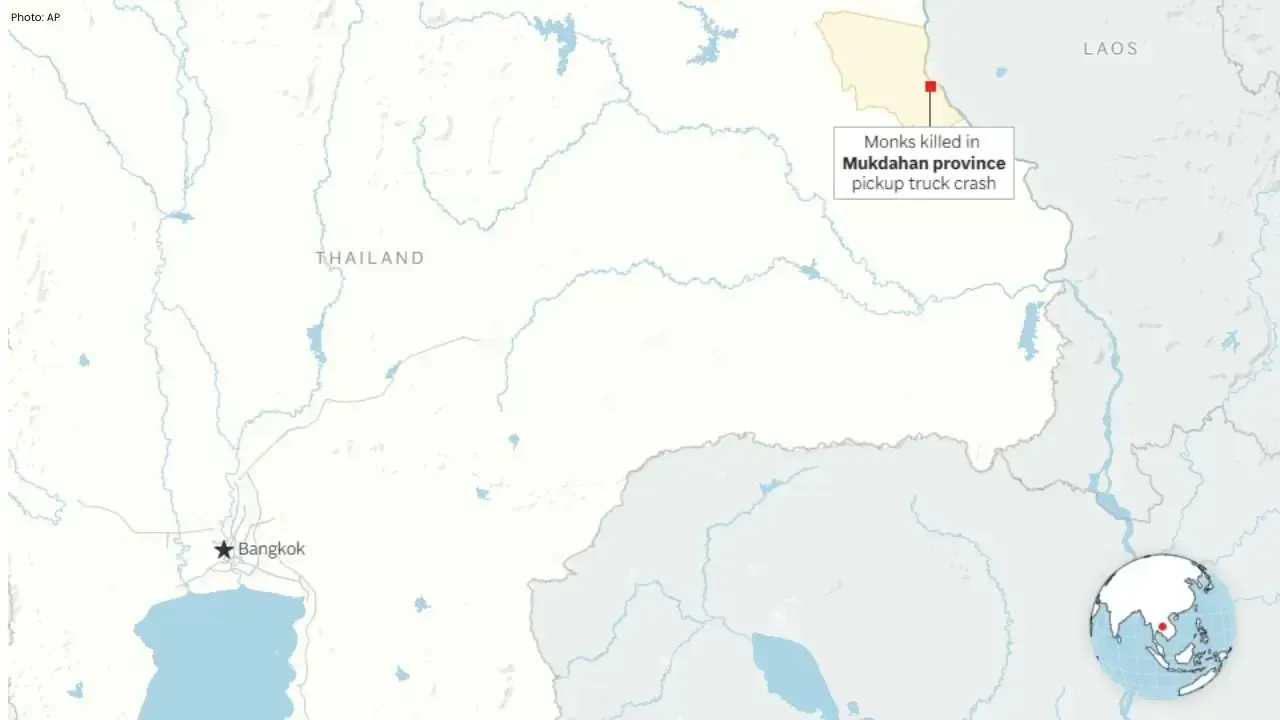
Nine Monks Killed in Thailand Pickup Truck Tragedy
An 11-year-old boy driving a pickup truck crashed into monks during a pilgrimage in northeastern Tha