
You have not yet added any article to your bookmarks!
Join 10k+ people to get notified about new posts, news and tips.
Do not worry we don't spam!
Post by : Jyoti Gupta
Photo:Reuters
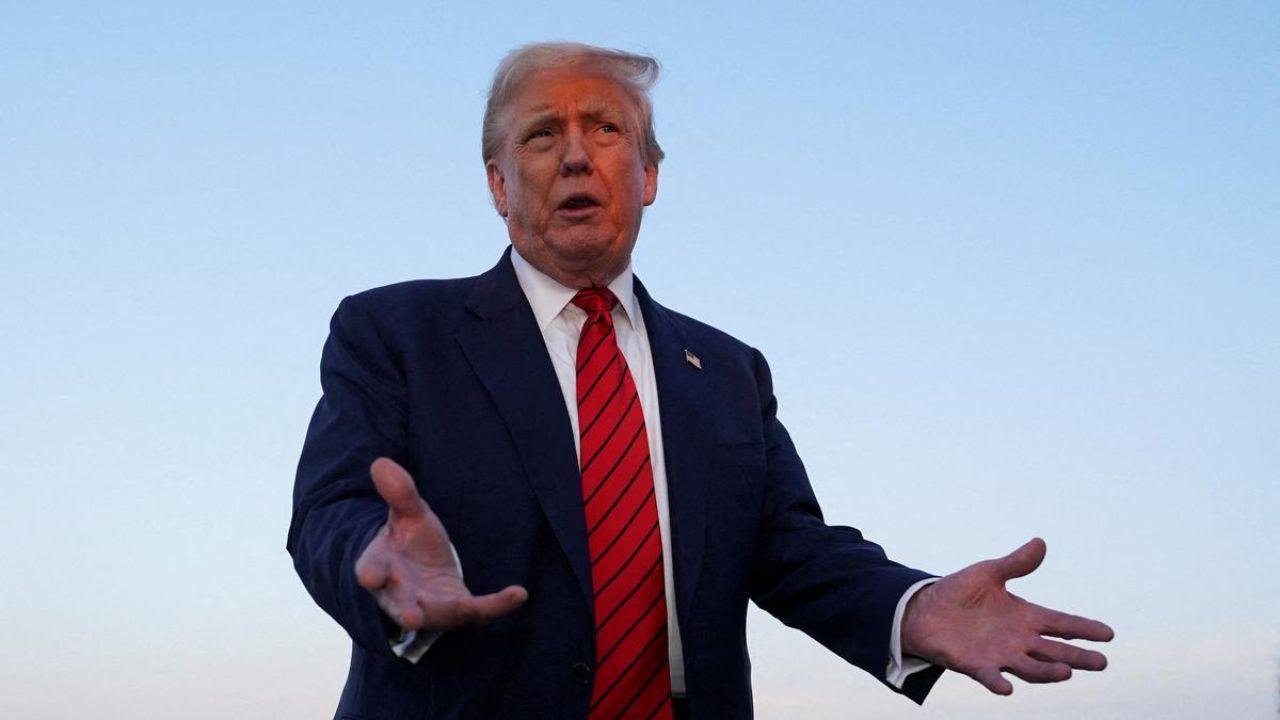
On Tuesday, August 5, 2025, U.S. President Donald Trump said he had no idea that his country was still importing chemicals and fertilizers from Russia. His comments came in response to a question during a press event at the White House, where he was asked about India’s claim that the U.S. continues to trade with Russia—even while criticizing other countries for doing the same.
President Trump responded, “I don’t know anything about it. We’ll have to check.”
This response came shortly after a strong statement from India, defending its energy-related trade with Russia and pushing back against new U.S. tariffs. Just a day earlier, on August 4, Trump had announced steep new tariffs on Indian goods, accusing India of buying large amounts of Russian oil and reselling it for profit on the global market.
Trump had written on his social platform, “India is buying massive amounts of Russian oil and reselling much of it to the world at a profit. They don’t seem to care about how many people are dying in Ukraine due to Russia’s war. Because of this, I am substantially raising the tariffs India must pay to the USA.”
India Strongly Rejects Trump’s Accusations
India reacted firmly and immediately. The Ministry of External Affairs (MEA) issued a detailed statement, calling the new U.S. tariffs and criticism “unjustified and unreasonable.” India said its oil purchases from Russia were not optional—they were necessary to maintain energy security for the country's large population, especially after the Ukraine war created instability in global oil markets.
India reminded the world that when the war in Ukraine began, traditional oil suppliers redirected their resources to Europe, leaving India with fewer choices. At that time, even the United States had encouraged India to continue purchasing Russian oil to help stabilize the global market.
The Indian government emphasized that its decisions are based on the needs of the Indian people and national security. “Our imports are made to ensure affordable and stable energy prices for Indian consumers,” the official statement read. “This is a market-based decision, forced by global conditions.”
India Points Out U.S. and EU Still Trade with Russia
In its response, India also made a key point: while the U.S. and European Union criticize India for doing business with Russia, they themselves continue trading with Moscow. India stated that the U.S. still imports several important items from Russia, including:
India called this clear hypocrisy and stated, “The same countries that are criticizing India are still doing trade with Russia—not for urgent national needs, but for commercial purposes.”
The Indian government also highlighted that, unlike some Western economies, India’s trade with Russia is focused on basic needs like energy and agriculture. It said that it will always do what is necessary to protect its own national interests.
Top U.S. Aides Echo Trump’s Accusations
While President Trump claimed he didn’t know about the ongoing U.S.-Russia imports, some of his top advisors went further. One of his senior aides publicly accused India of indirectly funding the war in Ukraine by purchasing Russian oil. This added more tension between the two countries, whose relationship has already been tested by trade disputes and differing views on the Ukraine conflict.
India, however, has stood firm. Officials said that blaming India for the war is unfair and politically motivated. “We will continue to protect our economic security and act in our national interest,” India said.
A Growing Rift Between Longtime Partners
This issue is the latest in a series of disagreements between India and the United States. While the two countries share strong economic and strategic ties, especially in the Indo-Pacific region, their positions on the Russia-Ukraine war have been different since the beginning.
The U.S. and many Western countries have placed strong sanctions on Russia and want other nations to do the same. But India, like some other developing nations, has refused to take sides completely. Instead, it has chosen to prioritize affordable energy, food, and fertilizer imports to support its economy and population.
Trump’s tariff announcement and public comments are seen by many analysts as a political move aimed at appealing to voters during a heated election season in the U.S. Some experts say the aggressive language could damage relations with India in the long term.
At the same time, others believe this may push India to deepen its partnerships with non-Western countries like Russia and China or further strengthen its efforts to become self-reliant in energy and critical materials.
What Happens Next?
At the time of writing, India has not announced any countermeasures in response to the new tariffs. But sources say that discussions are ongoing within the Indian government about how to respond if the tariffs go into effect.
Some possibilities include:
Meanwhile, Indian trade and foreign policy experts are calling for calm and balance. They say that while the U.S. may be acting unfairly, it’s important for India to stay focused on its long-term strategic goals, which include strong global partnerships.










PM Modi Pays Tribute to Mahatma Gandhi, Urges People to Support Khadi
PM Modi pays tribute to Mahatma Gandhi on Gandhi Jayanti and urges citizens to support Khadi and the

Amazon Seeks to Offload $8 Billion in Nvidia Chips to Investors
Amazon plans to move $8 billion in Nvidia chips to investors, using a new financing model to strengt

Samsung Raises Galaxy S26 Prices as Memory Chip Costs Rise
Samsung raises Galaxy S26 prices in South Korea as rising memory chip costs put pressure on smartpho

Lewis Hamilton Calls Singapore Grand Prix One of F1's Toughest Races
Lewis Hamilton discusses the demanding Singapore Grand Prix and brings Plus44 and Almave to Singapor

Denmark's Pandora Opens World's Largest Jewellery Factory in Vietnam
Pandora opens its largest jewellery factory in Vietnam, expanding global production, strengthening s

Gautam Gambhir Questions Batting-Friendly Pitches After India's Record ODI Chase
Gautam Gambhir questions batting-friendly ODI pitches after India’s record chase, calling for a bett

