
You have not yet added any article to your bookmarks!
Join 10k+ people to get notified about new posts, news and tips.
Do not worry we don't spam!
Post by : Rohit Dhiman
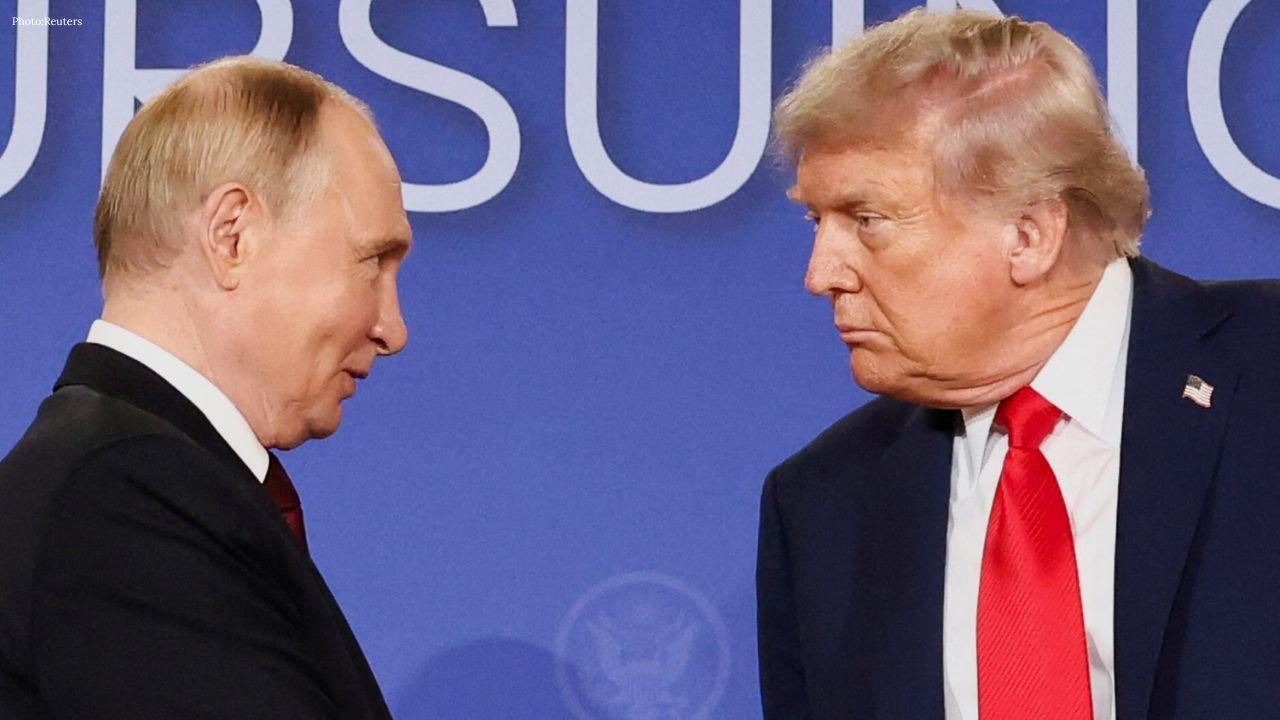
US President Donald Trump has said that Russia and Ukraine both want to bring their war to an end but have not found a clear path towards reaching an agreement. His remarks highlight the continuing challenges facing diplomatic efforts to resolve the conflict, despite Washington's stated intention to work with both sides. Speaking to reporters on October 13, Trump said the United States was continuing to assist Ukraine and share intelligence with the country. He also indicated that his administration remained engaged with both Moscow and Kyiv in an effort to find a way to end the fighting. The comments come as the conflict continues to create serious security, political and economic challenges for the region and the wider international community. While both countries have faced pressure to explore a possible settlement, major disagreements remain over the conditions required to achieve a lasting peace. Trump suggested that hostility between Russian President Vladimir Putin and Ukrainian President Volodymyr Zelenskyy was making it difficult for the two leaders to reach a common position. His assessment points to the personal and political tensions that continue to complicate diplomatic engagement.
Trump also addressed questions about American support for Ukraine, stating that the United States continues to share intelligence with Kyiv. Intelligence cooperation has been an important part of Ukraine's ability to monitor military developments and assess potential threats during the conflict. Information supplied by international partners can help a country evaluate battlefield conditions and make decisions about its security. Trump's statement comes amid wider questions about the future direction of US policy towards Ukraine and the balance between military assistance, intelligence cooperation and diplomatic pressure. Washington has played a significant role in supporting Ukraine since Russia launched its full-scale invasion in February 2022. The scale and form of that assistance have remained important issues in discussions about the conflict's future. By confirming that intelligence sharing is continuing, Trump sought to make clear that the United States remains involved in efforts to help Ukraine while pursuing a broader objective of ending the war.
The main challenge in ending the Russia Ukraine War is that a shared desire to stop fighting does not necessarily mean the two sides agree on how peace should be achieved. Any meaningful settlement would need to address several difficult issues, including territorial disputes, security guarantees, military arrangements and the future relationship between the two countries. Ukraine has consistently emphasised the importance of its sovereignty, territorial integrity and long-term security. Russia's demands and position on the territories it claims, alongside the wider security questions surrounding the conflict, remain major obstacles to an agreement. The two governments would also need to consider how any ceasefire would be monitored, what would happen if the terms were violated and whether international guarantees could help prevent renewed fighting. These questions make negotiations particularly complicated. Even if both sides express interest in ending the conflict, translating that objective into an agreement requires decisions on issues that have remained deeply contested.
Alongside his comments on the war, Trump defended his decision to temporarily ease restrictions connected with Russian diesel exports. The decision has attracted scrutiny because restrictions on Russian energy-related transactions were introduced as part of the international response to Moscow's invasion of Ukraine. Any relaxation of those measures raises questions about energy supplies, sanctions policy and the financial consequences for Russia. Trump argued that the diesel involved was intended for the wider international market rather than being supplied directly to the United States. He presented the arrangement in the context of pressure on global fuel markets and concerns about elevated energy prices. The administration's position is that releasing additional fuel into international markets could help address supply pressures. However, the extent to which the arrangement might affect prices will depend on the volume of fuel involved, market conditions and the availability of supplies from other producers. The decision has also generated criticism from lawmakers concerned that revenue from Russian energy exports could ultimately support Moscow's ability to continue financing its war effort.
Read Also: Battersea Power Station Secures £280 Million Refinancing Loan
The temporary easing of restrictions has raised questions about the relationship between energy policy and efforts to influence Russia's conduct in the war. Critics argue that allowing Russian diesel transactions under relaxed restrictions could weaken the impact of sanctions and provide additional revenue to Russian interests. They are also concerned that changes in energy policy could complicate coordination between the United States and its international partners. Supporters of easing restrictions may argue that maintaining adequate fuel supplies and limiting price pressures are important economic priorities. Diesel is widely used in freight transport, agriculture, industrial operations and other parts of the economy, making its price an important factor in overall operating costs. The potential benefits, however, depend on how much additional supply reaches the market and whether the resulting changes are large enough to influence prices. Trump's defence focused on the international destination of the fuel, rather than treating the transaction as a direct supply arrangement for American consumers.
Energy policy has become one of several issues linked to the broader diplomatic effort surrounding the war. Restrictions on Russian oil and other energy-related activities have been used to place economic pressure on Moscow. At the same time, disruptions to energy infrastructure, changes in supply routes and fluctuations in global fuel prices can affect economies well beyond the conflict zone. For Washington, the challenge is to balance these competing considerations while maintaining pressure for a diplomatic outcome. A temporary adjustment to diesel restrictions does not, by itself, guarantee progress in peace negotiations. Any connection between the energy arrangement and a wider settlement would depend on further diplomatic decisions and the responses of the governments involved.









Nvidia Pledges $250 Million for UK AI Safety Research
Nvidia will provide $250 million in computing resources over five years to support AI safety researc

Jacob Bethell Returns as England Name Squads for Australia Tour
England name ODI and T20 squads for the Australia tour, with Jacob Bethell returning from injury and

Beauden Barrett Opens Up About Mental Struggles During All Blacks Exile
Beauden Barrett discusses his confidence struggles after missing six tests, his return against Austr

IMF Says AI Investment Supports Global Growth Despite Energy Shock
IMF says AI investment is supporting global growth near 3%, with Asian economies benefiting from ris

Will O'Rourke Ruled Out of New Zealand's India Series
New Zealand fast bowler Will O'Rourke will miss the India series with hamstring and calf injuries as

AI Companies Expected to Drive Most US Earnings Growth in Q3
AI companies are expected to drive US third-quarter earnings growth as investors assess tech profits

