You have not yet added any article to your bookmarks!
Join 10k+ people to get notified about new posts, news and tips.
Do not worry we don't spam!
Post by : Rohit Dhiman
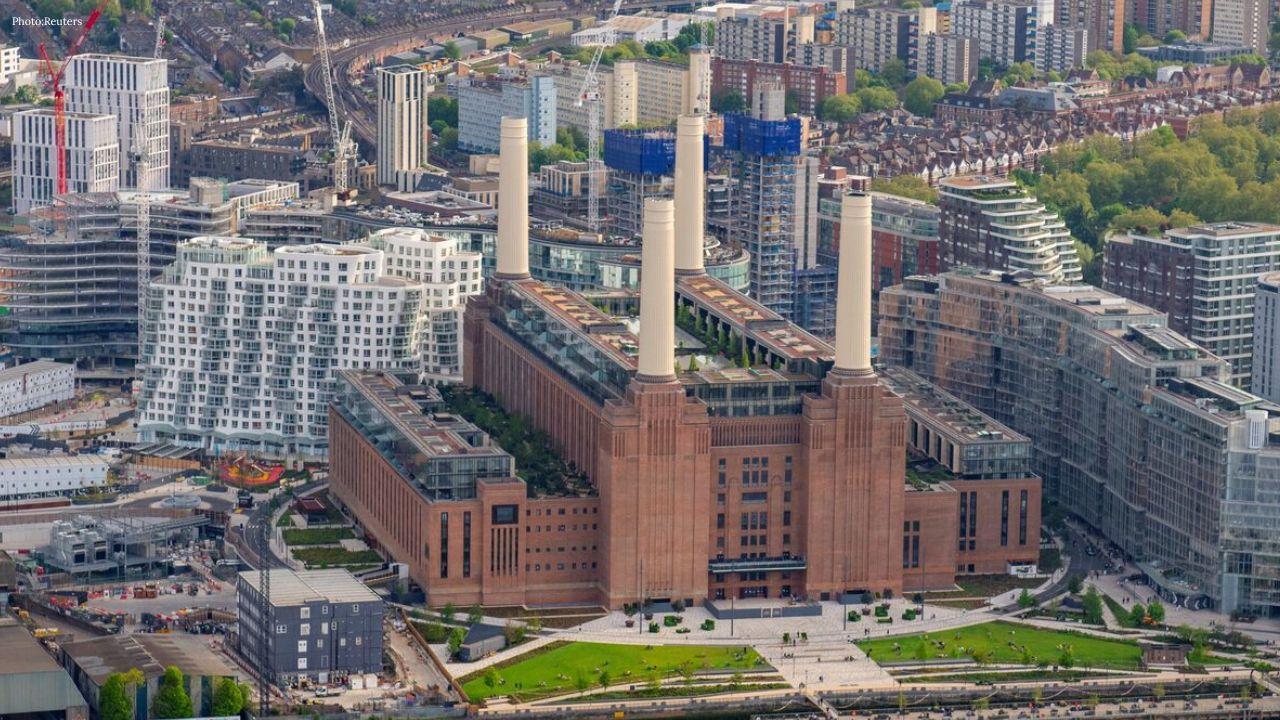
London's landmark Battersea Power Station regeneration project has secured a £280 million refinancing facility to support the next stage of development across its remaining undeveloped land. The financing will help advance plans for a 15.9-acre section of the wider 42-acre riverside neighbourhood along the River Thames. The latest funding marks an important step in the continued transformation of one of London's most recognisable industrial landmarks into a mixed-use destination featuring homes, offices, retail outlets, restaurants, leisure facilities and public spaces. Battersea Power Station Development Company (BPSDC) Ltd confirmed the financing arrangement, stating that the support from lenders reflects confidence in the project's performance, its progress to date and its readiness to move forward with additional development phases. The announcement comes as the company advances a revised master plan for the remaining undeveloped land. The proposal outlines opportunities to introduce further residential, commercial and leisure facilities while extending the neighbourhood's existing infrastructure and public amenities.
The £280 million facility is intended to support further development of the remaining land within the Battersea Power Station project. The site covers approximately 42 acres, of which around 15.9 acres remain available for future development. Refinancing allows a company to arrange new financing to support its existing financial structure or future requirements. In this case, the facility will provide financial support for the next phases of the London regeneration project. According to BPSDC, lenders have continued to support the development because of the transformation achieved so far, the project's commercial performance and the company's preparedness to progress with additional construction. CFO Siew Chee Seng highlighted the progress made in converting the former power station and its surrounding land into an active riverside neighbourhood. The project has moved beyond the restoration of a historic industrial structure and developed into a wider destination combining residential, commercial and community uses. The new financing is particularly relevant as the company prepares to develop the remaining land under its revised master plan.
One of the most significant elements of the next development phase is the revised master plan submitted for the remaining undeveloped section of the site. Studio Egret West, a firm specialising in master planning, urban design and landscape architecture, has proposed up to 3.2 million square feet of residential, commercial and leisure space. The proposed development represents a substantial expansion of the project's built environment, with the new space estimated to be nearly twice the amount developed to date, according to the company. The plan aims to extend the neighbourhood's existing mix of uses while creating additional opportunities for housing, business activity and leisure. Residential properties could increase the area's housing supply, while commercial facilities could accommodate businesses and retail operators. The leisure component is also expected to contribute to the wider appeal of the riverside district by supporting activities beyond traditional office and residential use.
Construction activity is also progressing at Prospect Place South, one of the development areas included in the wider regeneration programme. The scheme is planned to include approximately 300 homes, around 65,000 square feet of commercial space and a community hub covering approximately 15,000 square feet. These facilities are intended to contribute to a more integrated neighbourhood, bringing residential accommodation together with places for businesses, local services and community activities. The planned homes will add to the project's existing residential offering, while the commercial space could provide opportunities for retail, hospitality and other business uses. The community hub is intended to support local activities and provide a dedicated space for residents and the wider community. The combination of housing, commercial premises and community facilities reflects the project's broader approach to urban regeneration, in which new buildings are developed alongside services and shared spaces.
Housing remains another important component of the Battersea Power Station development strategy. Planning permission has been granted for 200 council housing units in Phase 5. The homes are intended to be offered at social rent levels, providing accommodation for eligible households under the applicable housing arrangements.
The planned homes form part of the wider residential programme associated with the regeneration of the site. By incorporating council housing alongside private residential and commercial development, the project is seeking to accommodate different housing needs within the expanding neighbourhood. Social rent housing is particularly relevant in London, where affordability and access to suitable accommodation remain important issues for many households. The planned Phase 5 homes will add a further housing component to a project expected to deliver thousands of homes across its full development programme. The final delivery timeline will depend on construction progress and the implementation of the approved plans.
The wider Battersea Power Station regeneration programme is expected to deliver significant economic and community benefits once completed. According to the project information cited in the announcement, the development is expected to create more than 20,000 jobs, deliver approximately 4,000 homes and provide around 19 acres of public space. These targets highlight the project's scale beyond the redevelopment of the historic power station itself. The wider programme combines property development with employment opportunities, public areas and facilities designed to support everyday activities. The expected employment impact reflects the range of activities associated with a mixed-use development, including construction, retail, hospitality, property management and other commercial services. The number of jobs represents a project-wide expectation rather than a guarantee of immediate employment.
Battersea Power Station is one of London's best-known industrial landmarks. Its redevelopment has involved restoring the historic power station while introducing new uses across the surrounding site. The Grade II-listed building has been a central feature of the regeneration project. Its restoration has helped preserve an important part of London's industrial heritage while allowing the wider site to accommodate contemporary residential, commercial and leisure activities. The broader development has already delivered more than 2,200 homes, approximately 800,000 square feet of office space and over 170 shops, bars, restaurants and entertainment venues, according to information provided by the company. These completed facilities have helped establish the site as a destination for residents, workers, visitors and businesses. The next phase will build on this existing foundation by bringing additional land into development. Rather than focusing exclusively on residential buildings, the wider strategy combines different uses to create a neighbourhood that can support work, shopping, leisure and community life.
Read Also: Jacob Bethell Returns as England Name Squads for Australia Tour
The wider development is owned by a consortium comprising three major stakeholders: Sime Darby Property Bhd, SP Setia Bhd and Malaysia's Employees Provident Fund (EPF).
The ownership structure is divided as follows:
Sime Darby Property Bhd: 40%
SP Setia Bhd: 40%
Employees Provident Fund (EPF): 20%
Commercial assets within the power station are directly owned by Permodalan Nasional Bhd and the EPF. The involvement of established property groups and institutional investors reflects the scale and long-term nature of the regeneration programme. Large mixed-use developments generally require substantial capital, coordinated planning and phased construction to bring residential, commercial and public facilities into operation.









Jacob Bethell Returns as England Name Squads for Australia Tour
England name ODI and T20 squads for the Australia tour, with Jacob Bethell returning from injury and

Beauden Barrett Opens Up About Mental Struggles During All Blacks Exile
Beauden Barrett discusses his confidence struggles after missing six tests, his return against Austr

IMF Says AI Investment Supports Global Growth Despite Energy Shock
IMF says AI investment is supporting global growth near 3%, with Asian economies benefiting from ris

Will O'Rourke Ruled Out of New Zealand's India Series
New Zealand fast bowler Will O'Rourke will miss the India series with hamstring and calf injuries as

AI Companies Expected to Drive Most US Earnings Growth in Q3
AI companies are expected to drive US third-quarter earnings growth as investors assess tech profits

Money Market Funds See Record Inflows as Global Bond Selloff Intensifies
Global money market funds attract $153.81 billion as bond yields rise, inflation fears persist and i