You have not yet added any article to your bookmarks!
Join 10k+ people to get notified about new posts, news and tips.
Do not worry we don't spam!
Post by : Rohit Dhiman
The government has announced a new framework for charges on certain digital payments made through the Unified Payments Interface. Under the revised system, ordinary users will continue to have access to person-to-person transfers without transaction charges, while selected payments made to merchants above a specified value will come under the new system. The change is aimed at creating a sustainable financial model for the country's digital payment infrastructure while keeping everyday low-value payments accessible. The government has also clarified that the new fee is not a direct charge on customers using UPI. The revised framework will take effect from October 15, 2026, according to the latest notification and reporting on the new arrangement.
Merchant Discount Rate, commonly known as MDR, is a fee associated with processing payments made to merchants. It forms part of the payment ecosystem and is shared among participating entities such as banks, payment service providers and application providers. For years, UPI has handled extremely large transaction volumes without a conventional merchant-side MDR for most payments. The latest framework introduces a limited charge on specified higher-value merchant transactions. The stated objective is to help support the operation, resilience and continued expansion of the payment infrastructure as digital transactions continue to grow. The government has said the framework was developed after consultations involving the UPI Steering Committee.
Under the new framework, specified person-to-merchant transactions above ₹2,000 will attract an MDR of 0.4%. This means the new arrangement is not applicable to every UPI payment. It is focused on eligible merchant transactions where the payment amount crosses the ₹2,000 threshold. For larger transactions, the charge will have a maximum ceiling of ₹300 per transaction. For transactions of ₹75,000 or more, the MDR will therefore not continue increasing beyond the ₹300 cap. For example, a 0.4% MDR on a ₹10,000 eligible merchant transaction would amount to ₹40. On a ₹50,000 transaction, the calculation would produce ₹200. Once the applicable amount reaches the level where the cap applies, the maximum MDR would remain ₹300.
One of the most important aspects of the new arrangement is that the MDR is positioned as a merchant-side payment ecosystem charge rather than a direct fee imposed on the customer. The Finance Ministry has advised banks to ensure that merchants do not pass the MDR cost on to customers. UPI application providers have also been expressly prohibited from imposing platform fees or hidden charges on users under the new framework. Therefore, the announcement does not mean that people will suddenly have to pay a separate fee every time they scan a QR code or use a UPI application. The treatment of the transaction depends on the type of payment, its value and the merchant category.
Transfers between two individuals will remain outside the MDR framework. This means that if a person sends money to a friend, family member or another individual, the transaction will continue to be free regardless of the amount involved. The government has said there will be no transaction fee, platform fee or other charge imposed on individuals for sending or receiving money through UPI under the new framework. This is significant because person-to-person transactions account for a major share of UPI's overall transaction value. The government has said that around 70% of UPI transaction value will remain completely outside the MDR framework.
Payments made to merchants up to ₹2,000 will also remain free from MDR. For consumers, this means everyday purchases such as groceries, food, small retail purchases and other low-value transactions can continue without an MDR charge being applied. The government has said that approximately 96% of merchant transactions will remain unaffected because they are either below the ₹2,000 threshold or covered under the zero-MDR framework for small merchants. This distinction is important because the announcement does not introduce a universal charge on all UPI payments. Small Merchants Get Protection Under Zero-MDR Framework
Certain sectors have been given a different rate because many businesses operating in these areas have relatively narrow margins. For eligible transactions above ₹2,000 in specified essential sectors, including railways, telecommunications, insurance, fuel and agricultural inputs, the MDR will be a flat ₹5 per transaction instead of the standard 0.4% rate. The flat-rate structure is intended to provide greater certainty for businesses and services where applying a percentage-based fee could create a relatively higher payment-processing cost. The exact applicability depends on the transaction category and the conditions prescribed under the framework.
Capital-market-related payments will also have a separate MDR structure. Transactions involving areas such as mutual funds, securities, stockbrokers and dealers will attract an MDR of 0.02%, with the charge capped at ₹300 per transaction. The lower rate reflects the separate treatment provided to financial-market transactions under the new framework. This category covers payments connected with formal financial-market activities rather than ordinary retail purchases.
The introduction of MDR comes at a time when digital payments have become a central part of India's financial system. UPI handles billions of transactions and has become widely used by consumers, merchants and businesses. Maintaining such a large payment network requires investment in technology, security, infrastructure and operational capacity. The government has said the revised model is intended to support the long-term sustainability and continued expansion of the UPI ecosystem. The argument behind the new framework is that a limited charge on selected higher-value merchant transactions can help payment ecosystem participants meet operational costs while preserving free access for individuals and small merchants.
A large merchant transaction will not automatically mean that the customer has to pay an additional fee. If the payment falls within the specified MDR category and crosses ₹2,000, the merchant-side ecosystem charge will be calculated under the applicable rate. For a standard eligible transaction, the rate is 0.4%, subject to the ₹300 maximum. Special categories can have different rates. The government has instructed banks to prevent merchants from passing the MDR directly to customers. This distinction between a merchant-side charge and a customer-side fee is central to understanding the new rules.
Another important part of the framework concerns payment applications. The government has stated that UPI application providers are expressly prohibited from imposing platform fees or hidden charges on users under the new arrangement. This means that the introduction of MDR should not be interpreted as permission for UPI applications to add arbitrary charges to ordinary users. The objective is to maintain transparency within the payment system while establishing a revenue mechanism for eligible merchant transactions.
Read Also: Anwar to Invite Myanmar President to Speed Up Rohingya Repatriation
The new MDR framework should also not be confused with transaction limits. Banks and NPCI may prescribe daily transaction limits depending on the type of payment and the associated risk-management requirements. These limits are designed for security and transaction-risk control.
The government has specifically clarified that the ₹2,000 threshold determines whether an eligible merchant transaction falls under the new MDR structure. It does not represent a daily UPI spending limit.
The government has highlighted that only about 4% of merchant transactions are expected to attract MDR. As a result, around 96% of merchant transactions will remain outside the new charge structure. These include payments below ₹2,000 and transactions covered under the zero-MDR provisions for eligible small merchants. For the average user, this means the practical impact of the new system will depend largely on how often they make higher-value payments directly to eligible merchants. Everyday small-value payments will continue to remain outside the MDR framework.
For ordinary users, three points are particularly important. First, person-to-person payments will remain free regardless of the amount. Second, merchant payments up to ₹2,000 will remain free. Third, selected merchant payments above ₹2,000 will attract MDR, but the charge is designed as part of the merchant payment ecosystem rather than as a direct customer fee. The government has also asked banks to ensure that merchants do not transfer the MDR to customers. As a result, users should not assume that every payment above ₹2,000 will automatically result in an additional amount being deducted from their bank account.
Merchants receiving digital payments need to understand which category their business falls under and whether their transactions are covered by the revised MDR framework. For eligible standard merchant transactions above ₹2,000, the MDR will be 0.4%, subject to the ₹300 cap. Small merchants covered by the zero-MDR provisions will continue to receive protection from the charge. Businesses operating in specified essential sectors and capital-market categories will follow their respective rates. The new system therefore creates different treatment depending on merchant category, transaction value and the nature of the payment.
The introduction of MDR represents a change in the economics of India's UPI ecosystem. Until now, the widespread use of UPI has been supported through a model that kept transactions largely free for users and merchants. The new framework introduces a targeted charge for selected higher-value merchant transactions while keeping the majority of payments outside the fee structure. The government has presented the change as a way to support the long-term sustainability of the digital payment network without affecting ordinary users and small merchants. The impact will depend on how merchants, banks, payment service providers and UPI application providers implement the framework once it comes into effect.




Avinash Sable Overcomes Hurdle Fear Ahead of Asian Games Title Defence
Avinash Sable returns after injury as he targets the Asian Games title, with Asian Games 2026 and In
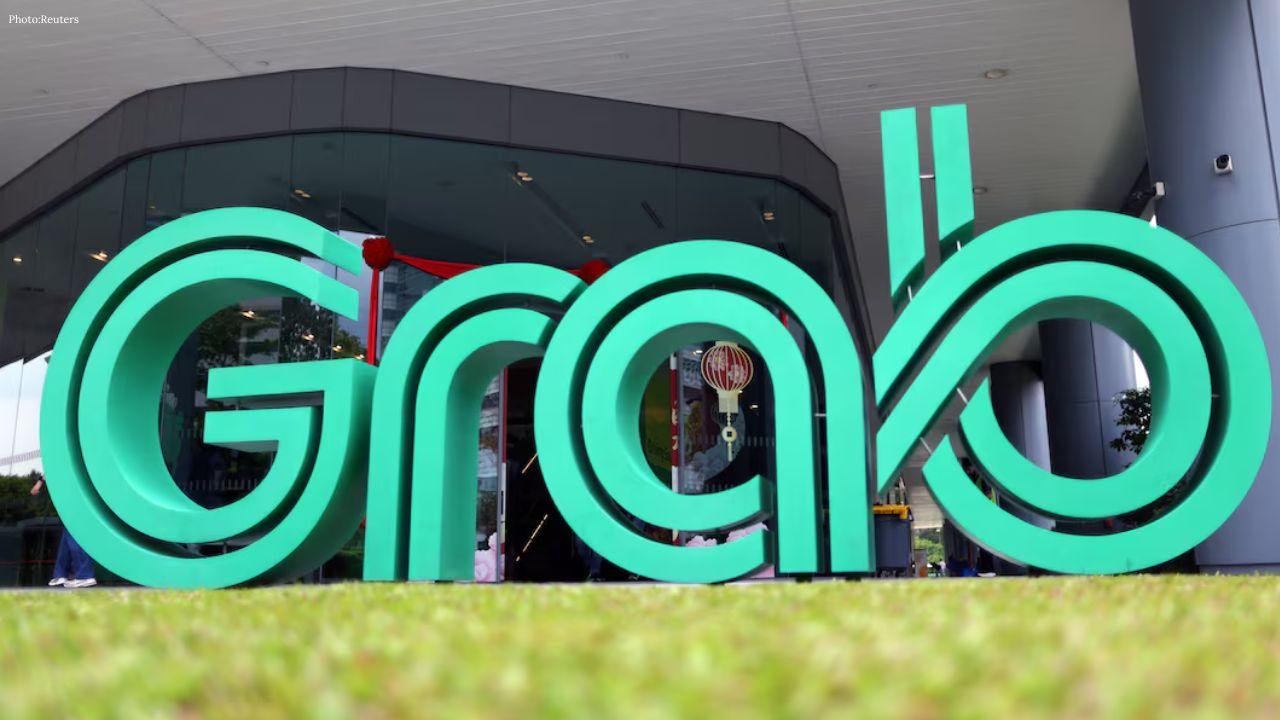
Grab to Expand Autonomous Vehicle Fleet from 10 to 50 in Singapore
Grab will expand its autonomous vehicle fleet from 10 to 50 in Singapore, with new AV services plann

Judge Refuses to Record RM1.7mil Road Accident Settlement
Malaysia High Court says court approval is needed before a RM1.7 million road accident settlement in

Tesla Establishes Vietnam Unit in Major Southeast Asian Market
Tesla establishes a Vietnam unit with $3 million capital, opening a new route into the country's gro

Lamine Yamal Says Mbappe Is His Only Ballon d'Or Rival
Lamine Yamal says Kylian Mbappe is his only Ballon d'Or rival after World Cup success and another La
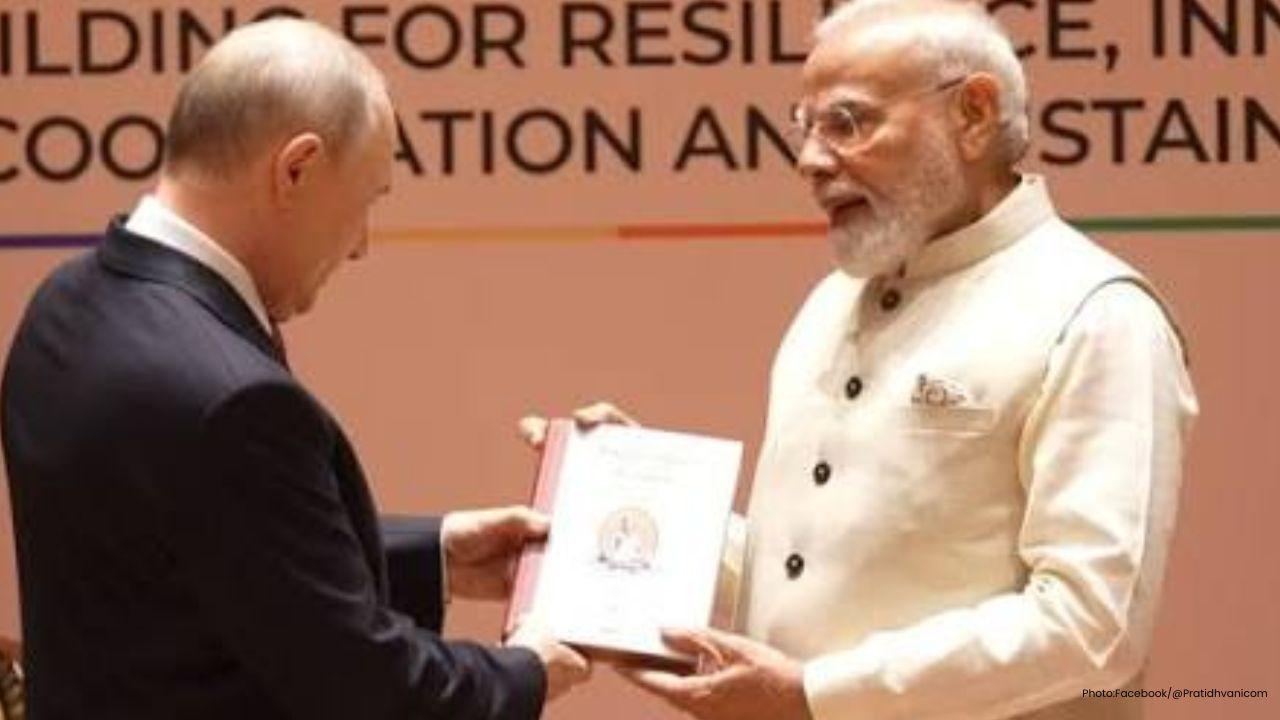
PM Modi Presents Putin Russian Translation of Thirukkural at BRICS Summit
PM Modi gifts Putin a Russian Thirukkural translation, highlighting India-Russia ties and the global