
You have not yet added any article to your bookmarks!
Join 10k+ people to get notified about new posts, news and tips.
Do not worry we don't spam!
Post by : Badri Ariffin
In a significant development, the United States and Iran have reached a week-long truce concerning the Strait of Hormuz, as reported by the New York Post, citing a US official. This decision is part of the ongoing indirect negotiations happening in Qatar.
The temporary arrangement aims to uphold stability in this crucial waterway while technical teams from both nations engage with international mediators to discuss further issues.
This agreement is particularly timely, coinciding with the upcoming Fourth of July celebrations in the United States and memorial ceremonies for Iran's former Supreme Leader, Ali Khamenei.
Despite the easing of immediate tensions, the United States and Iran continue to have stark differences regarding who governs shipping through the Strait of Hormuz.
This divide intensified after Iran targeted a vessel near Oman last week, leading to US airstrikes on Iranian missile facilities in the region.
Iran asserts its right to oversee maritime traffic in the passage and has demanded to levy fees from vessels once the interim arrangements conclude.
The Trump administration has dismissed Iran's claims, emphasizing that the Strait of Hormuz is an international waterway, and Tehran has no right to impose charges on passing ships.
As reported by the New York Post, this disagreement poses one of the most significant hurdles in broader negotiations between the two countries. US officials are encouraging Iran to relinquish its demand for transit fees in exchange for broader economic benefits.
According to the New York Post, the memorandum of understanding between the US and Iran indicates that Iran will collaborate with Oman to "define the future administration and maritime services in the Strait of Hormuz with other Persian Gulf littoral states."
However, the interpretation of this language varies significantly between the two nations.
Senior US officials believe the wording prevents Iran from imposing toll fees, asserting that Gulf nations would oppose such a system.
Conversely, Iran sees the provision as affirmation of its control over the waterway and believes it establishes a framework for future dialogues with regional partners.
The New York Post, citing sources from IRGC-affiliated Fars News, claims that revisions were made to the memorandum in the final negotiation stages.
An anonymous source stated, "In the last moments of the talks, the memorandum was altered to explicitly detail Iranian-Omani sovereignty over the Strait of Hormuz."
The source further claimed that the phrase 'maritime services' indicates US acknowledgment of the need to pay fees to Iran.
Despite these claims, US officials, including President Trump, continue to reject the notion that Iran can collect transit fees.
In a related development, the Associated Press has reported that US and Iranian delegates met separately with mediators from Qatar and Pakistan on Wednesday.
Qatar's Foreign Ministry spokesman, Majed al-Ansari, indicated that these discussions had yielded "positive progress."
He mentioned that the next round of discussions would be scheduled promptly after the memorial services for Iran's former Supreme Leader.
US envoy Steve Witkoff and Jared Kushner, President Trump's son-in-law, participated in the Qatari talks, while Iran was represented by chief negotiator Kazem Gharibabadi.
Negotiators are working to finalize technical discussions ahead of political consideration for a broader agreement, although significant divisions remain regarding both the Strait of Hormuz and Lebanon.
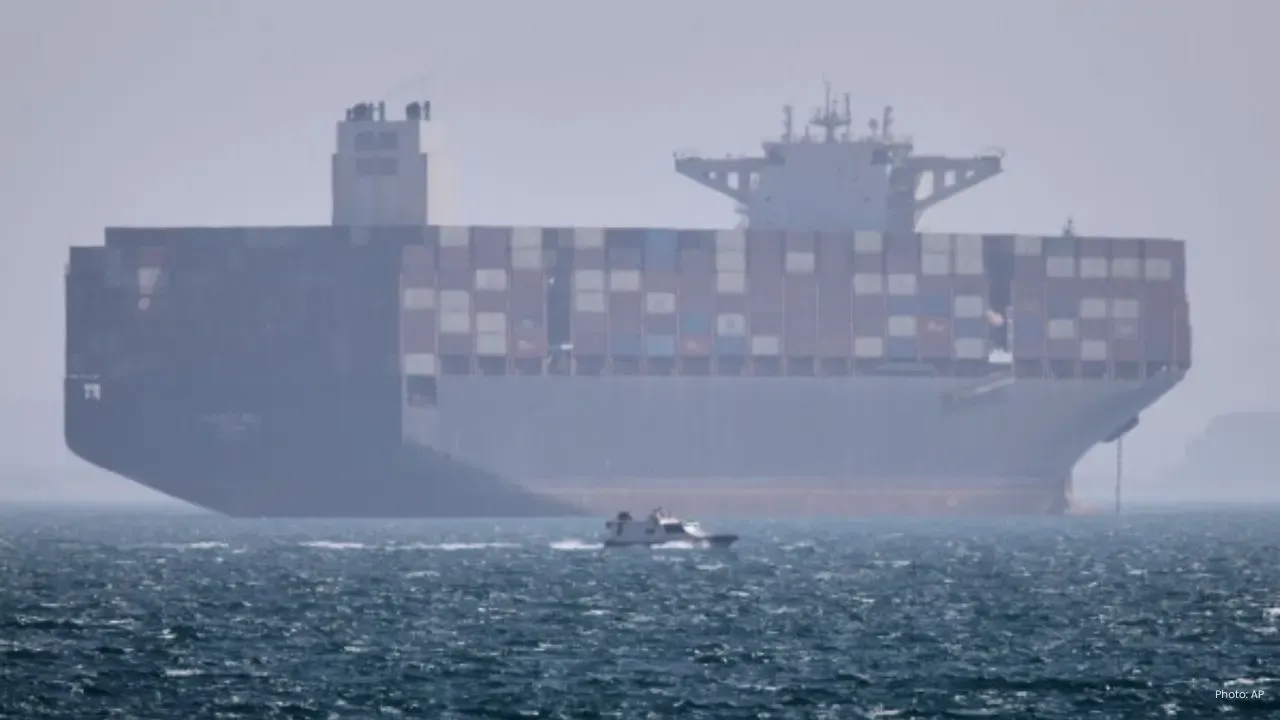
The Associated Press has also reported that a foreign container ship ran aground in the Strait of Hormuz after using an unapproved route, as stated by Iran.
Iranian state media reported that the vessel became stranded in shallow waters, and authorities emphasized the importance of adhering to navigation guidelines issued by Iran's paramilitary Revolutionary Guard.
The Revolutionary Guard's navy cautioned that any navigation outside the designated routes could lead to severe incidents.
Discussions in Qatar also encompassed broader concerns including Lebanon and regional security issues, according to reports from the Associated Press.
Iran's negotiator, Kazem Gharibabadi, confirmed no direct talks were held with the US delegation; all dialogues were facilitated via mediators, focusing on Lebanon and ways to recover some of Iran's assets.
Tehran has sought to end the conflict between Hezbollah and Israeli forces, while demanding Israel withdraw from its contested southern Lebanon territories.
Israel retains that it must maintain control of these areas to counter potential threats from Hezbollah.
#Iran News #US News #Strait of Hormuz #Global Updates #World News










PM Modi Pays Tribute to Mahatma Gandhi, Urges People to Support Khadi
PM Modi pays tribute to Mahatma Gandhi on Gandhi Jayanti and urges citizens to support Khadi and the

Amazon Seeks to Offload $8 Billion in Nvidia Chips to Investors
Amazon plans to move $8 billion in Nvidia chips to investors, using a new financing model to strengt

Samsung Raises Galaxy S26 Prices as Memory Chip Costs Rise
Samsung raises Galaxy S26 prices in South Korea as rising memory chip costs put pressure on smartpho

Lewis Hamilton Calls Singapore Grand Prix One of F1's Toughest Races
Lewis Hamilton discusses the demanding Singapore Grand Prix and brings Plus44 and Almave to Singapor

Denmark's Pandora Opens World's Largest Jewellery Factory in Vietnam
Pandora opens its largest jewellery factory in Vietnam, expanding global production, strengthening s

Gautam Gambhir Questions Batting-Friendly Pitches After India's Record ODI Chase
Gautam Gambhir questions batting-friendly ODI pitches after India’s record chase, calling for a bett

