
You have not yet added any article to your bookmarks!
Join 10k+ people to get notified about new posts, news and tips.
Do not worry we don't spam!
Post by : Badri Ariffin
The United States and Saudi Arabia have finalized a significant agreement enabling the Gulf nation to advance its civilian nuclear program.
Characterized by the US Department of Energy as a "peaceful nuclear cooperation agreement," this accord aims to foster "greater access for American enterprises within the Saudi nuclear energy sector."
While the specifics of the agreement remain largely undisclosed, media reports in the US suggest it may permit Saudi Arabia to engage in uranium enrichment, which serves as fuel for nuclear power reactors but is also applicable in nuclear weapons manufacturing.
The signing of a bilateral safeguards agreement alongside this cooperation deal was also confirmed by the US Department of Energy.
Collectively, these two agreements are intended to build a legal framework for a long-term, multi-billion-dollar partnership that is aligned with both economic and strategic priorities, notably efforts to enhance nuclear nonproliferation.
Saudi officials expressed their approval of the agreement, indicating it "extends the cooperative relationship in the energy sector between the two nations."
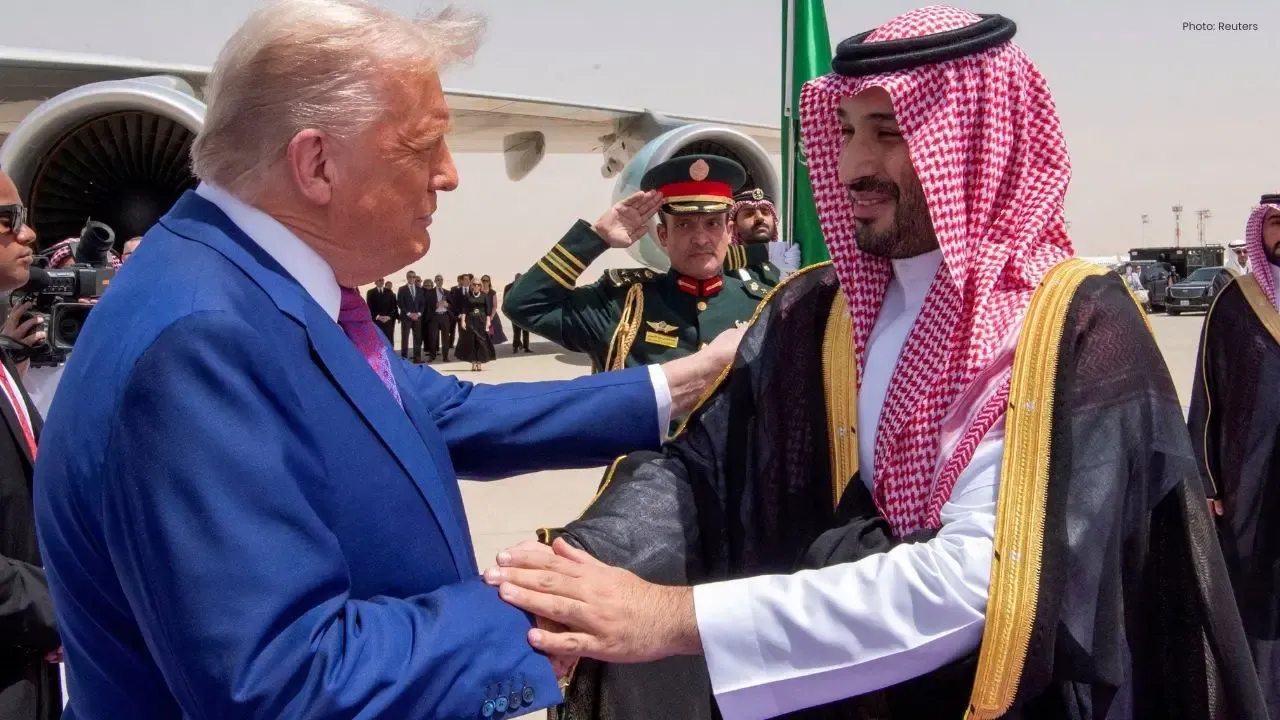
This pact follows the visit of Saudi Crown Prince Mohammed bin Salman to Washington last November.
Several US media outlets reported that President Donald Trump did not impose a condition for Saudi Arabia to recognize Israel as part of this agreement.
Past US administrations linked such agreements to Saudi diplomatic relations with Israel, but current reports indicate this stipulation is absent.
This announcement arrives against a backdrop of escalating tensions in the Middle East.
Hostilities between the US and Iran have intensified, with Saudi Arabia—traditionally a US ally—harboring numerous American military installations that have recently faced Iranian attacks.
Additionally, the agreement came two days after the Houthi movement in Yemen announced a "maritime blockade" against Saudi Arabia.
While the agreement lacks explicit details regarding Saudi Arabia's nuclear plans, earlier reports suggested that, following a collaborative study with the US, the kingdom might eventually gain authorization to enrich uranium domestically.
It is believed that this enriched fuel could be produced at a plant constructed by the US rather than being shipped in from other countries.
Such an initiative could be worth billions, with American companies anticipated to significantly contribute to the development and operation of the necessary facilities.
US Secretary of Energy Chris Wright assured that "these agreements uphold the highest standards of nuclear safety and nonproliferation, utilizing the most advanced nuclear technology and expertise available in the US."
Furthermore, the Department of Energy emphasized that the agreement enhances both US and regional security, maintaining high standards of nuclear safety, security, and nonproliferation, while bolstering the US's position in civilian nuclear technology.
Numerous nuclear specialists and former Israeli officials have voiced concerns that authorizing Saudi Arabia to enrich uranium might eventually enable it to develop nuclear weapons.
Experts have noted that such a development could take many decades and would likely face significant global opposition.
Rosemary Kelanic, Director of the Middle East Programme at the US-based Defense Priorities think tank, called the potential for enrichment "quite shocking."
She remarked that the United States has never assisted another nation in establishing uranium enrichment capabilities on its territory.
Kelanic further elucidated that producing domestic nuclear fuel increases risks, as the same technologies could be repurposed for weapon development.
The agreement is now set to be reviewed by the US Congress.
While resistance to the deal is expected from lawmakers across party lines, the Republican Party currently maintains control of both the Senate and House of Representatives.
US Secretary of State Marco Rubio dismissed concerns regarding the potential for nuclear weapon proliferation stemming from this agreement.
He stated during a recent visit to the Philippines: "The US is not going to reach any agreement with any country in the world that leads to the risk of proliferation."
A number of Democratic lawmakers have raised doubts about the agreement, highlighting Rubio's prior support for the "No Nuclear Weapons for Saudi Arabia Act" that mandated congressional approval for any nuclear agreement with Saudi Arabia.
Senator Edward Markey of Massachusetts criticized both Rubio and President Trump.
He expressed views that they are permitting Saudi Arabia—a belligerent and authoritarian country—to develop nuclear weapons technologies while initiating a conflict with Iran under the pretext of preventing an Iranian nuclear bomb.
Should the agreement include uranium enrichment rights, it would starkly contrast with the 2009 nuclear cooperation pact signed between the US and the United Arab Emirates.
Under the UAE's agreement, the nation does not produce its own nuclear fuel and has accepted further restrictions intended to minimize risks associated with nuclear proliferation.
Due to these distinctions, advocates for nuclear non-proliferation are likely to examine the new Saudi agreement with heightened scrutiny.
Saudi Arabia has been advocating for a civilian nuclear agreement with the United States across multiple administrations.
For years, Washington insisted that Saudi Arabia should recognize Israel and establish economic and diplomatic relations prior to any advancement of such deals.
Recent media reports indicate that this prerequisite may have been lifted.
President Trump has enhanced ties with Saudi Arabia during his tenure, and ongoing discussions involving Russia and China regarding similar nuclear cooperation with the kingdom may have accelerated the timing of the US agreement.
This agreement is seen as a pivotal diplomatic and strategic success for Saudi Arabia and may alter the power dynamics in the Middle East in the years to come, though immediate effects are not anticipated.
The issue of nuclear technology is central to the ongoing tensions between the US and Israel with Iran.
The US and Israel have stated that part of the rationale for their military actions against Iran in February was to preempt Tehran's nuclear capabilities, which Iran has consistently refuted.
Crown Prince Mohammed bin Salman remarked in a 2018 CBS News interview that Saudi Arabia has no intention of acquiring nuclear weapons.
However, he also cautioned: "If Iran develops a nuclear bomb, we will follow suit as soon as possible."
#US News #Saudi Arabia #Saudi Arabia News #Global Updates #World News










PM Modi Pays Tribute to Mahatma Gandhi, Urges People to Support Khadi
PM Modi pays tribute to Mahatma Gandhi on Gandhi Jayanti and urges citizens to support Khadi and the

Amazon Seeks to Offload $8 Billion in Nvidia Chips to Investors
Amazon plans to move $8 billion in Nvidia chips to investors, using a new financing model to strengt

Samsung Raises Galaxy S26 Prices as Memory Chip Costs Rise
Samsung raises Galaxy S26 prices in South Korea as rising memory chip costs put pressure on smartpho

Lewis Hamilton Calls Singapore Grand Prix One of F1's Toughest Races
Lewis Hamilton discusses the demanding Singapore Grand Prix and brings Plus44 and Almave to Singapor

Denmark's Pandora Opens World's Largest Jewellery Factory in Vietnam
Pandora opens its largest jewellery factory in Vietnam, expanding global production, strengthening s

Gautam Gambhir Questions Batting-Friendly Pitches After India's Record ODI Chase
Gautam Gambhir questions batting-friendly ODI pitches after India’s record chase, calling for a bett

