
You have not yet added any article to your bookmarks!
Join 10k+ people to get notified about new posts, news and tips.
Do not worry we don't spam!
Post by : Meena Ariff
Photo: Reuters
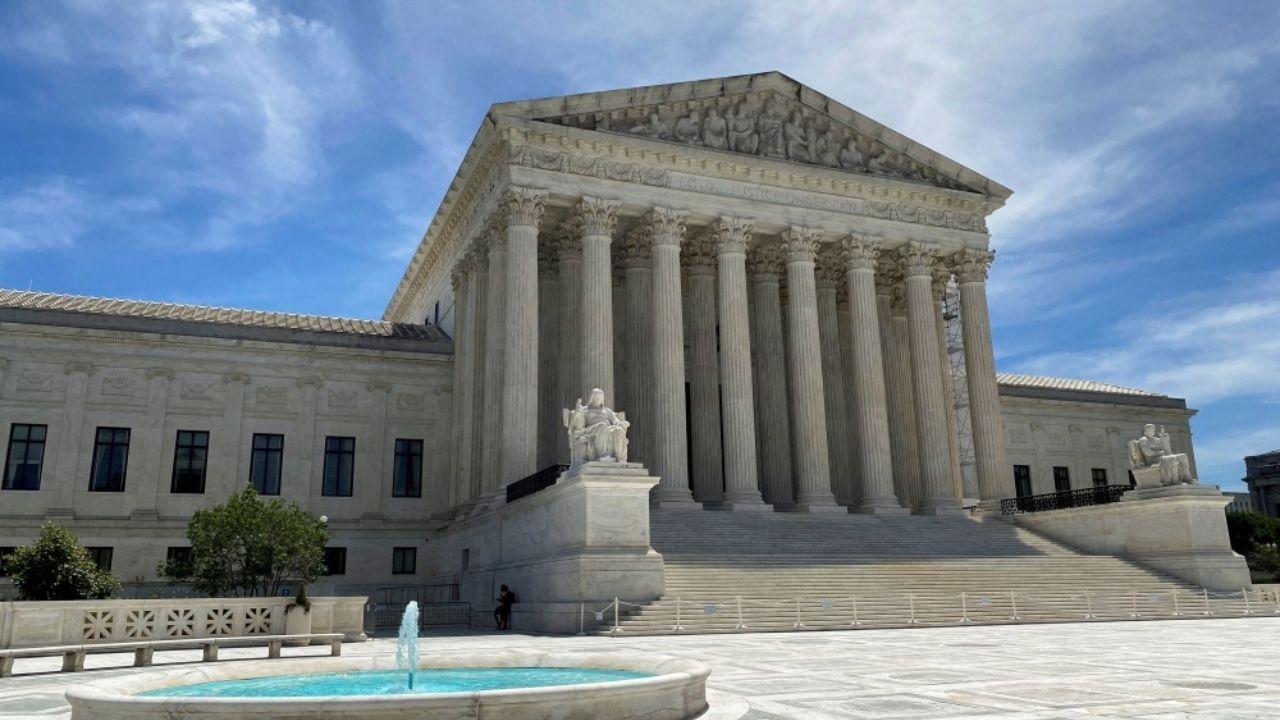
The United States Supreme Court has announced that it will take up an important case that could decide the future of a major part of the country’s Voting Rights Act. This law was passed 60 years ago to stop racial discrimination in voting. Now, the court will consider whether one part of this law goes against the Constitution when states use race to create new voting districts.
This case could lead to a big change in how voting districts are drawn across the country, especially those that include large numbers of Black, Hispanic, or other minority voters.
What the Case Is About
The case comes from the state of Louisiana. The Louisiana legislature, which is led by Republicans, created a new voting map that increased the number of Black-majority districts from one to two. This was done after a judge said the old map likely broke the rules of the Voting Rights Act by not fairly representing Black voters.
The new map was made as a solution to fix the problem. However, 12 voters who are not African American sued to block this new map. They argued that it was unfair and used race too much in deciding how to draw the districts. The case now sits in front of the Supreme Court, where the justices will decide if making districts based on race—even to fix unfair maps—is allowed under the Constitution.
Why This Matters
The court's decision could have a big impact not just on Louisiana but on the entire country. That’s because states redraw their voting maps every ten years in a process called redistricting. These maps help decide which communities get to elect their leaders in Congress.
If the Supreme Court rules against the use of race to create fairer districts, it could weaken the power of the Voting Rights Act. This law was created during the civil rights movement in the 1960s to make sure all people—no matter their race—could vote fairly.
The court’s ruling is expected by June 2026, and the hearing will take place in the next court term starting in October.
A Conservative Court and Big Decisions
The Supreme Court now has a 6-3 conservative majority, and many experts believe the court could use this case to reduce the power of the Voting Rights Act even more. In 2013, the court already removed one important part of the law in a case involving Alabama. That ruling made it harder for the federal government to oversee changes in voting rules in areas with a history of racial discrimination.
Now, this new case could challenge another important part of the same law.
Some experts are warning that the court might decide the Voting Rights Act is not in line with the idea that the Constitution should treat everyone the same, without using race as a factor. One legal expert said the court seems to be asking if the law breaks the idea of a “colorblind” Constitution.
What Happened in Louisiana
Louisiana has six congressional districts. After the 2020 census, the state had to redraw the districts to reflect new population numbers. Black people make up nearly one-third of Louisiana’s population, but only one of the six districts was majority-Black. That led to a lawsuit, and in June 2022, a judge ruled that the map was unfair to Black voters.
The judge said that Louisiana needed to create a second Black-majority district to ensure fair representation. In response, the legislature drew a new map with two such districts. The court allowed the new map to be used for the 2024 elections.
However, a panel of three judges ruled in April 2024 that this new map focused too much on race and might not meet the Constitution’s equal protection rule. This rule is found in the 14th Amendment, which was passed after the Civil War to protect the rights of formerly enslaved people.
The Debate: Fairness vs. Constitution
Now, the main question before the court is: Can states use race to fix voting maps that were unfair in the first place? Supporters of the new map say it gives Black voters a better chance to choose leaders who represent them. But opponents argue that race should not be the main reason for drawing a district.
The state of Louisiana argues that its map wasn’t only about race. They also wanted to protect current Republican leaders, like House Speaker Mike Johnson and Steve Scalise, who represent certain districts.
On the other side, civil rights groups say that without using race as a factor, it’s almost impossible to fix maps that have historically harmed Black voters.
What Could Happen Next
If the Supreme Court rules that using race this way is not allowed, many states might stop creating Black or minority-majority districts, even when judges find that current maps are unfair. This could reduce the number of minority lawmakers in Congress and state governments.










PM Modi Pays Tribute to Mahatma Gandhi, Urges People to Support Khadi
PM Modi pays tribute to Mahatma Gandhi on Gandhi Jayanti and urges citizens to support Khadi and the

Amazon Seeks to Offload $8 Billion in Nvidia Chips to Investors
Amazon plans to move $8 billion in Nvidia chips to investors, using a new financing model to strengt

Samsung Raises Galaxy S26 Prices as Memory Chip Costs Rise
Samsung raises Galaxy S26 prices in South Korea as rising memory chip costs put pressure on smartpho

Lewis Hamilton Calls Singapore Grand Prix One of F1's Toughest Races
Lewis Hamilton discusses the demanding Singapore Grand Prix and brings Plus44 and Almave to Singapor

Denmark's Pandora Opens World's Largest Jewellery Factory in Vietnam
Pandora opens its largest jewellery factory in Vietnam, expanding global production, strengthening s

Gautam Gambhir Questions Batting-Friendly Pitches After India's Record ODI Chase
Gautam Gambhir questions batting-friendly ODI pitches after India’s record chase, calling for a bett

