
You have not yet added any article to your bookmarks!
Join 10k+ people to get notified about new posts, news and tips.
Do not worry we don't spam!
Post by : Anis Farhan
The Middle East stands at a precarious crossroads as the United States and Iran convened indirect nuclear negotiations in Muscat, Oman, hoping to curb escalating tensions that have stirred widespread fears of another major conflict. These mediated discussions marked a crucial moment in U.S.–Iran relations, unfolding against the backdrop of years of acrimonious rivalry, recent military threats, and a volatile regional security landscape. While both sides portrayed the talks as a constructive beginning, substantial disagreements over fundamental issues and mutual distrust underline the fragile nature of any diplomatic breakthrough.
For the first time since a brief but intense period of hostilities last year — involving U.S. strikes on Iran’s nuclear facilities and heightened military posturing by both sides — American and Iranian officials stepped onto the diplomatic stage in Oman on Friday. The negotiations were mediated by officials from the Sultanate of Oman, a long-standing neutral facilitator in Iran–U.S. indirect talks.
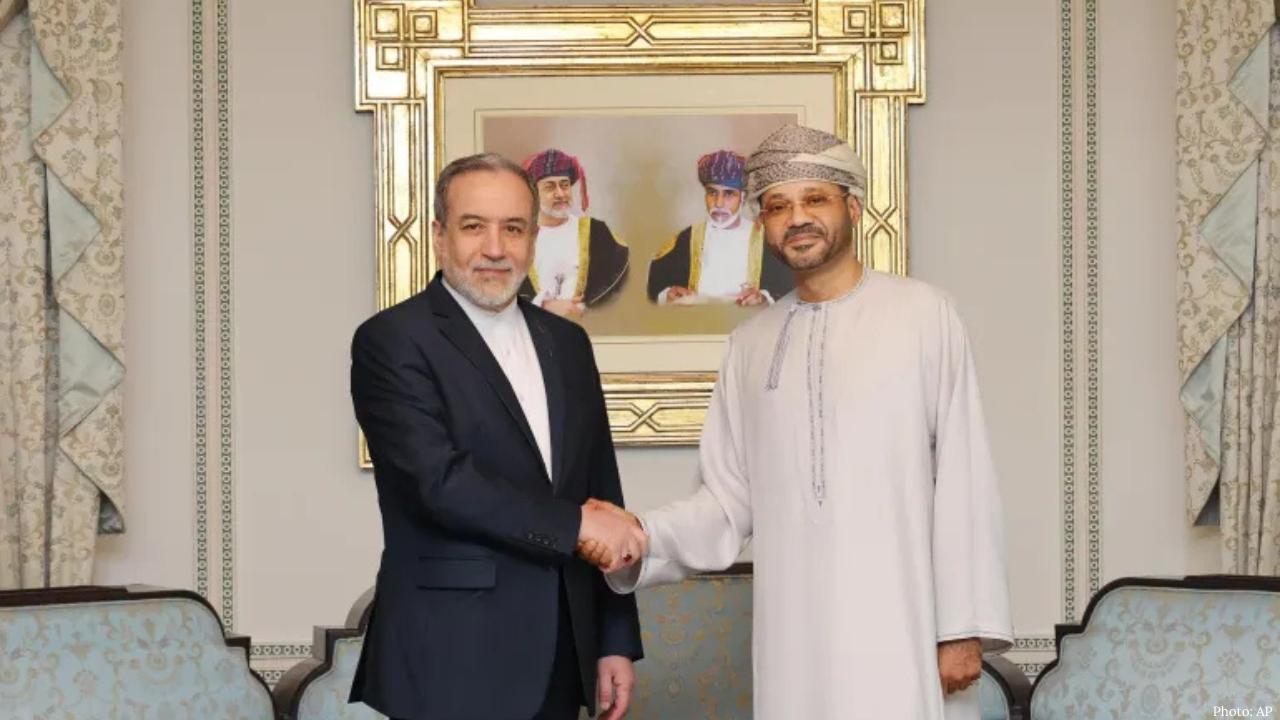
Iran’s Foreign Minister, Abbas Araghchi, and a U.S. delegation led by special envoy Steve Witkoff, supported by senior adviser Jared Kushner, convened in Muscat. Also present was U.S. Central Command chief Adm. Brad Cooper, whose participation underscored the intense military backdrop against which the diplomacy was occurring.
Both sides agreed that the talks had merit: Araghchi described them as a “good start” and suggested that further rounds would be planned after consultation with their respective capitals. Meanwhile, U.S. President Donald Trump echoed this sentiment, calling the discussions “very good” while underscoring that additional talks were intended soon.
At the heart of the negotiations lay Iran’s nuclear program — a source of long-standing contention between Tehran and Washington. For Tehran, the priority remains strictly focused on nuclear issues, rejecting efforts to broaden the agenda to encompass ballistic missiles or its regional influence operations. Iran asserts that its nuclear activities serve peaceful purposes and insists that negotiations be limited to this scope.
By contrast, U.S. officials have pressed for a broader set of topics, including restrictions on Iran’s ballistic missile program and its support for armed proxy groups across the Middle East. This fundamental divergence illustrates the deep strategic rifts that complicate diplomatic progress.
Both sides agree, however, on one essential premise: that the threat of renewed military confrontation, even after long periods of stalemate, must be addressed through diplomatic channels if possible. Still, despite these talks’ constructive tone, there was no definitive agreement reached on any substantive concessions during this round.
The diplomatic efforts in Oman cannot be divorced from the wider context of military tension and distrust. The United States has made a significant naval and air force presence felt in the region, with aircraft carriers and warships positioned near Iranian waters, highlighting Washington’s willingness to use force if diplomacy fails. This buildup both underscores U.S. leverage and fuels Iranian anxiety about its security.
Tensions have been further exacerbated by recent confrontations, including U.S. forces shooting down an Iranian drone near a U.S. carrier and attempts by Iranian vessels to intercept U.S.-flagged ships in strategic waterways. These incidents serve as stark reminders that diplomacy exists alongside the potential for rapid escalation back into military conflict.
Iran, for its part, has repeatedly emphasized readiness to defend itself if attacked. Senior Iranian commanders displayed one of the country’s most advanced ballistic missiles during this period, reinforcing Tehran’s deterrent message and signaling the seriousness with which it views its defense posture.
Underlying the negotiations is a legacy of mistrust that has developed over decades of adversarial relations. Iran’s leadership has pointed to past U.S. actions — including direct military strikes on its nuclear facilities and severe sanctions — as evidence that Washington cannot be relied upon to respect Iranian interests. This history complicates efforts to establish confidence in the current talks and impacts how Iran approaches any concessions.
At the same time, the U.S. views Iran’s ballistic missile program and regional influence as destabilizing factors that must be addressed to ensure long-term peace and security. Washington’s insistence on a broader negotiation agenda reflects these concerns, though Iran’s resistance to such demands illustrates why substantive progress remains elusive.
Despite achieving what both sides described as a positive start, the talks in Oman ended without definitive resolutions, and participants acknowledged that more discussions would be necessary. Tehran has emphasized the need for continued nuclear-focused negotiations, while Washington appears poised to maintain pressure both diplomatically and militarily if progress remains slow.
The outcome of these discussions will likely hinge on whether the two nations can bridge their fundamental differences — including Iran’s determination to limit talks to nuclear issues and U.S. demands that go beyond the nuclear file. The involvement of regional mediators like Oman highlights the broader international interest in preventing escalation and stabilizing the region.
Meanwhile, global observers remain vigilant, recognizing that failure to reach common ground could heighten the risk of renewed hostilities with far-reaching consequences beyond the Middle East. Energy markets, international security alliances, and regional stability all hang in the balance as these diplomatic efforts unfold.
The talks in Oman have drawn attention from neighboring countries and global powers alike, many of whom have advocated for restraint and dialogue. Middle Eastern states, fearful of a regional war’s potential spill-over effects, have called for continued diplomatic engagement to avert further conflict.
At the same time, nations outside the region have reiterated support for negotiations that seek peaceful resolutions while maintaining pressure on Iran to curtail activities seen as threatening. Yet the broad array of interests — often conflicting — underscores just how complicated such diplomatic initiatives remain.
Within Iran itself, public sentiment remains varied. While some citizens and political figures express cautious hope that diplomacy might ease economic sanctions and reduce international tensions, others doubt that meaningful concessions will emerge without direct pressure on Tehran’s defense and regional policies. These internal pressures further complicate Tehran’s negotiating posture.
In the United States, policymakers face similar scrutiny, with debates over how to balance diplomatic engagement with firm stances against nuclear proliferation and regional influence campaigns. The interplay between domestic policy considerations and international strategy continues to shape how Washington approaches these talks.
Disclaimer: This article is based on multiple verified news reports and publicly available verified information at the time of writing. Ongoing developments may evolve, and details may change as negotiations continue and broader geopolitical events unfold.










PM Modi Pays Tribute to Mahatma Gandhi, Urges People to Support Khadi
PM Modi pays tribute to Mahatma Gandhi on Gandhi Jayanti and urges citizens to support Khadi and the

Amazon Seeks to Offload $8 Billion in Nvidia Chips to Investors
Amazon plans to move $8 billion in Nvidia chips to investors, using a new financing model to strengt

Samsung Raises Galaxy S26 Prices as Memory Chip Costs Rise
Samsung raises Galaxy S26 prices in South Korea as rising memory chip costs put pressure on smartpho

Lewis Hamilton Calls Singapore Grand Prix One of F1's Toughest Races
Lewis Hamilton discusses the demanding Singapore Grand Prix and brings Plus44 and Almave to Singapor

Denmark's Pandora Opens World's Largest Jewellery Factory in Vietnam
Pandora opens its largest jewellery factory in Vietnam, expanding global production, strengthening s

Gautam Gambhir Questions Batting-Friendly Pitches After India's Record ODI Chase
Gautam Gambhir questions batting-friendly ODI pitches after India’s record chase, calling for a bett

