
You have not yet added any article to your bookmarks!
Join 10k+ people to get notified about new posts, news and tips.
Do not worry we don't spam!
Post by : Rameen Ariff
America was shaken this week by a shocking act of violence that left one of the country’s most recognized conservative voices dead and raised new fears about political hatred.
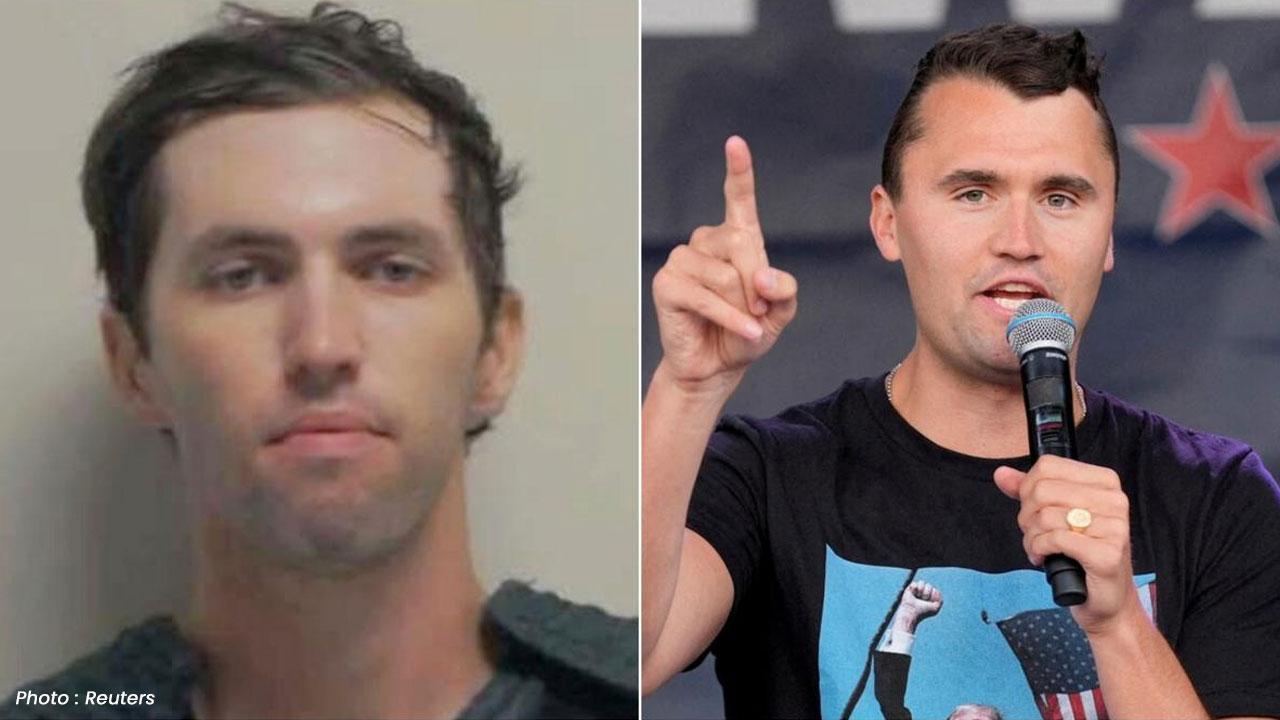
Charlie Kirk, a well-known conservative activist, was shot and killed at Utah Valley University during a campus event. Authorities say the man accused of firing the deadly shot was Tyler Robinson, a 22-year-old from Utah.
What makes this case even more tragic is the background of Robinson himself. Only a few years ago, he was seen as a young man with a bright future, a top student who earned a scholarship to university. Today, he sits in jail accused of aggravated murder, facing questions about how his life turned from promise to destruction.
Tyler Robinson was once a source of pride for his family and community. In high school, he scored an impressive 34 on the ACT exam, placing him in the top 1% of test-takers nationwide. His excellent score won him a four-year scholarship to Utah State University.
His mother shared her joy online, posting videos of him reading the scholarship letter and celebrating his achievements. Friends and neighbors recall him as a quiet but friendly student who enjoyed music and was part of the school band.
Robinson graduated from Pine View High School in 2021 and briefly attended Utah State University before leaving. Later, he enrolled at Dixie Technical College, where he studied in an electrical apprenticeship program. He lived at home with his parents and two younger brothers in Washington, Utah, a small town near Zion National Park.
By all appearances, Robinson was just another young man preparing for adult life.
Somewhere along the way, however, things began to change. Investigators say Robinson had grown more political in recent years. He reportedly spoke with family members about his dislike of Charlie Kirk and his views.
When police searched his belongings, they discovered bullet casings with anti-fascist messages engraved on them, suggesting his growing anger and political leanings.
On Tuesday, authorities allege, Robinson drove his gray Dodge Challenger to Utah Valley University. From the rooftop of a building, he fired a rifle and killed Charlie Kirk as the activist prepared to speak.
The shooting set off chaos on campus and across the country. Once again, Americans were left to question why political violence seems to be rising and how easily differences in opinion can turn deadly.
A 33-hour manhunt followed the shooting. Police briefly detained two other people but later released them. On Thursday evening, the search ended when Robinson was arrested without incident.
According to officials, a family friend called authorities after Robinson either confessed or hinted that he was responsible for Kirk’s death.
Robinson was booked into the Utah County Jail on charges of aggravated murder. He has no prior criminal record, no history of arrests, and was listed as an inactive voter, meaning he did not cast a ballot in the last election.
Neighbors and classmates struggled to understand how someone like Robinson could be linked to such a crime.
Steven Green, who attended the same Mormon church as Robinson’s family, described them as “a great family, good kids.” Another local, Canaan Timothy, said Robinson was “just your average kid” in high school—quiet but not unusual.
His mother’s social media posts over the years showed a normal family life: vacations, school plays, holidays, and pets. They did not appear political or extreme.
The arrest has left many in Robinson’s hometown stunned, as they try to reconcile the image of a promising young man with the actions of a suspected killer.
The loss of Charlie Kirk has created waves across the United States. Kirk was the founder of Turning Point USA, a conservative youth organization, and a strong supporter of former President Donald Trump.
For years, he traveled the country speaking at universities, often sparking debate and sometimes controversy. His death on a college campus has fueled discussions about free speech, safety at events, and the dangers of political division.
Many leaders across the political spectrum condemned the shooting, calling it an attack not only on Kirk but on democracy and open debate.
Investigators are still trying to piece together Robinson’s exact motive. Did his dislike of Kirk’s views lead directly to violence? Did personal struggles or mental health play a role? Why would a young man with no criminal history and such strong academic promise take such a dark path?
The answers are not yet clear. But the case highlights the growing tension in American society, where political disagreements can sometimes become dangerous.
This tragedy is not only about one shooter and one victim. It is also a warning sign about what happens when anger and division go unchecked.
Tyler Robinson’s story is heartbreaking. He was a student who had everything—brains, opportunity, and family support. Yet, somewhere, his path turned to bitterness and violence.
Charlie Kirk’s story is equally tragic. He believed in sharing his ideas, no matter how controversial, and paid with his life.
The editorial lesson here is simple: society must find ways to disagree without violence. Free speech is a cornerstone of democracy. People can argue, protest, and express their opinions, but the moment guns are involved, democracy itself is at risk.
Parents, educators, and communities also need to pay closer attention to young people who may be slipping into anger or extremism. Early signs of change, such as Robinson’s engraved bullet casings, must not be ignored.
The story of Tyler Robinson is one of lost potential, wasted promise, and tragedy. From a top student with scholarships and dreams, he has become a symbol of how easily anger can destroy lives—his own and that of another.
Charlie Kirk’s death is a painful reminder of the cost of political hatred. It has left a family grieving, a movement without its leader, and a country questioning its future.
As America mourns, the hope is that this tragedy sparks reflection: that young people learn to channel their passion into positive change, that communities look for warning signs, and that leaders on all sides work harder to cool tensions rather than inflame them.
In the end, the path forward must be one of peace, respect, and dialogue. Only then can tragedies like this be prevented.










PM Modi Pays Tribute to Mahatma Gandhi, Urges People to Support Khadi
PM Modi pays tribute to Mahatma Gandhi on Gandhi Jayanti and urges citizens to support Khadi and the

Amazon Seeks to Offload $8 Billion in Nvidia Chips to Investors
Amazon plans to move $8 billion in Nvidia chips to investors, using a new financing model to strengt

Samsung Raises Galaxy S26 Prices as Memory Chip Costs Rise
Samsung raises Galaxy S26 prices in South Korea as rising memory chip costs put pressure on smartpho

Lewis Hamilton Calls Singapore Grand Prix One of F1's Toughest Races
Lewis Hamilton discusses the demanding Singapore Grand Prix and brings Plus44 and Almave to Singapor

Denmark's Pandora Opens World's Largest Jewellery Factory in Vietnam
Pandora opens its largest jewellery factory in Vietnam, expanding global production, strengthening s

Gautam Gambhir Questions Batting-Friendly Pitches After India's Record ODI Chase
Gautam Gambhir questions batting-friendly ODI pitches after India’s record chase, calling for a bett

