You have not yet added any article to your bookmarks!
Join 10k+ people to get notified about new posts, news and tips.
Do not worry we don't spam!
Post by : Anis Farhan
On warm summer nights, flickering fireflies in fields or glowing jellyfish drifting through dark ocean waters capture human imagination. This mysterious ability to emit light, known as bioluminescence, is not magic—it is science in its most extraordinary form. Found in thousands of species across land and sea, bioluminescence is both a survival tool and a natural wonder. While humans rely on electricity to light up the night, nature has equipped certain animals with built-in light sources, powered not by wires but by chemistry.
At its core, bioluminescence is a chemical reaction. When a molecule called luciferin reacts with oxygen in the presence of the enzyme luciferase, it produces light. This process is highly efficient, with almost no heat wasted—a stark contrast to man-made light bulbs.
Interestingly, the light produced is often green, blue, or violet, as these wavelengths travel farthest through water. On land, fireflies display yellow and green hues, which stand out sharply in the darkness of night. Unlike fluorescence, which requires external light to “charge” the glow, bioluminescence creates its own light from within.
Bioluminescence is far more common in the ocean than on land. Scientists estimate that nearly 80% of deep-sea animals possess some ability to produce light. From tiny plankton to colossal squids, glowing creatures dominate the unlit depths of the sea. On land, it is comparatively rare, with fireflies, glow worms, and a handful of fungi being the most recognized examples.
Key habitats include:
Deep Oceans: Home to anglerfish, lanternfish, and glowing jellyfish.
Coastal Waters: Where plankton blooms create sparkling waves at night.
Forests and Grasslands: Fireflies lighting up warm evenings.
Caves and Tropical Jungles: Bioluminescent fungi glowing eerily in darkness.
Bioluminescence is not just for decoration. Each species uses it strategically:
Attraction: Fireflies flash to attract mates, while deep-sea anglerfish dangle glowing lures to catch prey.
Camouflage: Some fish glow underneath their bodies to blend with faint light from above, making them invisible to predators below.
Communication: Certain squid species use patterns of light to signal to each other.
Defense: Plankton release sudden bursts of light to startle predators, and shrimp eject glowing clouds to distract attackers.
Hunting: Predators like dragonfish use bioluminescent patches to lure smaller fish closer.
In essence, glowing in the dark is a survival strategy—sometimes to live, sometimes to eat, and sometimes to love.
Fireflies: Perhaps the most familiar example, fireflies communicate with rhythmic flashes that differ between species.
Anglerfish: Deep-sea predators using glowing lures to attract prey.
Lanternfish: Tiny fish that migrate daily through the ocean’s depths, glowing as they move.
Dinoflagellates: Microscopic plankton responsible for glowing blue waves along coastlines.
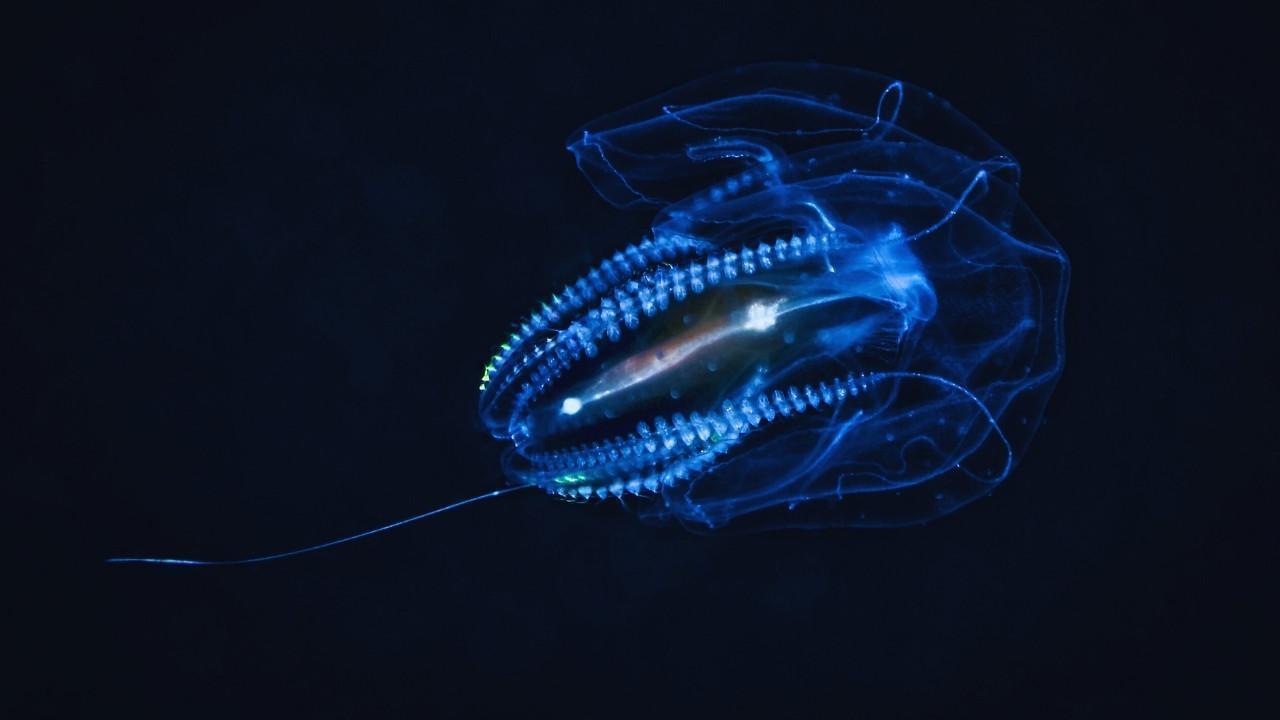
Jellyfish: Many species glow softly, adding surreal beauty to the ocean’s depths.
Fungi: Certain mushrooms in tropical forests glow faintly, earning the nickname “foxfire.”
Human cultures have long been fascinated by glowing creatures. Ancient folklore often described fireflies as wandering spirits or celestial sparks. In Japan, glowing plankton has been linked with spiritual symbolism, while in tribal communities, glowing fungi guided people through forests.
Today, tourism thrives on this fascination. Destinations such as bioluminescent bays in Puerto Rico or glowing beaches in the Maldives attract thousands of visitors annually, offering an almost magical spectacle of nature.
Beyond its beauty, bioluminescence has become a powerful tool in science. Researchers use luciferase enzymes in biotechnology and medicine, particularly in detecting diseases. By attaching luciferase to specific cells, scientists can track infections, monitor cancer growth, or test the effects of drugs in real time.
This scientific adaptation demonstrates how something as enchanting as glowing animals can transform into practical applications that advance human health and knowledge.
People often confuse bioluminescence with fluorescence, but the difference is crucial.
Bioluminescence: Light is produced by a chemical reaction inside the organism.
Fluorescence: Requires external light to excite molecules, which then release stored light.
For instance, corals and some jellyfish display fluorescence, glowing only when exposed to ultraviolet light, whereas a firefly glows naturally in complete darkness.
One of the biggest puzzles scientists face is understanding how bioluminescence evolved. Did it emerge multiple times across different species, or did it originate from a common ancestor? Evidence suggests that bioluminescence developed independently in various lineages, as the needs of survival—hunting, defense, or mating—shaped its emergence differently in different ecosystems.
This evolutionary marvel shows how nature creatively reuses chemistry to solve life’s challenges.
Like many wonders of nature, bioluminescent species face threats:
Pollution: Artificial lighting disrupts firefly mating patterns.
Climate Change: Rising sea temperatures affect plankton blooms.
Habitat Destruction: Urbanization reduces natural habitats where glow worms thrive.
Overtourism: Excessive human interference in glowing bays can harm delicate ecosystems.
Conservation efforts are necessary not just to protect these species but also to preserve the magical experiences they provide humanity.
Bioluminescence might soon shape the future of technology. Scientists are experimenting with using glowing proteins for sustainable streetlights, bio-sensors, and even medical diagnostics. Imagine glowing trees replacing street lamps or glow-based signals in medical imaging. These innovations could reduce reliance on electricity and open eco-friendly pathways for lighting.
Thus, what begins in the deep oceans or quiet forests might eventually light up human cities in ways nature has always intended.
This article is for educational and informational purposes only. Scientific details are simplified for general understanding. Interpretations of cultural practices may vary across regions.










Starc Compares Australia's Tough Year to McIlroy's Major Sweep
Mitchell Starc says Australia winning three away Test series and the World Cup would match Rory McIl

France’s Sesterce Plans $11 Billion AI Data Centre in Finland
Sesterce plans a $11 billion AI data centre in Finland, with major expansion, green energy plans and

Danaher to Launch AI-Powered Autonomous Research Lab in 2027
Danaher plans an AI research lab for 2027, combining robotics and automation to speed up drug discov

Musk Welcomes German Support for Tesla Driver Assistance Tech as EU Approval Push Continues
Elon Musk welcomes Germany's backing for Tesla FSD as the company seeks EU approval amid speed, safe

Microsoft and Nvidia CEOs to Unveil AI Laptop at San Francisco Event
Microsoft and Nvidia showcase a new AI laptop with RTX Spark chips as they push powerful local AI co

Man to face charges over perfume thefts at Changi Airport
A 47-year-old man faces charges over perfume theft at Changi Airport after six items worth nearly S$