You have not yet added any article to your bookmarks!
Join 10k+ people to get notified about new posts, news and tips.
Do not worry we don't spam!
Post by : Rohit Dhiman
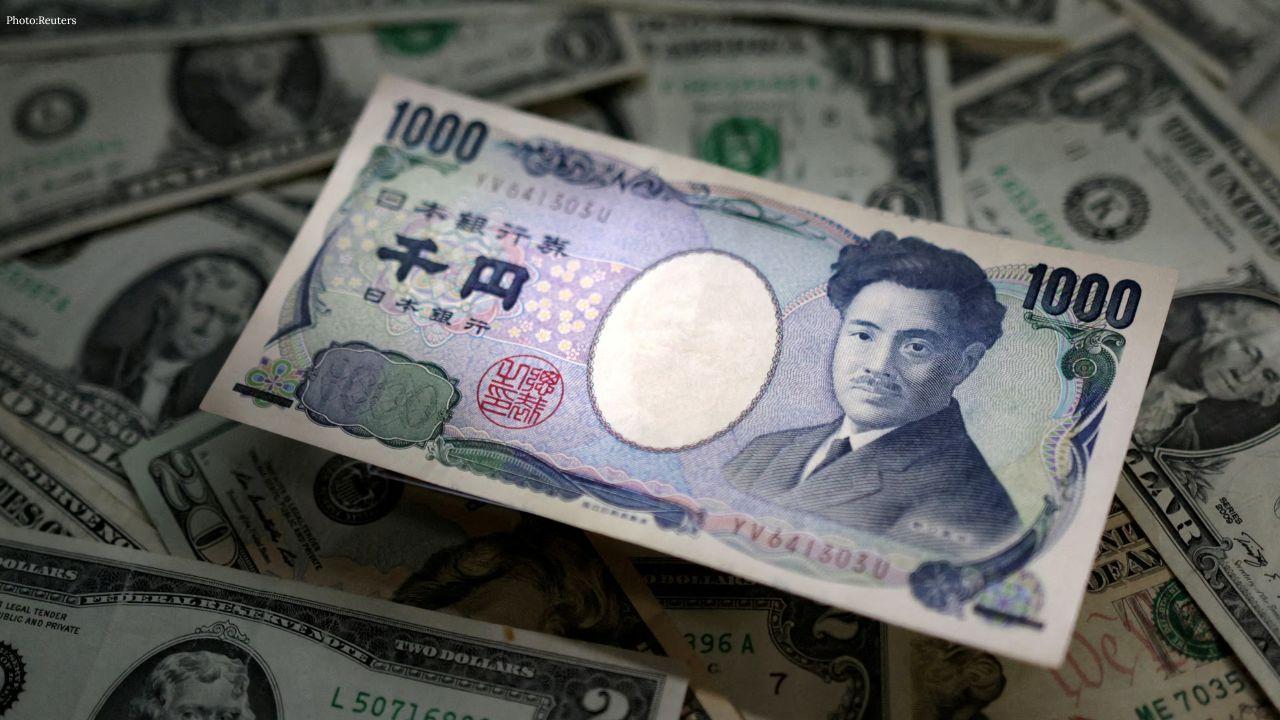
The yen carry trade is a widely used investment strategy in which investors borrow money in a currency with relatively low interest rates and use those funds to invest in assets or currencies that offer higher returns. For years, the Japanese yen has been one of the world's most popular funding currencies because Japan maintained extremely low interest rates for a long period. Investors could borrow yen at relatively low costs and then convert the money into currencies such as US dollars, Mexican pesos and New Zealand dollars. They could then invest the converted funds in bonds, financial instruments or other assets that offered higher yields.
The strategy is attracting renewed attention because the Japanese yen has recently strengthened to a seven-month high against the US dollar. The move has raised questions about whether investors are beginning to reduce their yen-funded positions. Another major factor is changing expectations surrounding the Bank of Japan (BOJ). Investors are increasingly anticipating that the Japanese central bank could accelerate interest-rate increases, with a possible hike as early as its meeting next week. Higher Japanese interest rates would make borrowing yen more expensive. At the same time, a stronger yen could reduce the potential returns generated by the strategy. Together, those developments could make the traditional carry trade less attractive.
The process is relatively straightforward. An investor first borrows Japanese yen at a comparatively low interest rate. The investor then converts the borrowed yen into another currency offering a higher yield. For example, the funds could be converted into US dollars and invested in dollar-denominated assets. Alternatively, investors may choose higher-yielding currencies such as the Mexican peso, New Zealand dollar or currencies from emerging markets. The investor earns income from the higher-yielding investment while paying interest on the original yen borrowing. At the end of the investment period, the investor converts the proceeds back into yen and repays the borrowing. The potential profit comes primarily from the difference between the interest earned and the cost of borrowing.
The potential return from a dollar-yen carry trade has declined compared with previous years. Annualised returns are currently estimated at roughly 2.5% to 3.5% based on the interest-rate difference between the United States and Japan. That compares with around 5% to 6% that the strategy could generate in 2024. The lower return reflects changes in interest-rate conditions between the two countries. Investors therefore have to consider not only the interest-rate gap but also the direction of the yen when deciding whether to maintain these positions.
Japan's extremely low interest rates made the yen particularly attractive to global investors. For years, Japanese monetary policy kept borrowing costs unusually low compared with many other major economies. The modern version of the yen-funded carry trade became particularly prominent around 2013, when former Prime Minister Shinzo Abe's economic policies included aggressive monetary easing. At the same time, interest rates in the United States were eventually moving higher, while the yen weakened. This created favourable conditions for investors willing to borrow yen and put the money into higher-yielding overseas assets.
During that period, the US Federal Reserve raised interest rates rapidly as it attempted to control inflation, while the Bank of Japan maintained an exceptionally accommodative monetary policy. The widening difference between US and Japanese rates encouraged more investors to use the yen as a funding currency.
There is no single figure that accurately captures the total size of the global yen carry trade. The reason is that many different investors use different structures, derivatives and levels of leverage. However, analysts use several indicators to estimate its scale. A Jefferies analysis of Bank for International Settlements data found that cross-border yen borrowing reached around 360 trillion yen, equivalent to approximately US$2.34 trillion, by March. That represented the largest build-up of yen-funded borrowing in roughly three decades, according to the analysis. Another indicator comes from speculative positioning in the futures market. US Commodity Futures Trading Commission data showed that net short positions on the yen stood at 92,227 contracts during the week ending September 1. Although that marked a third consecutive weekly increase, the figure remained below the two-year high of 163,412 contracts recorded during the week ending July 1.
The actual exposure linked to the carry trade could be significantly larger than visible borrowing figures suggest. Hedge funds and computer-driven investment funds frequently use leverage, meaning they can control positions much larger than the amount of capital they initially invest. Leverage can increase potential returns when markets move in the investor's favour. But it can also magnify losses when currencies move unexpectedly. If the yen suddenly strengthens, highly leveraged investors may be forced to close their positions quickly. That can create additional demand for the yen as investors buy the currency to repay their borrowing. The resulting currency movement can then accelerate the unwinding process.
The yen carry trade gained widespread attention in 2024 after a sudden change in Japanese monetary policy triggered a major market reaction. The BOJ unexpectedly raised interest rates in July 2024 to a level that was then the highest in roughly 15 years. The yen subsequently strengthened sharply, moving from around 154 yen per US dollar to around 141 within only a few days. That rapid currency movement created significant pressure on investors who had borrowed yen. Many carry-trade investors were forced to close their positions. They sold assets purchased with borrowed money and bought yen to repay their loans.
Market conditions are currently different from those seen during the 2024 shock. There is no clear indication that the same kind of disorderly unwinding is taking place now. One important difference is that Bank of Japan officials have been signalling for several weeks that another rate increase could be approaching. Officials have also indicated that additional increases could eventually be required depending on economic conditions. Because investors have had more time to prepare for a potential policy change, markets have so far been able to absorb the stronger yen and expectations of tighter monetary policy relatively calmly. Analysts have noted that the yen's recent movements have been comparatively orderly. That suggests investors may already be adjusting their positions rather than being caught completely off guard.
Recent developments have also encouraged some carry-trade investors to consider alternatives to the yen. Following yen-buying intervention by Tokyo and Washington at the end of July, some investors appear to have shifted towards the Swiss franc as another funding currency. The Swiss franc, like the yen historically, has been associated with relatively low borrowing costs compared with some higher-yielding currencies. However, switching funding currencies does not eliminate risk. Investors still have to consider changes in interest rates, currency movements and global market conditions.
A continued rise in the yen could put additional pressure on existing carry trades. Investors holding overseas assets financed through yen borrowing could face higher repayment costs if they need to convert those assets back into yen. If the currency appreciation is gradual, investors may be able to adjust their positions in an orderly manner. A rapid and unexpected rise would be more concerning. Large investors could rush to reduce exposure at the same time, potentially creating sharp movements in currencies, equities and bonds. That is why traders and economists are closely watching the upcoming BOJ meeting and developments in the Japanese currency.
Although the strategy originates from differences in borrowing and investment costs, its impact can extend far beyond Japan. The yen has been used as a funding currency by international investors for many years. Borrowed yen has been invested in a wide range of global assets, including government bonds, equities and emerging-market currencies. If investors suddenly unwind these positions, they may have to sell those assets and buy yen.
Read Also: Joe Root Welcomes Kevin Pietersen's Return to England Setup
The next Bank of Japan policy meeting has become a major focus for financial markets. Investors are trying to determine whether Japanese policymakers will raise interest rates and how strongly they will signal future increases. A higher rate would narrow the gap between Japanese borrowing costs and rates in countries such as the United States. That could weaken one of the main reasons investors have historically borrowed yen.
If the yen rises sharply following a rate decision, carry-trade investors could face additional pressure to reduce their positions. Yen carry trade in simple terms The concept can be explained in a simple sequence: Borrow yen at a low interest rate → convert it into a higher-yielding currency → invest in higher-return assets → earn the interest-rate difference → convert the money back into yen and repay the loan. The strategy works best when the interest-rate difference is large and the yen remains stable or weakens. It becomes more dangerous when Japanese interest rates rise or the yen strengthens rapidly.
The future direction of the yen carry trade will depend on several factors, including Japanese interest-rate policy, US interest rates, currency movements and broader global market conditions. The recent rise in the yen has already prompted investors to reassess the strategy. However, the current situation does not necessarily mean that the entire carry trade is about to collapse. Unlike the sudden policy shock seen in 2024, markets have had more time to prepare for the possibility of further Japanese rate increases.







Santner rejects BBL deal to focus on New Zealand schedule
Mitchell Santner rejects a lucrative BBL deal to focus on New Zealand cricket, captaincy and upcomin

New Zealand Focus on Discipline After South Africa Loss
New Zealand targets better discipline and defence after losing to South Africa, with the All Blacks

Joe Root Welcomes Kevin Pietersen's Return to England Setup
Joe Root welcomes Kevin Pietersen's return to the England team as a mentor ahead of the 2027 World C

Japan Ambassador Takes Holy Dip in Ganga During Rishikesh Visit
Japan Ambassador Ono Keiichi visited Rishikesh, took a holy Ganga dip and joined the Ganga aarti, ca

Sabah Spends Over RM1 Billion to Improve Water Supply
Sabah has spent over RM1 billion on water supply improvements, including replacing ageing and stolen

Authorities Urge Review of Minimum Age for Mountain Expeditions
Malaysia authorities seek a review of the minimum age for mountain expeditions after six climbers, i