You have not yet added any article to your bookmarks!
Join 10k+ people to get notified about new posts, news and tips.
Do not worry we don't spam!
Post by : Anis Farhan
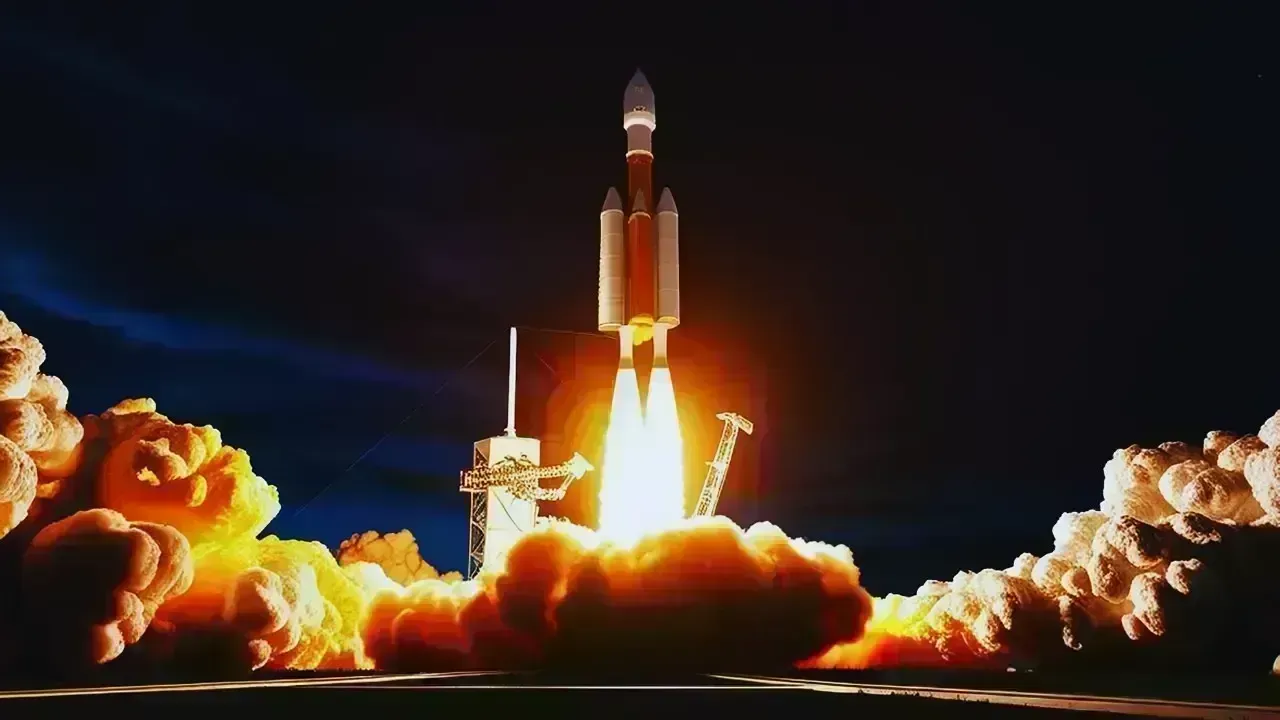
Space exploration is entering a new golden age, and 2026 stands at the centre of this transformation. Unlike earlier eras dominated by a single superpower, today’s space missions are driven by a diverse mix of national agencies, private companies, and international partnerships. The focus has shifted from symbolic achievements to long-term presence, scientific discovery, and planetary defence.
In 2026, humanity will not only return to the Moon with renewed purpose but also push deeper into the solar system, targeting asteroids, advancing space telescopes, and testing technologies critical for future Mars missions. Together, these missions represent a decisive step toward making space exploration sustainable, scientific, and globally collaborative.
The Moon is once again the primary focus of global space ambitions. Unlike the short-duration missions of the past, 2026’s lunar projects aim to establish infrastructure, study resources, and prepare for long-term human presence.
At the heart of this effort is the Artemis programme led by NASA, which continues to drive international momentum toward sustained lunar exploration.
NASA’s Artemis roadmap is designed to take humans back to the Moon and keep them there. While earlier Artemis missions tested hardware and orbital operations, 2026 focuses heavily on enabling technologies—habitats, landers, and logistics.
These missions are laying the groundwork for future lunar bases near the Moon’s south pole, a region believed to contain water ice crucial for life support and fuel production.
The lunar race in 2026 is no longer a two-player game. Space agencies across the world are advancing their own Moon missions, often in collaboration rather than competition.
The European Space Agency is contributing key modules, scientific instruments, and astronaut training to lunar initiatives, reinforcing Europe’s role in deep-space exploration.
Meanwhile, ISRO continues to expand its lunar science ambitions, building on past successes and strengthening India’s position in planetary research.
China’s lunar programme remains one of the most ambitious in the world. In 2026, its missions are expected to focus on detailed exploration of the Moon’s south pole, including surface mapping, sample analysis, and potential resource identification.
These efforts align with China’s long-term vision of establishing a permanent research station on the Moon in the coming decades.
Asteroids are time capsules from the early solar system. Studying them helps scientists understand planetary formation, the origins of water and organic molecules, and potential threats to Earth.
In 2026, asteroid exploration missions will move from reconnaissance to deeper scientific investigation, focusing on composition, structure, and orbital behaviour.
Planetary defence has become a serious scientific and policy priority. Missions planned around 2026 aim to test technologies that could one day prevent asteroid impacts.
Data gathered from these missions will help refine impact prediction models and response strategies, turning science fiction into practical preparedness.
One of the most valuable aspects of asteroid missions is sample return. By analysing material in Earth-based laboratories, scientists can gain insights far beyond what remote instruments allow.
Several 2026-era missions are designed to either collect new samples or analyse those already en route, deepening humanity’s understanding of the building blocks of the solar system.
2026 is also significant for astronomy beyond our solar system. New space telescopes are expected to expand humanity’s ability to study distant galaxies, exoplanets, and cosmic phenomena.
These observatories will complement existing platforms, offering higher resolution, broader wavelength coverage, and longer operational lifespans.
Advanced telescopes launching or entering operational phases around 2026 will focus on detecting atmospheric signatures on exoplanets—such as oxygen, methane, and water vapour—that could indicate potential habitability.
This research brings humanity closer to answering one of its oldest questions: are we alone in the universe?
While 2026 is not expected to see crewed Mars missions, it plays a crucial preparatory role. Robotic missions and orbital studies planned around this time will test technologies needed for future human journeys.
These include entry, descent, and landing systems, long-duration life-support concepts, and resource utilisation strategies.
Private space companies are no longer limited to launch services. In 2026, commercial players are increasingly involved in spacecraft design, lunar landers, satellite deployment, and even space station development.
This shift reduces costs, accelerates innovation, and introduces new models of collaboration between governments and industry.
While the International Space Station continues to support scientific research, planning for its eventual successor is well underway. Commercial space stations and modular orbital platforms are being tested as future research hubs.
The lessons learned in 2026 will shape how humans live and work in low Earth orbit for decades to come.
Many 2026 missions focus on testing advanced propulsion systems, autonomous navigation, and energy solutions. These technologies are essential for deep-space missions where communication delays and harsh environments demand self-reliance.
Success in these areas directly impacts future missions to Mars and beyond.
Space exploration in 2026 reflects a complex mix of collaboration and strategic competition. Joint missions and data sharing coexist with national ambitions and geopolitical signalling.
Despite tensions on Earth, space continues to serve as a domain where scientific cooperation often prevails.
The missions planned for 2026 mark a transition from exploration to presence. Whether on the Moon, in orbit, or through robotic explorers, humanity is moving toward sustained activity beyond Earth.
This shift has profound implications for science, technology, economy, and even philosophy.
Major space milestones have always inspired young minds. The diversity and ambition of 2026’s missions are expected to fuel interest in science, engineering, and space careers worldwide.
Universities, research institutions, and space agencies are already aligning programmes to support this surge in interest.
Despite careful planning, space missions carry inherent risks. Launch failures, technical malfunctions, and budget constraints remain real challenges.
However, the redundancy and international collaboration built into many 2026 missions help mitigate these risks.
If even a majority of planned missions succeed, 2026 could be remembered as the year humanity truly prepared for interplanetary life.
The data, experience, and confidence gained will shape exploration strategies well into the 2030s and 2040s.
The 2026 space mission calendar reflects a world that no longer sees space as distant or symbolic, but as a practical frontier for science, security, and survival. From Moon landings designed for permanence to asteroid missions that protect Earth, the year represents a convergence of ambition and responsibility.
As spacecraft launch, land, orbit, and return, 2026 will stand as a defining chapter in humanity’s expanding presence beyond Earth—one that brings the Moon closer, asteroids within reach, and the universe into sharper focus.
This article is intended for informational and editorial purposes only. Mission timelines, objectives, and launch schedules are subject to change due to technical, regulatory, or budgetary factors. Readers should refer to official space agency announcements for the latest updates.








AI Companies Expected to Drive Most US Earnings Growth in Q3
AI companies are expected to drive US third-quarter earnings growth as investors assess tech profits

Money Market Funds See Record Inflows as Global Bond Selloff Intensifies
Global money market funds attract $153.81 billion as bond yields rise, inflation fears persist and i

Meta Bans TikTok Ads on Facebook and Instagram in Seven Countries
Meta has banned TikTok ads in seven countries, escalating competition over social media users, adver

ASML and Zeiss Target Next-Generation Chip Technology in 10 Years
ASML and Carl Zeiss are developing Hyper NA technology to print smaller chip circuits, with the next

Rabada Misses First Australia Test as South Africa Pick Two Spinners
Kagiso Rabada misses the opener as South Africa vs Australia begins, with Anrich Nortje returning an

Starc Compares Australia's Tough Year to McIlroy's Major Sweep
Mitchell Starc says Australia winning three away Test series and the World Cup would match Rory McIl