You have not yet added any article to your bookmarks!
Join 10k+ people to get notified about new posts, news and tips.
Do not worry we don't spam!
Post by : Rameen Ariff
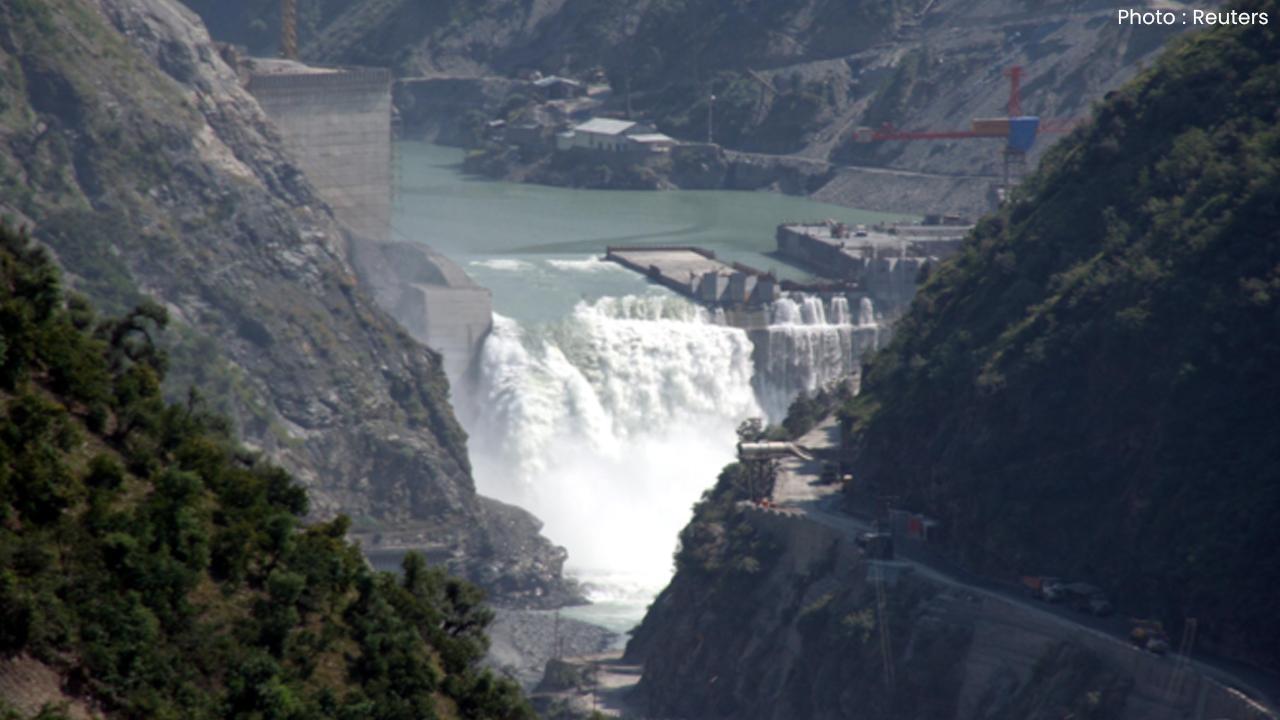
Afghanistan has announced plans to restrict the flow of water into Pakistan by constructing dams on the Kunar River, a move that closely mirrors India’s recent action on the Indus Waters Treaty. The Taliban’s decision aims to assert control over its water resources while responding to tensions along the Pakistan-Afghanistan border.
Supreme Leader Mawlawi Hibatullah Akhundzada ordered the construction, with the Taliban’s acting Water Minister, Mullah Abdul Latif Mansoor, confirming that domestic companies will lead the dam projects. “Afghans have the right to manage their own water,” Mansoor said, emphasizing the importance of national control over key rivers.
The Taliban’s plan comes amid growing security concerns along the 2,600-km Durand Line, the disputed border with Pakistan. Islamabad has accused Kabul of supporting the Tehreek-e-Taliban Pakistan, which Pakistan has designated a terrorist group.
Echoing India’s Indus Waters Move
Analysts say Afghanistan’s move echoes India’s suspension of the Indus Waters Treaty (IWT) after the terror attack in Pahalgam, Jammu and Kashmir, on April 22, 2025. India halted water sharing under the 65-year-old treaty just 24 hours after the attack, significantly affecting Pakistan’s access to Indus waters.
The Kunar River, which originates in Pakistan’s Chitral district in the Hindu Kush mountains, flows nearly 500 km south into Afghanistan through Kunar and Nangarhar provinces before joining the Kabul River. The Kabul River, in turn, flows back into Pakistan, joining the Indus near Attock in Punjab. These rivers are vital for irrigation, drinking water, and hydroelectric power in Pakistan, particularly in the Khyber Pakhtunkhwa region.
If Afghanistan builds dams on the Kunar or Kabul rivers before they enter Pakistan, it could severely limit Pakistan’s water supply for farms, households, and electricity generation. Unlike the Indus Waters Treaty between India and Pakistan, there is currently no formal treaty regulating water sharing between Afghanistan and Pakistan, leaving Islamabad with no immediate legal recourse.
Taliban’s River Management Strategy
Since taking power in August 2021, the Taliban has focused on controlling rivers and canals across Afghanistan. This includes projects that flow west toward Central Asia and rivers critical for national food security. The controversial Qosh Tepa canal in northern Afghanistan, for example, is set to turn 550,000 hectares of arid land into farmland, but could divert up to 21% of the Amu Darya River, potentially affecting Uzbekistan and Turkmenistan.
During a recent visit to India, Taliban Foreign Minister Amir Khan Muttaqi praised Indian support for dam construction in Herat province. A joint statement highlighted the importance of “sustainable water management” and cooperation on hydroelectric projects to meet Afghanistan’s energy needs and boost agricultural development.
Experts warn that Afghanistan’s river dam projects could escalate tensions with Pakistan, already facing reduced water flow due to India’s suspension of the Indus Waters Treaty. The Taliban’s move underscores the strategic importance of rivers in regional geopolitics and highlights the potential for water disputes to fuel cross-border tensions.










Rabada Misses First Australia Test as South Africa Pick Two Spinners
Kagiso Rabada misses the opener as South Africa vs Australia begins, with Anrich Nortje returning an

Starc Compares Australia's Tough Year to McIlroy's Major Sweep
Mitchell Starc says Australia winning three away Test series and the World Cup would match Rory McIl

France’s Sesterce Plans $11 Billion AI Data Centre in Finland
Sesterce plans a $11 billion AI data centre in Finland, with major expansion, green energy plans and

Danaher to Launch AI-Powered Autonomous Research Lab in 2027
Danaher plans an AI research lab for 2027, combining robotics and automation to speed up drug discov

Musk Welcomes German Support for Tesla Driver Assistance Tech as EU Approval Push Continues
Elon Musk welcomes Germany's backing for Tesla FSD as the company seeks EU approval amid speed, safe

Microsoft and Nvidia CEOs to Unveil AI Laptop at San Francisco Event
Microsoft and Nvidia showcase a new AI laptop with RTX Spark chips as they push powerful local AI co