You have not yet added any article to your bookmarks!
Join 10k+ people to get notified about new posts, news and tips.
Do not worry we don't spam!
Post by : Rohit Dhiman
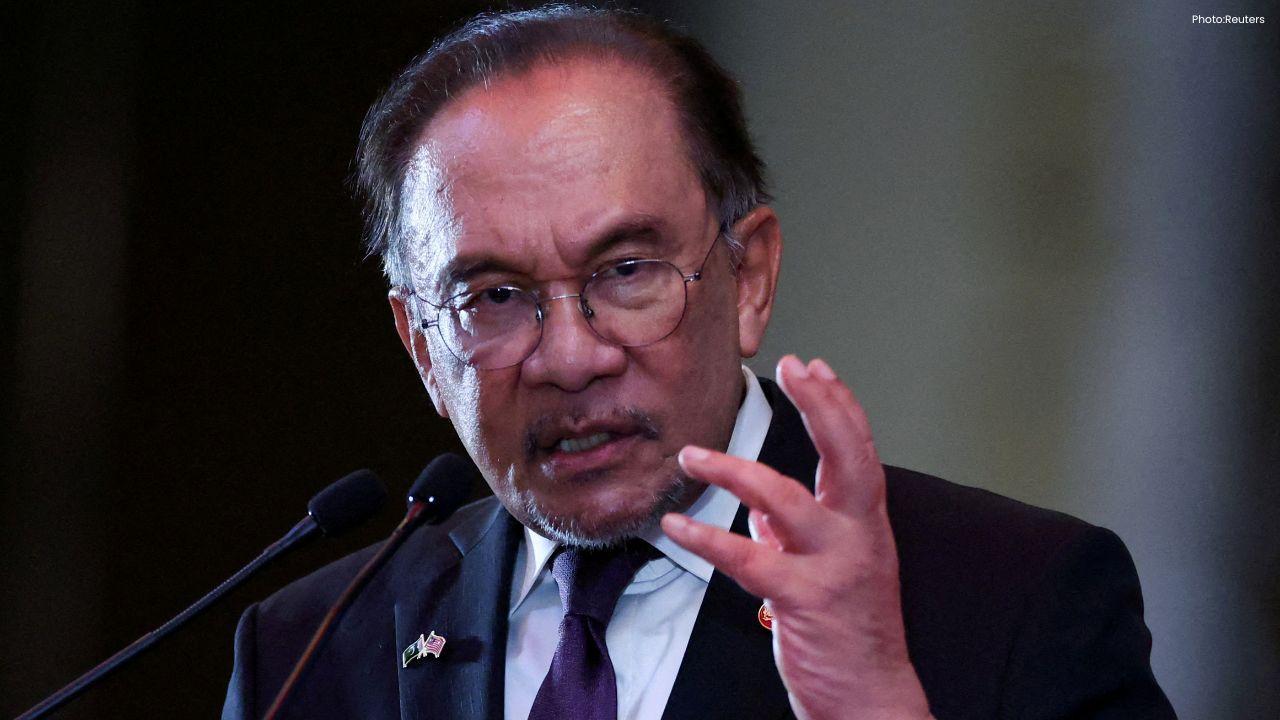
Prime Minister Anwar Ibrahim has criticised the actions of Negeri Sembilan Menteri Besar Ismail Lasim and members of the state executive council in connection with the dispute involving the state’s royal institution. Speaking to Malaysian media while travelling by high-speed train from Shanghai to Hangzhou, Anwar said disagreements involving the monarchy could be raised through the appropriate constitutional and legal channels. However, he objected to what he described as an attempt by state leaders to question the position of the ruler. Anwar referred to the actions as “uncivilised” and disrespectful, stressing that the constitutional position of the state ruler must be protected. He said he found it difficult to understand why the Menteri Besar and Exco members had taken decisions concerning the position of the Yang Dipertuan Besar.
The controversy dates back to an April 19 proclamation concerning the position of Tuanku Muhriz Tuanku Munawir as Yang Dipertuan Besar of Negeri Sembilan. The state executive council later affirmed the proclamation and maintained that the removal of Tuanku Muhriz was legitimate. Ismail Lasim also confirmed that the Exco had unanimously discussed and endorsed the matter and had instructed the state secretary to proceed with the gazettement process. The development was challenged by the Negeri Sembilan Dewan Keadilan dan Undang, or DKU, which maintained that Tuanku Muhriz remained the lawful ruler. The DKU said matters involving Malay customs and the selection, appointment, abdication or removal of the Yang Dipertuan Besar fall within the relevant constitutional framework and customary institutions. It also maintained that there was no vacancy in the position while Tuanku Muhriz remained lawfully in office.
A major development came on Sept 17, when the Attorney-General’s Chambers said the April proclamation was invalid. According to the AGC, the proclamation did not comply with mandatory requirements under Article 10 of the Laws of the Constitution of Negeri Sembilan 1959. The AGC also said there was no evidence that the specified disqualification grounds applied to Tuanku Muhriz. The AGC further stated that the Menteri Besar and the state executive council did not have unilateral authority to depose the Yang Dipertuan Besar or declare the position vacant. It said constitutional and legal procedures had to be followed and noted that the dispute was already before the High Court in Seremban, where an interlocutory injunction remained in force.
Against this backdrop, Anwar said the federal government would follow the Federal Constitution in dealing with the controversy. He stressed that differences of opinion were possible, but disputes involving the position of a ruler should be handled through the established constitutional process. Anwar said the federal government would defend the Constitution where it believed constitutional provisions were being violated. He also said the position of the royal institution should not be questioned outside the procedures provided by law. Earlier, Anwar had already urged the Negeri Sembilan government and Ismail Lasim not to give in to political pressure while dealing with the controversy. He said Malaysia’s constitutional monarchy required the relevant rules and procedures to be followed.
The situation took another significant turn on Sept 20. Tuanku Muhriz revoked the appointments of the members of the Negeri Sembilan State Executive Council with immediate effect. The palace said the decision followed findings that the Exco members had breached their oaths of office. The members had taken their oaths and signed pledges of allegiance before Tuanku Muhriz on Aug 7, ahead of their appointments. The palace cited Article XXXVIII(5) of the Laws of the Constitution of Negeri Sembilan 1959, under which an Exco member other than the Menteri Besar holds office at the pleasure of the Yang Dipertuan Besar.
Following the revocation, the Menteri Besar was required to submit a new list of candidates for the state executive council for the ruler’s consideration and consent under the state constitution.
The development was followed by a meeting between Anwar and Tuanku Muhriz. On Sept 21, Anwar travelled to the Negeri Sembilan Palace in Kuala Lumpur and held an audience with the ruler for nearly an hour. The meeting came shortly after the revocation of the Exco appointments. The meeting was closely watched because of the constitutional questions surrounding the state government, the royal institution and the authority of different state bodies. Anwar did not provide a detailed public statement immediately after the meeting. The federal government has continued to maintain that matters involving the state’s constitutional and customary framework must be addressed through the proper legal process.
The dispute has attracted wider attention because Negeri Sembilan has a distinctive constitutional and customary system for its monarchy. Unlike the hereditary succession arrangements commonly associated with other Malaysian states, Negeri Sembilan’s royal system involves the Undang and the Dewan Keadilan dan Undang in matters concerning the selection and position of the Yang Dipertuan Besar. The AGC has pointed to the Laws of the Constitution of Negeri Sembilan 1959 as the relevant legal framework, while the DKU has also stressed its role in matters connected with Malay customs and the state’s traditional institutions. This means the controversy is not simply a disagreement between political figures. It involves questions about constitutional authority, customary institutions, the powers of the state executive and the role of the ruler.
The dispute is centred on Negeri Sembilan, one of Malaysia’s 13 states, where the position of Yang Dipertuan Besar is governed by a distinctive combination of constitutional provisions and traditional institutions. The immediate controversy concerns Tuanku Muhriz Tuanku Munawir, the state ruler, and an April proclamation that purported to affect his position. The AGC said the proclamation was invalid, while the DKU separately maintained that Tuanku Muhriz remained the lawful ruler. The state Exco had earlier taken a different position before the subsequent revocation of its members’ appointments by Tuanku Muhriz. These developments have created a complex constitutional dispute involving the state government, royal institution, customary authorities and federal legal authorities.
The next stage is expected to depend heavily on the constitutional and legal processes already underway. The AGC has called for the court process to be respected, while the DKU has also urged all parties to follow the relevant constitutional framework. Meanwhile, the revocation of the Exco appointments creates an additional administrative issue for the Negeri Sembilan government because a new list of state executive councillors has to be submitted for consideration under the state constitution. For the federal government, Anwar has indicated that the central concern is adherence to constitutional procedures and respect for the royal institution. The dispute remains politically and constitutionally sensitive, with several institutions having issued positions on different aspects of the controversy. Its eventual resolution will depend on the applicable constitutional provisions, legal proceedings and decisions taken through the authorised state institutions.
Read Also: India, Bhutan Strengthen Partnership Through Gelephu Mindfulness City
Anwar criticised the actions of the state Menteri Besar and Exco members, describing them as “uncivilised” and disrespectful in relation to the royal institution.
Tuanku Muhriz Tuanku Munawir is the Yang Dipertuan Besar of Negeri Sembilan and has remained at the centre of the ongoing dispute over the state’s royal institution.
The Attorney-General’s Chambers said the April 19 proclamation did not comply with mandatory requirements under the Laws of the Constitution of Negeri Sembilan 1959 and said the state executive did not have unilateral authority to remove the ruler.
Tuanku Muhriz revoked the appointments of the 10 state executive councillors on Sept 20, saying they had breached their oaths of office.





Sri Lanka Economy Shows Resilience, But IMF Flags Growing Downside Risks
Sri Lanka economy remains resilient, but IMF warns of downside risks from energy costs, inflation an

Milne, Bracewell Return as Ravindra Misses New Zealand’s India T20 Series
New Zealand name squad for India T20 series as Rachin Ravindra misses the matches, while Adam Milne

David Miller Says Losing South Africa Contract Changes Nothing
David Miller remains committed to South Africa Cricket despite losing his national contract ahead of

Tiffany Teo Wins Singapore’s First Asian Games Gold in MMA
Singapore’s Tiffany Teo wins historic MMA gold at the Asian Games, securing the country’s first gold

Air Quality Back At Unhealthy Levels In Central Singapore
Singapore haze returns as central PSI crosses 100, with smoke from fires in Sumatra and Kalimantan d
Don’t Lay Off Staff To Cut Costs, Union Urges AirAsia
Nufam urges AirAsia to protect workers as rising jet fuel costs and financial pressure raise concern