You have not yet added any article to your bookmarks!
Join 10k+ people to get notified about new posts, news and tips.
Do not worry we don't spam!
Post by : Meena Ariff
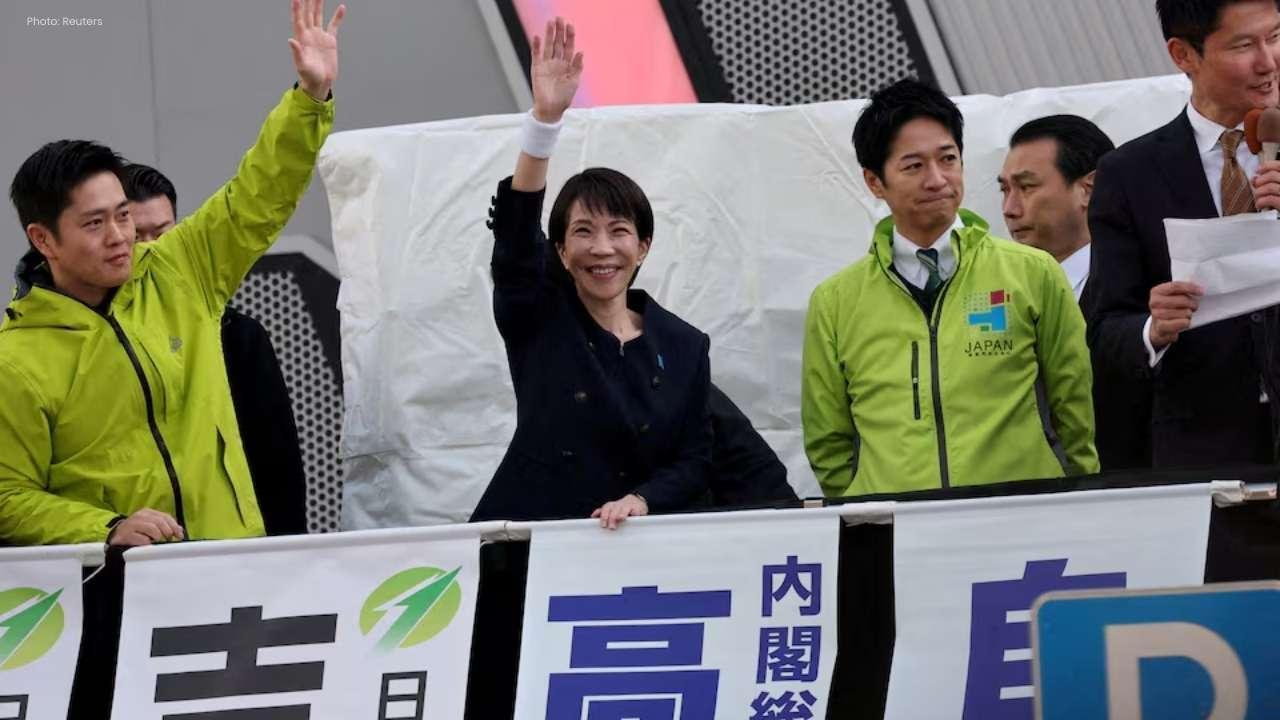
China might reconsider its escalating diplomatic pressure campaign against Japanese Prime Minister Sanae Takaichi if she secures a decisive victory in the snap election set for February 8, sources within the Japanese government and political analysts suggest. This development could have significant implications for the already fragile geopolitical landscape in East Asia.
Since taking office last year, Takaichi has become a focal point of rising tensions between Tokyo and Beijing. Her administration’s stance on Taiwan—an island with a self-governing democratic government that China claims as its own territory—has been a major factor in this diplomatic strain. Shortly after becoming Prime Minister, Takaichi publicly outlined Japan’s possible military and diplomatic responses in the event of a Chinese attack on Taiwan, signaling a firm and assertive posture that Beijing viewed as provocative.
This explicit articulation of Japan’s potential defense policies marks the most significant diplomatic dispute between the two nations in over a decade, according to veteran Japanese diplomats. Beijing has responded with a series of strong diplomatic and economic pressures on Japan, ranging from official condemnations to increased military maneuvers near disputed maritime boundaries.
However, insiders in Tokyo believe that China’s aggressive approach might soften if Takaichi demonstrates overwhelming public support through a convincing election win. “If Takaichi’s mandate is strong, Beijing may have to rethink its tactics, shifting from outright pressure to a more cautious and strategic engagement,” one senior Japanese official noted.
Political analysts also highlight that a clear electoral victory for Takaichi would reinforce her position domestically and internationally, enabling her government to pursue a more assertive foreign policy while compelling China to recalibrate its stance to avoid further escalation. Such a shift could influence broader regional security dynamics, particularly in relation to Taiwan’s security and the U.S.-Japan alliance.
Experts warn, however, that the situation remains complex and unpredictable. While a strong election result may encourage Beijing to dial down its pressure, it may also harden its resolve to counter what it perceives as Japan’s growing alignment with U.S. policies aimed at containing China’s influence in the Indo-Pacific.
The snap election, called unexpectedly by Takaichi, is now viewed not only as a domestic political contest but also as a significant moment that could reshape diplomatic relations in East Asia. The outcome will be closely watched by governments and analysts worldwide, as it will signal the future course of Japan-China ties amid ongoing regional tensions.









Starc Compares Australia's Tough Year to McIlroy's Major Sweep
Mitchell Starc says Australia winning three away Test series and the World Cup would match Rory McIl

France’s Sesterce Plans $11 Billion AI Data Centre in Finland
Sesterce plans a $11 billion AI data centre in Finland, with major expansion, green energy plans and

Danaher to Launch AI-Powered Autonomous Research Lab in 2027
Danaher plans an AI research lab for 2027, combining robotics and automation to speed up drug discov

Musk Welcomes German Support for Tesla Driver Assistance Tech as EU Approval Push Continues
Elon Musk welcomes Germany's backing for Tesla FSD as the company seeks EU approval amid speed, safe

Microsoft and Nvidia CEOs to Unveil AI Laptop at San Francisco Event
Microsoft and Nvidia showcase a new AI laptop with RTX Spark chips as they push powerful local AI co

Man to face charges over perfume thefts at Changi Airport
A 47-year-old man faces charges over perfume theft at Changi Airport after six items worth nearly S$