You have not yet added any article to your bookmarks!
Join 10k+ people to get notified about new posts, news and tips.
Do not worry we don't spam!
Post by : Badri Ariffin
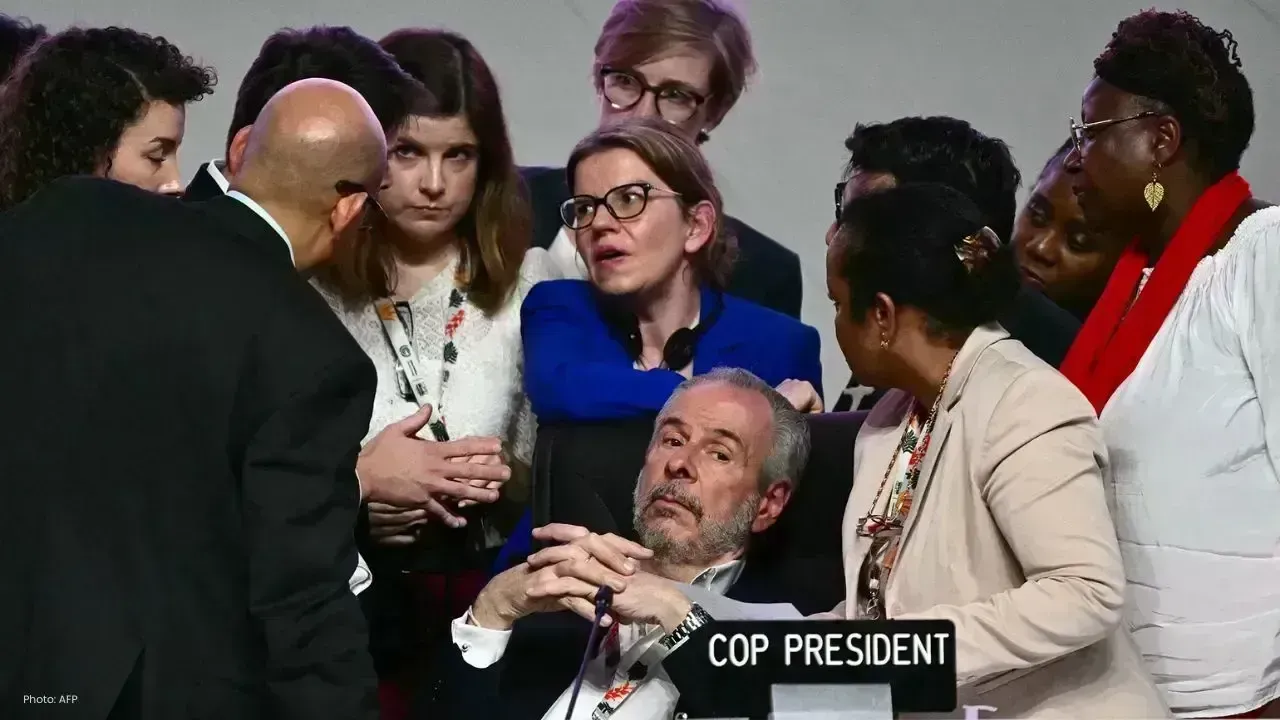
COP30 officially concluded in the tropical heat of Belém, Brazil, after two weeks of vigorous negotiations that tested global resolve against climate change. Central to the discussions was the call to shift away from fossil fuels, a commitment initially introduced at COP28 in Dubai.
Countries from the European Union, the UK, and a coalition of others set firm boundaries, threatening to withdraw from any agreement that overlooked the need to transition from oil, gas, and coal. The urgency was intensified by Brazilian President Luiz Inácio Lula da Silva's call for nations to implement "road maps" aimed at decreasing fossil fuel reliance and reversing the effects of deforestation.
However, significant pushback emerged from major oil-producing nations such as Saudi Arabia and Russia. Diplomats found themselves grappling with the ambitions of progressive countries versus the needs of fossil-fuel-reliant economies. Moreover, a fire disruption at the venue led to urgent evacuations, causing ongoing discussions to shift into various city hotels.
Despite the discord, a resolution was eventually reached as the summit concluded. The final agreement included acknowledgment of historical promises regarding fossil fuels, alongside initiatives for mapping out energy transitions—albeit without formal legal frameworks under the Paris Agreement. Moreover, a pledge to triple climate adaptation funding by 2035 was made, emphasizing support for vulnerable countries.
Outside the main negotiation area, activists, Indigenous groups, and environmental advocates organized large protests, calling for decisive climate actions. Their message resonated: while talks are vital, immediate and practical solutions are crucial in tackling the climate emergency.
The outcomes of COP30 illuminate the ongoing struggle within global climate diplomacy: harmonizing ambition with practicalities, and the necessity for multinational collaboration in a divided geopolitical arena. As the world inches closer to achieving its climate goals, the path ahead remains intricate, necessitating persistent work and unified political determination.









Rabada Misses First Australia Test as South Africa Pick Two Spinners
Kagiso Rabada misses the opener as South Africa vs Australia begins, with Anrich Nortje returning an

Starc Compares Australia's Tough Year to McIlroy's Major Sweep
Mitchell Starc says Australia winning three away Test series and the World Cup would match Rory McIl

France’s Sesterce Plans $11 Billion AI Data Centre in Finland
Sesterce plans a $11 billion AI data centre in Finland, with major expansion, green energy plans and

Danaher to Launch AI-Powered Autonomous Research Lab in 2027
Danaher plans an AI research lab for 2027, combining robotics and automation to speed up drug discov

Musk Welcomes German Support for Tesla Driver Assistance Tech as EU Approval Push Continues
Elon Musk welcomes Germany's backing for Tesla FSD as the company seeks EU approval amid speed, safe

Microsoft and Nvidia CEOs to Unveil AI Laptop at San Francisco Event
Microsoft and Nvidia showcase a new AI laptop with RTX Spark chips as they push powerful local AI co