
You have not yet added any article to your bookmarks!
Join 10k+ people to get notified about new posts, news and tips.
Do not worry we don't spam!
Post by : Shweta
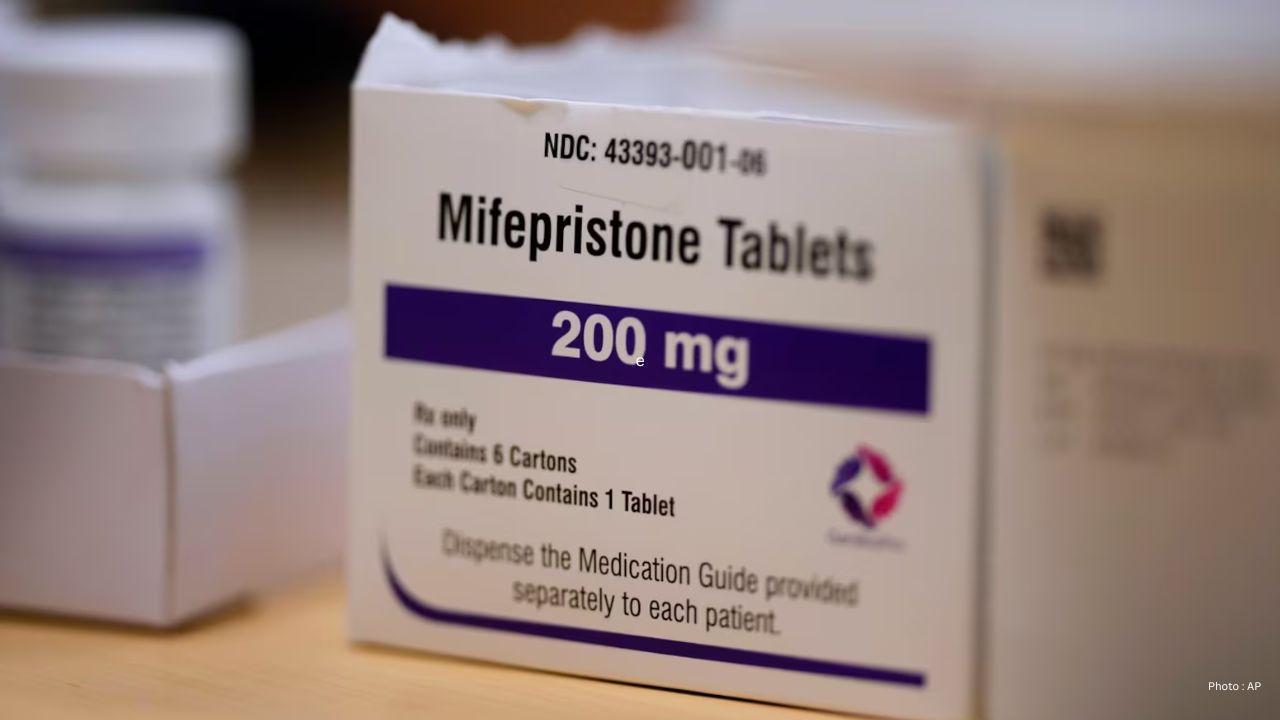
A federal appeals court in the United States has imposed new limitations on the distribution of abortion medication, specifically by prohibiting the mailing of prescriptions for mifepristone. This ruling marks a significant moment in the ongoing abortion discourse since the Supreme Court's decision to overturn Roe v. Wade in 2022.
The ruling was made by a trio of judges from the 5th U.S. Circuit Court of Appeals, based in New Orleans. They determined that prescriptions for mifepristone could no longer be sent via mail and must instead be dispensed directly at clinics or healthcare facilities. This decision temporarily halts federal regulations enacted by the Food and Drug Administration (FDA) that had broadened access to the drug through telehealth and mail services.
Mifepristone, alongside another medication, is commonly utilized for medication abortions in the U.S. The FDA first approved it in 2000, later expanding access during the COVID-19 pandemic when rules were relaxed to allow certified providers to prescribe and send the medication without requiring in-person visits. Following the Supreme Court's decision on Roe v. Wade, mailing abortion pills became a predominant method for women to obtain these services, especially in areas with stringent abortion restrictions.
The state of Louisiana, along with several anti-abortion organizations, initiated this legal challenge, claiming that the FDA did not adequately justify its decision to loosen restrictions on mifepristone. The appeals court echoed these concerns, asserting that mailing abortion medication contradicts the state's abortion laws and public policy. Additionally, the judges raised questions regarding whether the FDA fully assessed potential health risks associated with broader distribution.
Reproductive rights advocates have condemned the ruling, warning it could create significant obstacles for women seeking reproductive health services nationwide. Medical experts and advocacy groups have noted that mifepristone has been safely used for over two decades, with serious complications being exceedingly rare. Critics also argue that mandating in-person visits could particularly burden women in rural regions or those in states where abortion access is already limited.
Furthermore, the ruling jeopardizes telehealth abortion services that surged in popularity after the Supreme Court's Dobbs decision, which allowed states to impose their own abortion regulations. Various Democratic-led states enacted “shield laws” to safeguard physicians who prescribe abortion pills across state lines via online consultations and mail services. The court's new order could complicate these arrangements and ignite legal disputes among states over abortion accessibility.
Reacting swiftly, pharmaceutical companies involved with mifepristone, such as Danco Laboratories and GenBioPro, criticized the ruling, suggesting it could lead to confusion for patients, pharmacists, and healthcare providers everywhere. Legal representatives for these companies plan to pursue emergency appeals with the United States Supreme Court to prevent these restrictions from becoming permanent.
The Biden administration's FDA policies allowing abortion pill delivery by mail have previously faced legal challenges. In 2024, the Supreme Court dismissed a significant challenge against mifepristone, ruling that the plaintiffs lacked standing, yet it did not directly address the drug's safety or legality, setting the stage for potential future litigation like the current case.
Reactions to the ruling are sharply divided along political lines. Conservative lawmakers and anti-abortion advocates have hailed the decision as a victory for states advocating stricter abortion regulations. On the other hand, reproductive rights organizations have accused the court of impeding medical science and hindering access to healthcare due to political agendas. Public discussions on social media reflect a significant divide on this contentious issue.
Legal analysts anticipate that this case is likely to resurface in the Supreme Court given its nationwide implications for reproductive health policy and federal drug regulation. Meanwhile, uncertainty looms for healthcare providers, pharmacies, and countless women across the U.S. who depend on telemedicine and mail-order abortion services.










PM Modi Pays Tribute to Mahatma Gandhi, Urges People to Support Khadi
PM Modi pays tribute to Mahatma Gandhi on Gandhi Jayanti and urges citizens to support Khadi and the

Amazon Seeks to Offload $8 Billion in Nvidia Chips to Investors
Amazon plans to move $8 billion in Nvidia chips to investors, using a new financing model to strengt

Samsung Raises Galaxy S26 Prices as Memory Chip Costs Rise
Samsung raises Galaxy S26 prices in South Korea as rising memory chip costs put pressure on smartpho

Lewis Hamilton Calls Singapore Grand Prix One of F1's Toughest Races
Lewis Hamilton discusses the demanding Singapore Grand Prix and brings Plus44 and Almave to Singapor

Denmark's Pandora Opens World's Largest Jewellery Factory in Vietnam
Pandora opens its largest jewellery factory in Vietnam, expanding global production, strengthening s

Gautam Gambhir Questions Batting-Friendly Pitches After India's Record ODI Chase
Gautam Gambhir questions batting-friendly ODI pitches after India’s record chase, calling for a bett

