You have not yet added any article to your bookmarks!
Join 10k+ people to get notified about new posts, news and tips.
Do not worry we don't spam!
Post by : Maya Rahman
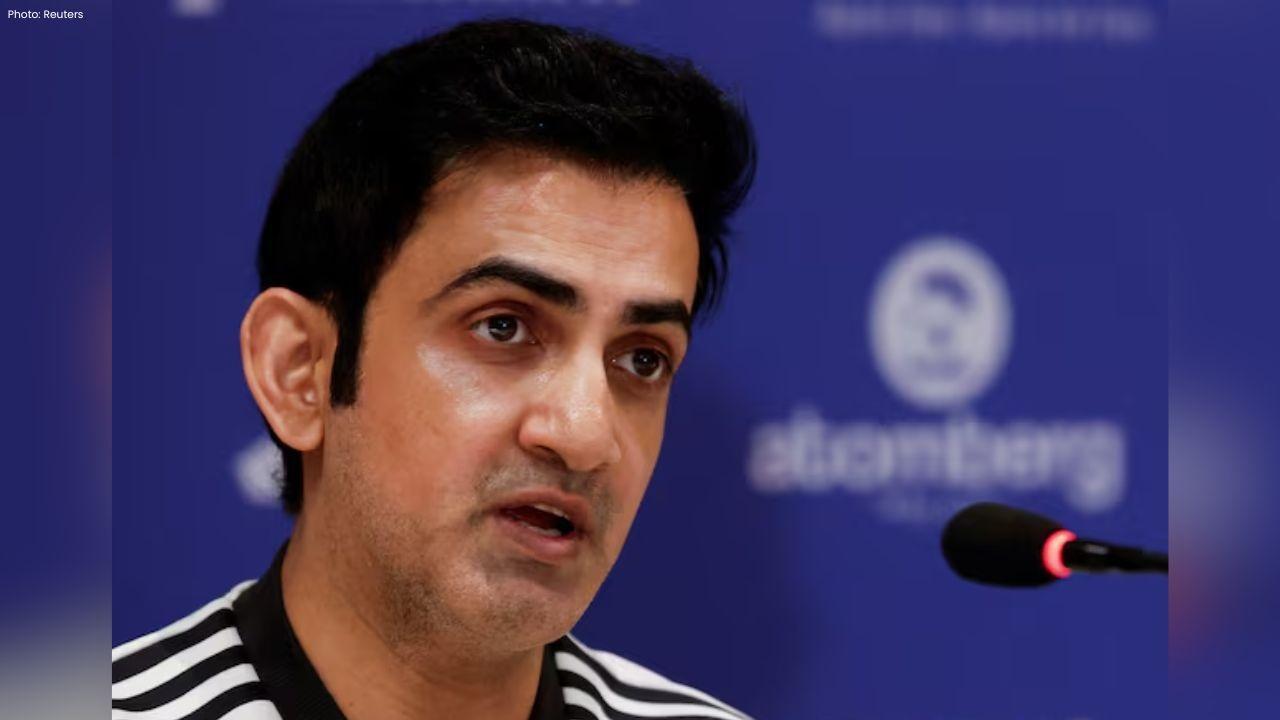
In a surprising turn of events, India’s head coach Gautam Gambhir came to the defense of the Eden Gardens pitch after a striking collapse in the first Test against South Africa. Chasing a mere 124 runs, India ended up all out for just 93, leading to a 30-run loss within three days. Despite the grim score and challenging conditions, Gambhir insisted the pitch was not at fault.
He pointed out that the surface was devoid of “demons,” asserting it was playable. Gambhir acknowledged that while it posed challenges, it was fair and tested the players' skills and mental fortitude. He expressed that the difficulties in batting should not invite criticism of the pitch’s integrity. Notably, most wickets fell to fast bowlers, indicating it wasn’t merely a pitch favoring spinners.
According to Gambhir, those who maintained defensive stances and patience managed to score runs. He highlighted the necessity for Indian players to exhibit improved technique and mental resilience, stating the pitch was appropriately difficult, demanding excellence from both teams. However, he recognized that underperformance would naturally lead to disappointment.
On day three, South Africa began at 97 for 3 whilst trailing by 30 runs. Their captain Temba Bavuma delivered a crucial innings, scoring an unbeaten 55, the match's sole half-century, enhancing South Africa's lead and bolstering his bowlers' confidence.
Simon Harmer, South Africa’s veteran off-spinner, was pivotal, claiming four wickets in the second innings and totaling eight for the match, exhibiting remarkable skill under the conditions. His meticulous bowling maintained pressure on the Indian batsmen throughout.
India faced a further setback as their captain, Shubman Gill, suffered a neck injury after contributing four runs in the first innings. Unable to return for the second, India found themselves with only ten batting players, complicating their chase on a challenging pitch.
The match was characterized by unpredictable bounces and varying spins, with some deliveries behaving erratically. Bavuma noted the difficulties in trusting the bounce, with certain balls misleadingly low, complicating batting efforts.
Despite the challenges, Bavuma relied on his strong defensive skills. His straightforward strategy—focusing on solid defense and playing familiar balls—allowed him to last longer than others and helped steer his team toward a formidable total. His significant 44-run partnership with Corbin Bosch for the eighth wicket further frustrated India and shifted game momentum.
Both teams faced obstacles in attempting flashy shots or scoring quickly. The pitch's demanding nature necessitated patience and defensive prowess. Bavuma’s performance was exemplary, showcasing adaptability under the circumstances.
Ultimately, South Africa celebrated a remarkable victory, while India felt the sting of regret. Gambhir remained steadfast in his conviction that the pitch was fair, stressing the need for the team to take accountability for the batting shortcomings. He emphasized that such challenges are integral to Test cricket, urging teams to adapt and evolve continuously.










Lamborghini Catches Fire on Singapore's ECP, Causing Heavy Traffic
A Lamborghini caught fire on Singapore's ECP, causing heavy traffic and bus delays. No injuries were

Bangkok Airport Duty-Free Area Flooded by Pipe Burst
A burst water pipe flooded the duty-free shopping area at Bangkok's Suvarnabhumi Airport on July 16,

Nine Monks Killed in Thailand Pickup Truck Tragedy
An 11-year-old boy driving a pickup truck crashed into monks during a pilgrimage in northeastern Tha
Anwar Congratulates Xi on CPC's 105th Anniversary
Malaysia reaffirms strong ties with China as PM Anwar Ibrahim sends a congratulatory letter to Presi

Thai Agriculture Team Reviews 2026 Farm Development Plans
Agriculture Ministry officials inspected livestock and organic rice projects in Nakhon Sawan to moni

Thailand, Canada Boost Ties in PM-Level Phone Talks
Thailand and Canada agreed to strengthen trade, security, OECD cooperation and ASEAN-Canada FTA talk