
You have not yet added any article to your bookmarks!
Join 10k+ people to get notified about new posts, news and tips.
Do not worry we don't spam!
Post by : Shweta
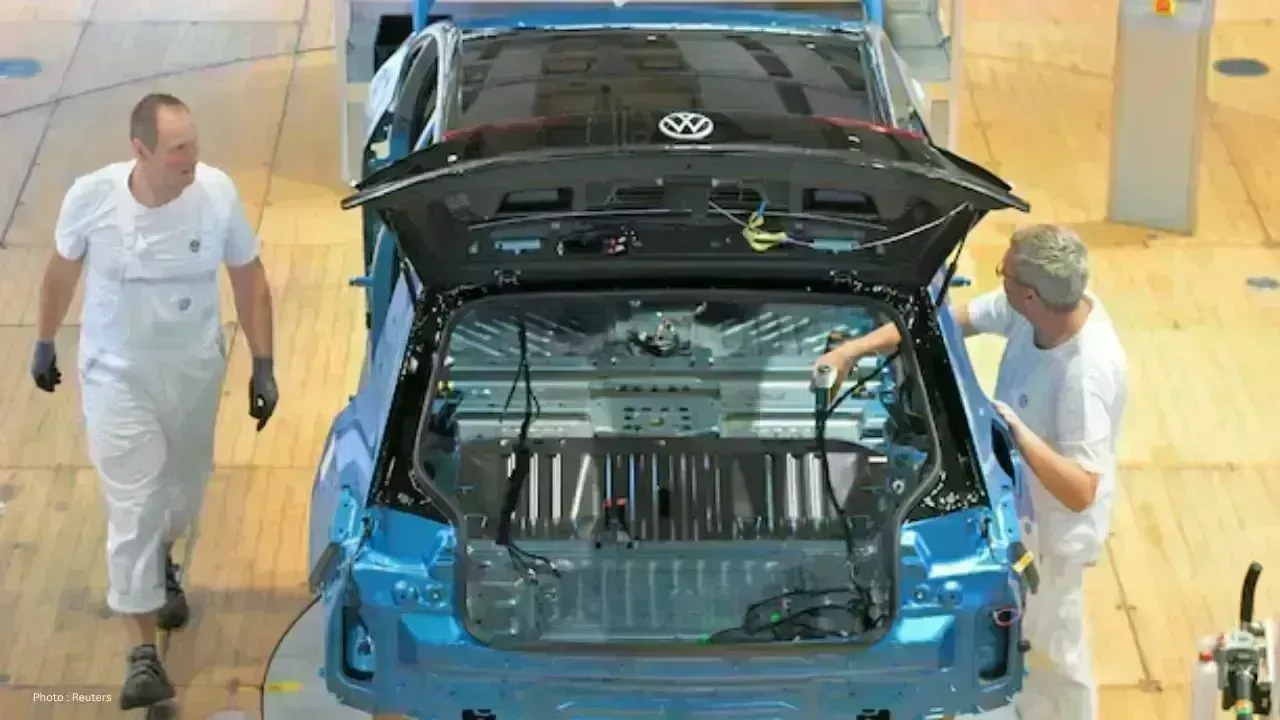
The influential automotive association in Germany has issued a stark warning that the job market could see a further reduction of 125,000 positions by the year 2035 due to significant shifts in the industry. As the automotive sector grapples with intense competition, costs associated with transitioning to electric vehicles, and diminished global demand, concerns are growing about the future viability of this key economic sector in Germany.
The German Association of the Automotive Industry (VDA) highlighted that the shift from conventional gasoline and diesel engines to electric vehicles is taking place during a challenging period marked by high energy costs, economic volatility, and fierce competition from Chinese electric vehicle manufacturers.
This sector not only directly supports hundreds of thousands of jobs but also plays a vital role in the overall economy of Germany. However, experts point out that electric vehicles typically require fewer components and less complex assembly than traditional combustion-engine vehicles, which may lead to a decline in manufacturing jobs over the years.
According to the VDA, many smaller automotive firms and suppliers could be most adversely affected during this transition phase. Companies focusing on engine parts, fuel systems, and transmission components are expected to be particularly exposed as electric vehicle production expands throughout Europe.
The VDA cautioned that lack of adequate government backing and improved industrial policies could jeopardize Germany's status as a leading hub for automotive manufacturing. Industry leaders are advocating for lower electricity rates, faster infrastructure rollout, and enhanced investments in battery production and digital technology.
Major German companies like Volkswagen, BMW, and Mercedes-Benz are already channeling significant funds into electric vehicle initiatives and new facilities. Despite these efforts, companies are still feeling the heat from declining demand in Europe alongside intensifying competition from affordable Chinese electric vehicle options.
In recent years, numerous large manufacturers have revealed plans for restructuring and workforce cuts. Analysts suggest that advances in automation, artificial intelligence, and digital production methods are also diminishing the need for traditional manufacturing jobs within the industry.
The forecast for future job losses comes at a time when Germany's economy is facing a slew of broader industrial hurdles. Several sectors are witnessing a decline in manufacturing activity attributable to weak exports, ongoing global trade disputes, and increased operational costs prompted by soaring energy prices and inflation.
Labor unions have expressed cautious reactions to the industry's report, emphasizing that workers should not bear the full burden of the transition towards electric vehicles. Union representatives are seeking stronger job security measures, retraining initiatives, and long-term strategies to facilitate worker adaptation to evolving technologies.
Political figures in Germany are also feeling the heat to preserve industrial employment while achieving climate objectives aimed at reducing carbon emissions. The European Union’s plan to phase out the sale of new combustion-engine vehicles by 2035 is steering the continent towards a faster transition to electric transport.
Experts believe that the future of Germany’s automotive industry will hinge on how swiftly companies can adapt to new technologies while remaining competitive against rapidly advancing competitors from China and America. There are concerns that delays in developing charging infrastructure, battery production, and digital advancements may further undermine Europe’s standing in the global automotive marketplace.
Despite these alarm bells, the VDA maintains that Germany possesses robust engineering talent, advanced manufacturing capabilities, and world-renowned automotive brands. Leaders within the industry hold a hopeful outlook, suggesting that the nation can stay competitive if there’s collaboration between governments and businesses to better navigate this transition over the coming decade.










PM Modi Pays Tribute to Mahatma Gandhi, Urges People to Support Khadi
PM Modi pays tribute to Mahatma Gandhi on Gandhi Jayanti and urges citizens to support Khadi and the

Amazon Seeks to Offload $8 Billion in Nvidia Chips to Investors
Amazon plans to move $8 billion in Nvidia chips to investors, using a new financing model to strengt

Samsung Raises Galaxy S26 Prices as Memory Chip Costs Rise
Samsung raises Galaxy S26 prices in South Korea as rising memory chip costs put pressure on smartpho

Lewis Hamilton Calls Singapore Grand Prix One of F1's Toughest Races
Lewis Hamilton discusses the demanding Singapore Grand Prix and brings Plus44 and Almave to Singapor

Denmark's Pandora Opens World's Largest Jewellery Factory in Vietnam
Pandora opens its largest jewellery factory in Vietnam, expanding global production, strengthening s

Gautam Gambhir Questions Batting-Friendly Pitches After India's Record ODI Chase
Gautam Gambhir questions batting-friendly ODI pitches after India’s record chase, calling for a bett

