You have not yet added any article to your bookmarks!
Join 10k+ people to get notified about new posts, news and tips.
Do not worry we don't spam!
Post by : Anis Farhan
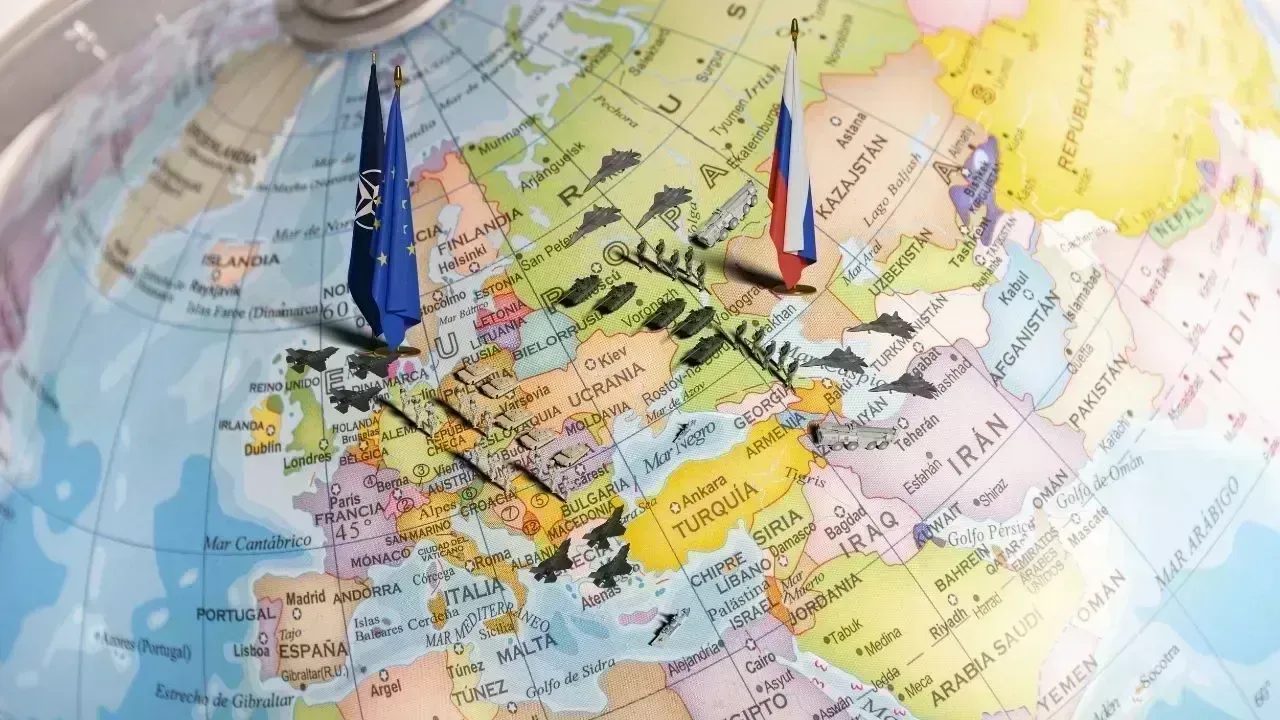
Geopolitical tensions were once perceived as issues discussed in diplomatic corridors or analysed by foreign policy experts. Today, they are experienced in far more personal ways. A war thousands of kilometres away can raise fuel prices at a local petrol pump. A trade dispute between two major economies can increase the cost of smartphones, medicines, or food items.
In recent years, the world has entered a phase where global politics and daily life are tightly interwoven. Conflicts, sanctions, shipping disruptions, and strategic rivalries are shaping economic decisions, consumer behaviour, and even emotional well-being. The line between “international affairs” and “personal impact” has grown increasingly thin.
One of the most immediate ways geopolitical tensions affect everyday life is through rising living costs. Energy, food, and transportation prices are particularly sensitive to global instability.
When conflicts disrupt oil-producing regions or major shipping routes, fuel prices tend to rise. These increases don’t stop at petrol stations—they cascade through the economy. Transport costs rise, pushing up prices of food, consumer goods, and services. Households often feel this impact long before governments respond with policy measures.
Global tensions involving regions such as the Middle East or Eastern Europe have repeatedly demonstrated how fragile price stability can be. Even the fear of escalation is often enough to trigger market volatility.
Food security has become one of the most visible casualties of geopolitical instability. Modern food systems depend on international trade for fertilisers, grains, edible oils, and animal feed. When conflicts disrupt production or trade routes, shortages and price spikes follow.
The war involving Ukraine, for instance, exposed how dependent global markets are on a few key agricultural exporters. Disruptions in wheat, corn, and sunflower oil supplies quickly translated into higher food prices across continents, affecting households far removed from the battlefield.
For families, this means shrinking grocery baskets, changes in diet, and difficult budgeting decisions. For lower-income households, food inflation can quickly turn into a crisis rather than an inconvenience.
Geopolitical tensions also influence employment and business stability. Companies operating in globally connected industries—manufacturing, technology, logistics, and energy—are especially vulnerable.
When sanctions are imposed or trade relations deteriorate, companies may lose access to markets, raw materials, or technology. This can lead to hiring freezes, layoffs, or delayed investments. Even businesses with no direct link to conflict zones may suffer due to weakened consumer demand or disrupted supply chains.
For workers, this uncertainty translates into job insecurity and slower wage growth. Career planning becomes harder when industries face unpredictable global risks, and younger professionals often feel the pressure most acutely.
International travel has become more complicated and expensive in a geopolitically tense world. Airspace closures, security concerns, and fluctuating fuel prices all affect flight routes and ticket costs.
Tourism-dependent economies feel the impact quickly when geopolitical events discourage travel. At the individual level, families postpone vacations, students rethink overseas education plans, and professionals face increased hurdles for international assignments.
Visa policies, border controls, and diplomatic relations increasingly shape where people can go, how easily they can move, and at what cost. Mobility, once taken for granted, now feels conditional and fragile.
Energy has emerged as one of the most politically sensitive resources in the world. Conflicts involving oil- and gas-producing regions have made energy security a top priority for governments and a daily concern for citizens.
Households feel this through higher electricity bills, fuel costs, and heating expenses. Businesses face rising operational costs, which are often passed on to consumers. In colder regions, energy price spikes can become a matter of basic survival rather than financial discomfort.
These pressures are also accelerating debates around renewable energy and energy independence, but transitions take time—leaving consumers exposed in the interim.
Beyond economics, geopolitical tensions have a psychological impact. Continuous exposure to news about wars, instability, and global uncertainty creates a background of anxiety that affects mental well-being.
People worry about the future—job prospects, savings, safety, and the stability of the world their children will inherit. This constant low-level stress is increasingly recognised as a public health issue, especially among younger generations who have grown up amid financial crises, pandemics, and conflicts.
The sense that global events are uncontrollable yet deeply personal contributes to emotional fatigue and a feeling of powerlessness.
Geopolitical rivalries are also reshaping the digital world. Technology restrictions, cybersecurity threats, and data protection concerns increasingly affect everyday digital experiences.
From concerns about data privacy to disruptions in popular apps or services, global tech rivalries are no longer abstract. Ordinary users feel the consequences when platforms change policies, devices become costlier, or digital services face restrictions due to international tensions.
Cybersecurity risks linked to geopolitical conflicts have also raised awareness about digital safety, turning online security into a household concern rather than a corporate one.
One striking feature of the current global climate is how political everyday life has become. Decisions about what to buy, where to travel, how to invest, or even what news to trust are influenced by global tensions.
People increasingly find themselves thinking geopolitically—worrying about sanctions, wars, alliances, and global stability—not because they want to, but because these forces shape their daily realities.
The sense that “global events are distant” has faded. In its place is an understanding that the world is interconnected in ways that make isolation impossible.
Geopolitical tensions may rise and fall, but their effects linger. Markets adapt slowly, supply chains take time to heal, and trust—once broken—is difficult to restore.
For individuals, adapting to this reality means greater financial caution, emotional resilience, and awareness of global developments. While most people have little influence over international politics, they must still navigate its consequences.
In many ways, everyday life today is about managing uncertainty—learning to live, plan, and hope in a world where stability can no longer be assumed.
Geopolitical tensions are no longer distant conflicts discussed only in policy forums or news panels. They shape grocery bills, job security, travel plans, energy costs, and mental health. The global has become personal.
As the world continues to navigate an era of shifting power dynamics and unresolved conflicts, the challenge for individuals is not just staying informed—but staying adaptable. Understanding how geopolitics affects everyday life is no longer optional; it is essential for navigating the modern world.
Disclaimer:
This article is intended for informational purposes only. Geopolitical developments are complex and rapidly evolving, and their impacts may vary across regions and communities.








France’s Sesterce Plans $11 Billion AI Data Centre in Finland
Sesterce plans a $11 billion AI data centre in Finland, with major expansion, green energy plans and

Danaher to Launch AI-Powered Autonomous Research Lab in 2027
Danaher plans an AI research lab for 2027, combining robotics and automation to speed up drug discov

Musk Welcomes German Support for Tesla Driver Assistance Tech as EU Approval Push Continues
Elon Musk welcomes Germany's backing for Tesla FSD as the company seeks EU approval amid speed, safe

Microsoft and Nvidia CEOs to Unveil AI Laptop at San Francisco Event
Microsoft and Nvidia showcase a new AI laptop with RTX Spark chips as they push powerful local AI co
Man to face charges over perfume thefts at Changi Airport
A 47-year-old man faces charges over perfume theft at Changi Airport after six items worth nearly S$

Google Signs 3.6-GW Power Deal With Constellation Energy in US
Google signs a 3.6-GW power deal with Constellation Energy, including nuclear power upgrades to supp