
You have not yet added any article to your bookmarks!
Join 10k+ people to get notified about new posts, news and tips.
Do not worry we don't spam!
Post by : Samjeet Ariff
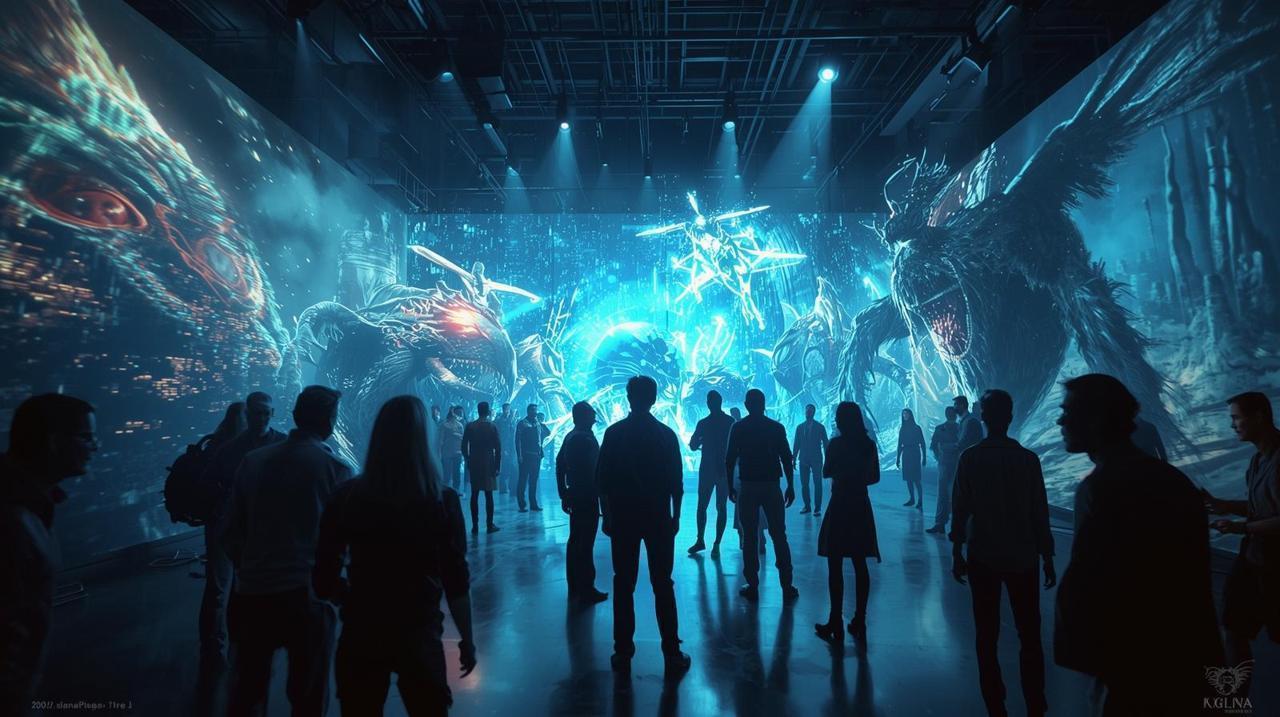
Real-time CGI represents a significant technological evolution in the realm of filmmaking. No longer bound by lengthy rendering times, filmmakers can now instantly generate and visualize intricate digital environments, characters, and effects. This innovation is reshaping every aspect, from pre-production planning to the execution of final scenes. With prominent real-time engines such as Unreal Engine and Unity becoming foundational tools, directors enjoy unprecedented creative flexibility, production teams achieve cost efficiencies, and studios are able to deliver exceptional visuals more rapidly. This article delves into the transformative effects of real-time CGI on contemporary filmmaking, the ongoing challenges it presents, and its future role in cinema's next decade.
Historically, CGI tasks necessitated significant rendering periods. Animators would labor on scenes, awaiting completion over long hours. Real-time technology stands to change this narrative, allowing teams to witness changes in real-time instead of pre-rendering each frame.
This technology accelerates decision-making processes, reduces uncertainties, and enables prompt scene adjustments.
Directors can visualize the final look of a scene during filming rather than merely conjecturing what post-production might yield.
Virtual production merges real-time CGI with live-action shoots. LED walls portray hyper-realistic environments that adapt dynamically to camera movements, allowing actors to interact within these digital realms.
Background lighting integrates seamlessly with performances, yielding more authentic scenes compared to traditional green screens. This approach dramatically reduces reshoot costs due to saved digital environments, with the ability to seamlessly alter weather, time, and location.
Productions like The Mandalorian illustrate the immense power of this technique, prompting a shift among major studios towards virtual sets for greater flexibility and minimized outdoor shooting challenges.
Classic CGI demands extensive render farms, significant manpower, and prolonged timelines. The advent of real-time CGI combats many of these obstacles.
Lesser dependency on physical locations. Decreased set construction expenses. Fewer visual effects revisions, as scenes can be assessed immediately.
A task that previously required days of rendering can now be finalized in real-time, dramatically compressing production schedules.
This technology affords filmmakers a fresh degree of creative oversight over lighting, camera positions, and motion.
Directors can evaluate various lighting scenarios in mere seconds, while cinematographers can monitor motion and color dynamics live. Action sequences can be interactively visualized.
This evolution blurs traditional boundaries between animation and live-action techniques, offering creators the freedom to explore without financial constraints.
Conventional previs methods aimed to outline scenes ahead of actual shooting. Real-time CGI elevates this process to a new level of accuracy and interactivity.
Scenes can be rapidly constructed, modified, and simulated live. Camera trajectories can be validated in real-time. Stunt work can be pre-visualized with realistic physics.
Instead of rough sketches, teams engage with near-final-quality visuals during scene planning.
Real-time CGI provides instant feedback by integrating seamlessly with motion capture, responding immediately to character movements and facial expressions.
Animators no longer endure waiting times for data processing. Actors quickly see their digital avatars react in real-time. Directors can assess performance immediately instead of weeks later.
This advancement notably elevates the quality of animated features, video-game-derived cinema, and hybrid storytelling.
Real-time CGI fosters synergy among various departments—lighting, visual effects, design, and direction—all collaborating within the same dynamic digital framework.
Uniform visual references mitigate miscommunications. Technical teams can rectify issues promptly rather than await rendered previews.
With everyone on the same page, production processes become smoother, faster, and more precise.
For years, green screens have been a filmmaking mainstay, yet they often lead to inconsistent lighting and necessitate extensive post-production work.
These walls showcase final environments during filming. They cast natural reflections on actors while eliminating prolonged compositing efforts.
This approach not only enhances realism but also significantly alleviates post-production challenges.
Despite its groundbreaking potential, real-time CGI is not without its challenges.
High costs of setting up LED environments. The demand for proficient technical teams. Hardware limitations for extremely complex visuals. Not every director has experience with real-time workflows.
As the technology matures, these hurdles are expected to diminish.
As the technology evolves, a significant portion of both high-budget films and many medium-scale productions will likely adopt real-time processes.
More affordable virtual stages. AI-enhanced real-time rendering. Enhanced digital characters. Complete films rendered live.
This progression will likely intertwine gaming and filmmaking technologies, ushering in an era of immersive storytelling.
Real-time CGI stands among the most transformative advancements in modern cinema. It trims costs, amplifies creative opportunities, and accelerates production timelines. Filmmakers can visualize scenes prior to shooting, while actors engage in immersive digital environments. As this technology progresses, real-time CGI will continuously redefine filmmaking, making stunning visuals accessible to productions of all scales.
This article offers general information regarding filmmaking technology and should not be taken as professional technical, financial, or production guidance. The implementation of real-time CGI varies based on project needs, equipment, and expertise. Readers are encouraged to consult qualified industry professionals before making production-related decisions.










Nvidia Pledges $250 Million for UK AI Safety Research
Nvidia will provide $250 million in computing resources over five years to support AI safety researc

Jacob Bethell Returns as England Name Squads for Australia Tour
England name ODI and T20 squads for the Australia tour, with Jacob Bethell returning from injury and

Beauden Barrett Opens Up About Mental Struggles During All Blacks Exile
Beauden Barrett discusses his confidence struggles after missing six tests, his return against Austr

IMF Says AI Investment Supports Global Growth Despite Energy Shock
IMF says AI investment is supporting global growth near 3%, with Asian economies benefiting from ris

Will O'Rourke Ruled Out of New Zealand's India Series
New Zealand fast bowler Will O'Rourke will miss the India series with hamstring and calf injuries as

AI Companies Expected to Drive Most US Earnings Growth in Q3
AI companies are expected to drive US third-quarter earnings growth as investors assess tech profits

