
You have not yet added any article to your bookmarks!
Join 10k+ people to get notified about new posts, news and tips.
Do not worry we don't spam!
Post by : Rohit Dhiman
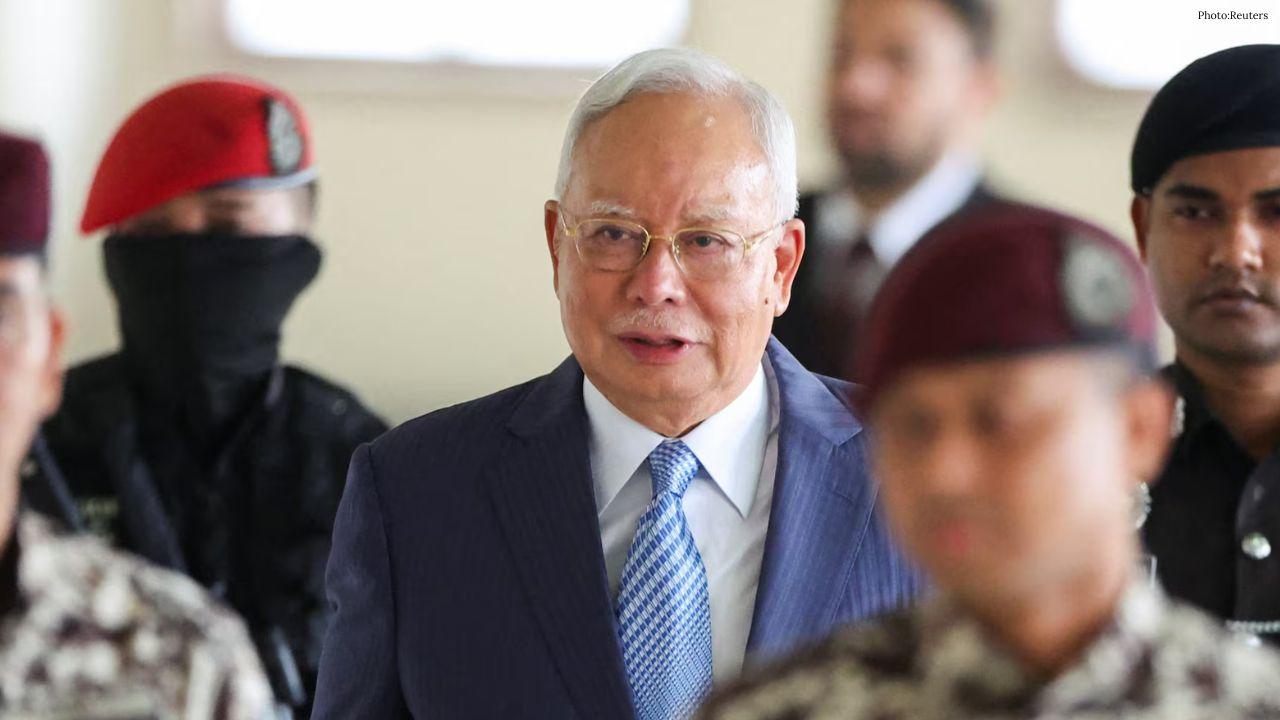
A Malaysian court has rejected former Prime Minister Najib Razak's request to temporarily halt the enforcement of an additional 15-year prison sentence connected to the country's multibillion-dollar 1MDB corruption scandal. The decision was delivered on Wednesday, October 14, 2026, at the Kuala Lumpur High Court. The ruling means the additional sentence remains in place despite expectations that Najib could eventually serve the remainder of an earlier prison term under house arrest following a conditional royal pardon in a separate case. Najib, 73, had sought a suspension of the newer sentence through his legal team. His lawyers argued for the court to pause its enforcement, but Judge Noor Ruwena Md Nordin ruled that the application did not meet the requirements for such relief. The judge said there were no special circumstances justifying a stay and dismissed the application. The decision represents a significant development in the legal proceedings against the former Malaysian leader, whose political career and imprisonment have remained closely associated with the 1MDB corruption scandal.
The central issue before the court was whether the enforcement of Najib's additional 15-year sentence should be suspended. A request to stay a sentence seeks to delay its implementation while a person pursues the relevant legal process or relies on other grounds recognised by law. In this case, the court found insufficient grounds to grant the requested suspension. Judge Noor Ruwena Md Nordin stated that no special circumstances had been established to justify the relief sought by Najib's legal team. The ruling does not mean that the separate legal arrangements concerning his earlier sentence have automatically been cancelled. Instead, it addresses the request to suspend the additional 15-year prison term imposed in another case linked to 1MDB. The distinction is important because Najib's current imprisonment, the conditional pardon relating to his earlier sentence and the additional sentence arise from separate legal developments.
Najib's legal position became more complicated after Malaysia's King, Sultan Ibrahim Sultan Iskandar, granted him a conditional pardon in a separate case last month. Under that arrangement, Najib was permitted to serve the remainder of his original six-year prison sentence at home, subject to the conditions attached to the pardon. These include payment of a fine of RM50 million, equivalent to approximately US$12.2 million. The arrangement created expectations that the former prime minister could eventually move from prison to house arrest. However, it did not automatically remove the separate 15-year sentence imposed in another 1MDB-related case. Najib's lawyers subsequently approached the Kuala Lumpur High Court to seek a stay of that additional sentence. Their request was intended to address the newer prison term, which is scheduled to begin after the earlier sentence and house-arrest period conclude. According to the reported timeline, the additional 15-year term is due to start after the earlier term ends in August 2028. The latest court ruling means the request to suspend that future sentence has been rejected.
The 1MDB scandal centres on allegations that billions of dollars were misappropriated from 1Malaysia Development Berhad, a Malaysian state investment fund established in 2009 while Najib was prime minister. The fund was created with the stated purpose of supporting Malaysia's economic development. It later became the focus of investigations across several countries into the movement of money through complex financial transactions and accounts. United States and Malaysian investigators have said that at least US$4.5 billion was stolen from the fund. Around US$1 billion was reported to have reached accounts linked to Najib, according to the information cited in the report. The scandal triggered criminal investigations and legal proceedings that extended beyond Malaysia. It also became a major political issue because of the scale of the alleged financial misconduct and the involvement of a former head of government. Najib has denied wrongdoing. He has apologised for mishandling the scandal but has maintained that he was misled by others about the source of money deposited into accounts linked to him.
The additional 15-year prison term followed Najib's conviction in a separate 1MDB corruption case in December 2025, according to the report. The sentence is distinct from the original six-year prison term that followed an earlier conviction. Malaysia's top court upheld the earlier conviction involving graft and money laundering in connection with funds linked to 1MDB, and Najib has been imprisoned since 2022. Because the newer case involved separate proceedings, the additional sentence created a further legal obligation beyond the original prison term. Najib's legal team sought to suspend the enforcement of the additional sentence, while the court considered whether there were sufficient grounds to grant that request. The judge ultimately rejected the application. The decision does not erase the conviction or the sentence. It also does not, by itself, determine the outcome of any separate legal challenge that may be available under Malaysian law.
Read Also: Nvidia Pledges $250 Million for UK AI Safety Research
The RM50 million fine attached to the conditional pardon has become another important factor in Najib's case. The United Malays National Organisation (UMNO), Najib's political party, has launched a fundraising campaign intended to help raise the money required under the arrangement. However, Najib's lawyers have said that a substantial portion of his assets remains subject to freezing orders and enforcement proceedings. Those restrictions have complicated efforts to access funds for payment of the fine. The payment requirement matters because the conditional pardon is subject to specified conditions. The precise consequences of compliance or non-compliance depend on the terms of the arrangement and the relevant legal decisions. The fundraising campaign also demonstrates how the former prime minister's legal position continues to have implications for his political supporters. Nevertheless, the amount raised and whether the full fine has been paid were not established in the report covering the October 14 court ruling.
Despite his imprisonment, Najib continues to retain support among sections of Malaysia's political establishment, particularly within UMNO and the wider Barisan Nasional coalition. Najib served as Malaysia's prime minister from 2009 to 2018. His time in office coincided with the establishment of 1MDB and the period during which the fund later became the subject of international investigations. Barisan Nasional is part of Malaysia's unity government alongside Prime Minister Anwar Ibrahim's Pakatan Harapan coalition and several parties based in Borneo. Najib's continued support among some political figures has kept his legal situation relevant to discussions within the country's political landscape. His lawyers have previously indicated that he could consider returning to politics if he were pardoned and released from prison. However, the latest court decision does not determine whether he will return to political office. It addresses his application to suspend the additional 15-year sentence.
The immediate outcome is clear: the Kuala Lumpur High Court has refused to suspend Najib's additional 15-year prison sentence. The sentence remains in place, while the separate conditional pardon relating to his original six-year term continues to form part of his legal circumstances. The next developments may depend on whether Najib's legal team pursues further remedies, how the conditions of the royal pardon are addressed and what legal arrangements apply when the earlier sentence ends. The timeline is particularly important. The additional 15-year sentence is scheduled to begin after the earlier term ends in August 2028, according to the report. The rejected application sought to suspend that additional term, rather than to overturn the earlier conviction or directly cancel the conditional pardon. The court's decision also leaves unresolved the wider questions surrounding the payment of the RM50 million fine and the restrictions affecting some of Najib's assets.
The October 14 ruling is an important development in the legal proceedings involving Malaysia's former prime minister. The Kuala Lumpur High Court rejected Najib Razak's request to halt the enforcement of his additional 15-year sentence linked to the 1MDB scandal. Although a conditional royal pardon has affected the way his original six-year sentence is to be served, it does not automatically remove the separate prison term imposed in the later case. Najib continues to deny wrongdoing, while the court has ruled that the application to suspend the additional sentence does not justify the requested relief.






Nvidia Pledges $250 Million for UK AI Safety Research
Nvidia will provide $250 million in computing resources over five years to support AI safety researc

Jacob Bethell Returns as England Name Squads for Australia Tour
England name ODI and T20 squads for the Australia tour, with Jacob Bethell returning from injury and

Beauden Barrett Opens Up About Mental Struggles During All Blacks Exile
Beauden Barrett discusses his confidence struggles after missing six tests, his return against Austr

IMF Says AI Investment Supports Global Growth Despite Energy Shock
IMF says AI investment is supporting global growth near 3%, with Asian economies benefiting from ris

Will O'Rourke Ruled Out of New Zealand's India Series
New Zealand fast bowler Will O'Rourke will miss the India series with hamstring and calf injuries as

AI Companies Expected to Drive Most US Earnings Growth in Q3
AI companies are expected to drive US third-quarter earnings growth as investors assess tech profits

