
You have not yet added any article to your bookmarks!
Join 10k+ people to get notified about new posts, news and tips.
Do not worry we don't spam!
Post by : Meena Ariff
Photo: AFP
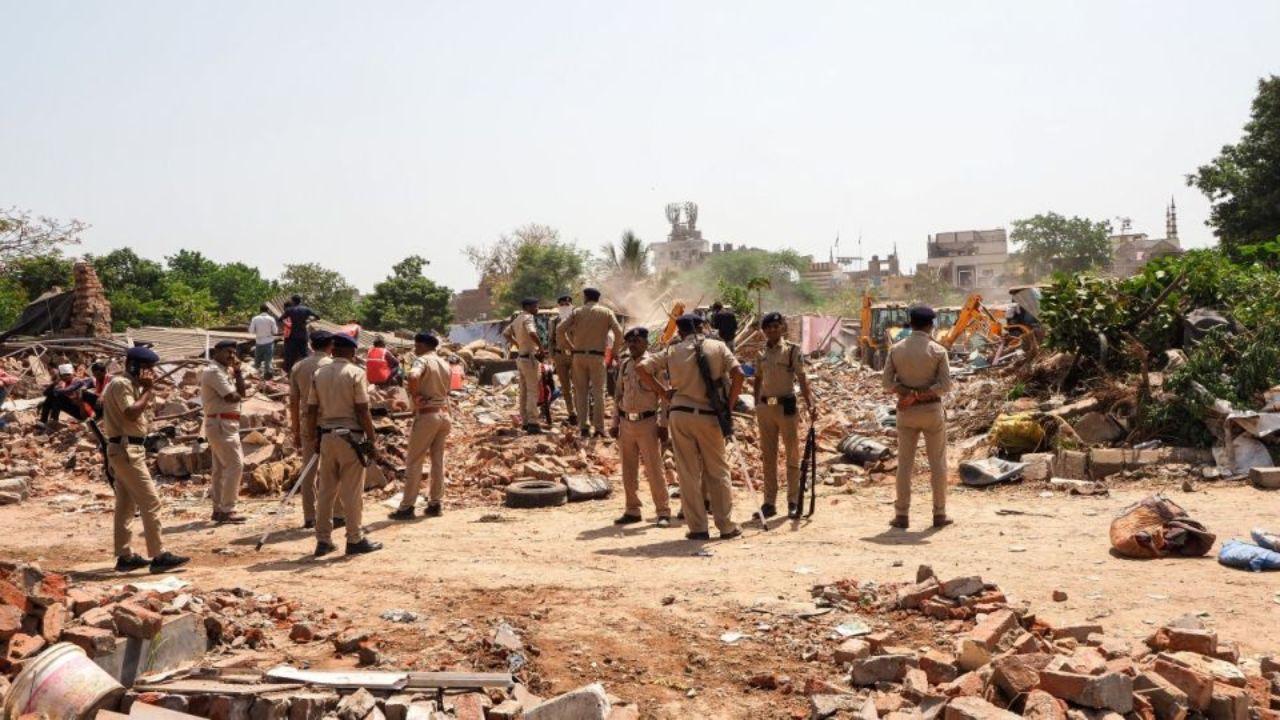
In recent weeks, Indian authorities have expelled hundreds of ethnic Bangalee Muslims to Bangladesh, claiming they were “illegal immigrants”. However, many of them say they are actually Indian citizens living in states close to Bangladesh.
Who Reported This?
This information comes from a new report by Human Rights Watch, an international human rights organisation. They said India is sending Bangalee Muslims to Bangladesh without giving them proper legal rights or a chance to prove their citizenship.
What Did Human Rights Watch Say?
Human Rights Watch said that since May 2025, the Indian government, led by the Bharatiya Janata Party (BJP), has increased its operations to send Bangalee Muslims to Bangladesh. The government says this is to stop people from entering India without permission. However, Human Rights Watch believes that many of these people are actually Indian citizens who have lived in India for generations.
Quote From Human Rights Watch
Elaine Pearson, the Asia director at Human Rights Watch, said,
“India’s ruling BJP is fueling discrimination by arbitrarily expelling Bengali Muslims from the country, including Indian citizens. The authorities’ claims that they are managing irregular immigration are unconvincing given their disregard for due process rights, domestic guarantees, and international human rights standards.”
How Many People Were Interviewed?
In June, Human Rights Watch spoke to 18 people, including those who had been expelled and their family members. They spoke about nine different cases. Some people managed to return to India after being sent to Bangladesh, while others are still missing, and their families are worried.
Did Human Rights Watch Contact the Government?
Yes. On July 8, Human Rights Watch wrote to India’s Ministry of Home Affairs to share these findings. However, the ministry did not respond to them.
How Many People Have Been Expelled?
The Indian government has not officially shared any numbers. But according to Border Guard Bangladesh, between May 7 and June 15, India expelled more than 1,500 Muslim men, women, and children to Bangladesh. This also included about 100 Rohingya refugees from Myanmar. Reports say these expulsions are continuing.
What Did the Expelled People Say?
Many people who were expelled shared painful experiences. Some said that officers from India’s Border Security Force (BSF) threatened them and beat them up. A few people said they were forced to cross the border at gunpoint.
What Did the Government Order Say?
In May, India’s Ministry of Home Affairs told all state governments to detect, identify, and deport “illegal immigrants” within 30 days. The government also asked local authorities to set up holding centres in every district to keep people until they could be deported.
After this order, many BJP-run state governments started arresting Bangla-speaking Muslim migrant workers. Some of these people had been working in these states for many years.
Why Are These Expulsions Happening?
The Indian government says it wants to protect its borders from illegal immigration. Bangladesh shares a long border with India, and many people cross the border daily for work, trade, or family visits. However, Human Rights Watch says that not everyone being expelled is an illegal immigrant. Many are Indian citizens but are being sent away only because they speak Bangla and are Muslim.
The Problem of Due Process
Under Indian law and international human rights standards, every person has the right to a fair process before being deported. This means:
However, Human Rights Watch says none of these rules were followed in these recent expulsions. Many people were sent away without any notice or court hearing.
Who Are the Bangalee Muslims?
Bangalee Muslims are people who speak Bangla and follow Islam. Many Bangalee Muslims live in Indian states like Assam, West Bengal, and Tripura. Their families have lived there for decades, even before India and Bangladesh became separate countries in 1947 and 1971.
What Is the Impact on Families?
These sudden expulsions have created fear among Bangalee Muslims living in India. Some families have been separated, as only some members were caught and deported. Children have lost parents, and wives have lost husbands who were working to earn for their families. Many deported people are struggling in Bangladesh as they have no home, money, or relatives there.
What Should The Government Do?
Human Rights Watch has asked the Indian government to:
These deportations are not just numbers. They are stories of real people – mothers, fathers, children, and workers – who are suddenly thrown out of their homes and country. Every government has the right to protect its borders, but it should not punish innocent citizens or act without fairness. The world is watching how India treats its people, and respecting human rights is important for every country’s dignity and strength.










PM Modi Pays Tribute to Mahatma Gandhi, Urges People to Support Khadi
PM Modi pays tribute to Mahatma Gandhi on Gandhi Jayanti and urges citizens to support Khadi and the

Amazon Seeks to Offload $8 Billion in Nvidia Chips to Investors
Amazon plans to move $8 billion in Nvidia chips to investors, using a new financing model to strengt

Samsung Raises Galaxy S26 Prices as Memory Chip Costs Rise
Samsung raises Galaxy S26 prices in South Korea as rising memory chip costs put pressure on smartpho

Lewis Hamilton Calls Singapore Grand Prix One of F1's Toughest Races
Lewis Hamilton discusses the demanding Singapore Grand Prix and brings Plus44 and Almave to Singapor

Denmark's Pandora Opens World's Largest Jewellery Factory in Vietnam
Pandora opens its largest jewellery factory in Vietnam, expanding global production, strengthening s

Gautam Gambhir Questions Batting-Friendly Pitches After India's Record ODI Chase
Gautam Gambhir questions batting-friendly ODI pitches after India’s record chase, calling for a bett

