You have not yet added any article to your bookmarks!
Join 10k+ people to get notified about new posts, news and tips.
Do not worry we don't spam!
Post by : Badri Ariffin
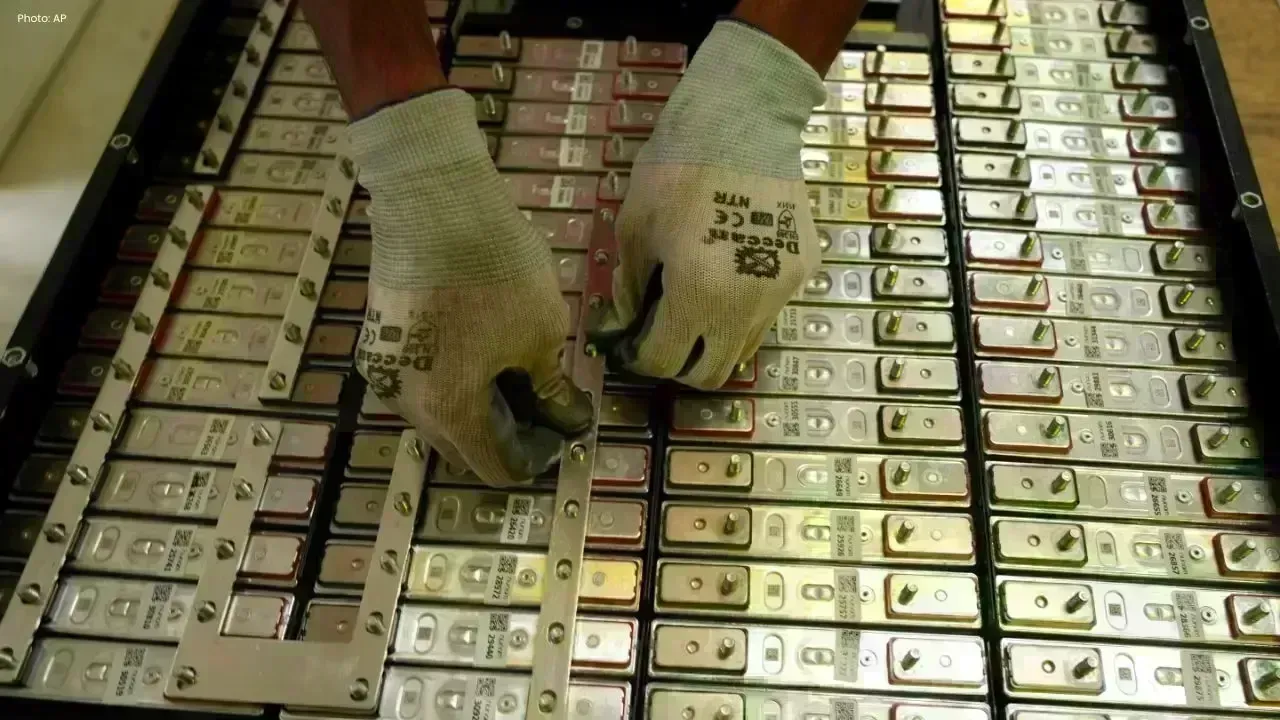
India’s transition to cleaner energy is making battery recycling a vital element of its industrial agenda. With the rise of electric vehicles, smartphones, and solar storage technologies, the demand for critical minerals such as lithium, nickel, and cobalt is soaring. This growing battery dependency presents both a significant challenge and a remarkable opportunity: creating a recycling ecosystem that bolsters domestic manufacturing while decreasing import reliance.
In the last decade, a promising yet swiftly growing recycling industry has emerged in India. These businesses collect used batteries, especially lithium-ion types, recover essential metals, and reintegrate them into the supply chain, allowing them to be utilized once more in electric vehicles, consumer goods, and renewable energy systems. This straightforward yet transformative model—extract, process, and repurpose materials—has the potential to significantly lessen import costs.
Rajat Verma, CEO of Lohum Cleantech, a leading battery recycling firm in Noida, conveyed a powerful vision: if India can achieve success similar to its recycling of copper and aluminum—where domestic production fulfills over 40% of needs—it could vastly reduce its import dependence on lithium, cobalt, and nickel. This ambition corresponds with India’s larger objective of establishing a robust local clean energy sector and diminishing vulnerability to global supply fluctuations.
A recent report from the renewable energy think tank RMI highlights this potential, estimating that a mature recycling industry could satisfy nearly 40% of India’s mineral needs and create around 100,000 green jobs. The study suggests that this sector could grow into a $9 billion industry amid soaring battery demand, especially in the electric mobility sector. As India expands its EV market and advances solar energy initiatives, the volume of used batteries is likely to increase dramatically.
The Current Landscape: Merging Opportunities and Fragmentation
Despite the positive momentum, the road ahead is fraught with challenges. Currently, India possesses approximately 60,000 tons of recycling capacity, much of which remains untapped. One principal issue is the absence of a well-organized supply chain for the consistent collection, sorting, and processing of discarded batteries. Unlike many developed nations, India's recycling sector operates mostly informally, with millions of uncontracted scrap workers handling metals, plastics, and electronic waste. Their inclusion in a formalized system is critical for progress.
The informal sector is pivotal to waste collection today, yet the lack of structured pathways results in substantial loss of recycling potential. Moreover, informal recycling raises significant environmental and labor safety issues. Given that batteries contain hazardous materials, improper handling can pose serious risks to workers and surrounding communities.
Policy Ambition Versus Ground Reality
India has made strides in policy to regulate battery disposal and encourage recycling, with the 2022 Battery Waste Management Rules marking a significant milestone. These rules establish targets for manufacturers to collect and recycle batteries while implementing penalties for non-compliance.
Nonetheless, actual implementation has been feeble.
Companies are left to develop their own recycling networks. Without a cohesive infrastructure—including collection points, transportation systems, and authorized disposal facilities—executing the rules proves challenging. Analysts indicate that while the policy framework is promising, the operational void hampers effectiveness. This disconnect between policy goals and ground realities represents a significant bottleneck.
Energy analyst Jaideep Saraswat points out that while India is quick to establish regulations, developing a fully functioning supply chain—from collection to processing to reuse—requires a more gradual approach.
Evaluating the Recycling Process: High Stakes for High Value
Large, heavy electric vehicle batteries provide considerable recovery opportunities, with up to 90% of essential materials obtainable through proper processing. Common methods employed include:
shredding battery modules into powder, followed by chemical separation
smelting, which uses high temperatures to separate metals for further refining
Refined recycled materials can match or surpass the quality of newly mined metals.
Another avenue is repurposing. Batteries that have fallen short of performance standards can be cleaned and reused for stationary energy storage—crucial for homes, small businesses, and renewable energy systems.
However, this process is not without risks.
Poor or unregulated recycling may result in hazardous emissions, polluted wastewater, and dangerous waste disposal. Industry leaders caution that illegal or low-cost operators may cut corners, compromising worker safety and environmental integrity. Some recyclers argue that environmentally friendly practices incur higher costs and are undervalued in the Indian market, subsequently slowing investment.
The Global Context: Competing for Strategic Minerals
Lithium, nickel, and cobalt are pivotal global commodities, with China currently dominating their mining, processing, and refining—making India and other countries reliant on Chinese supply chains. India lacks significant lithium mines and depends heavily on imports.
Recycling offers not only cost reductions but also a strategic advantage. Fortifying domestic capacity lessens exposure to geopolitical risks and aligns with India's vision of becoming a key player in electric mobility and clean technologies.
Experts advise a patient and comprehensive approach for India. For instance, China regards recycling as a strategic objective, accepting losses in that sector as it strengthens the overall supply chain. Adopting a holistic perspective—that sees recycling as part of the overall value chain rather than an isolated function—could facilitate sustainable scaling for Indian firms.
Future Directions: Formalization, Incentives, and Innovation
India now requires a systematic approach to ensure growth:
formalizing the informal workforce
developing collection and logistics systems
offering incentives for environmentally sound operations
enhancing collaboration between state and federal entities
supporting domestic recyclers through financing and technology
Experts from RMI emphasize the importance of worker training programs and governmental backing for companies committed to formal employment and eco-friendly practices. They assert that success hinges on acknowledging both the dangers and opportunities that batteries present.
Industry stakeholders remain hopeful. Entrepreneurs like Lohum’s Verma are optimistic, believing that with stable policies, technological advancements, and proactive investment, India can establish major firms in this sector, potentially establishing recycling as a key pillar of its clean energy future.








PSG Coach Luis Enrique Urges Players to Step Outside Comfort Zone
PSG coach Luis Enrique says players must leave their comfort zone and keep improving as the club tar

China’s Tiangong Sets New 400m Record at Robot Olympics
China’s Tiangong robot sets a new 400m record at the Robot Olympics, beating a South African robot i

George Russell Wins Dutch GP Sprint, Boosts Mercedes Morale
George Russell wins the Dutch GP Sprint from pole as Mercedes teammate Kimi Antonelli extends his F1

Australia 50/3 After Bangladesh Bowled Out for 64 in Second Test
Australia reached 50/3 after Bangladesh were bowled out for 64 in the second Test, with Mitchell Sta

Jordan Burroughs Returns to Wrestling with 2028 Olympic Dream
Jordan Burroughs returns to wrestling with Real American Freestyle as the Olympic champion eyes a po

Lamborghini Catches Fire on Singapore's ECP, Causing Heavy Traffic
A Lamborghini caught fire on Singapore's ECP, causing heavy traffic and bus delays. No injuries were