
You have not yet added any article to your bookmarks!
Join 10k+ people to get notified about new posts, news and tips.
Do not worry we don't spam!
Post by : Anis Farhan
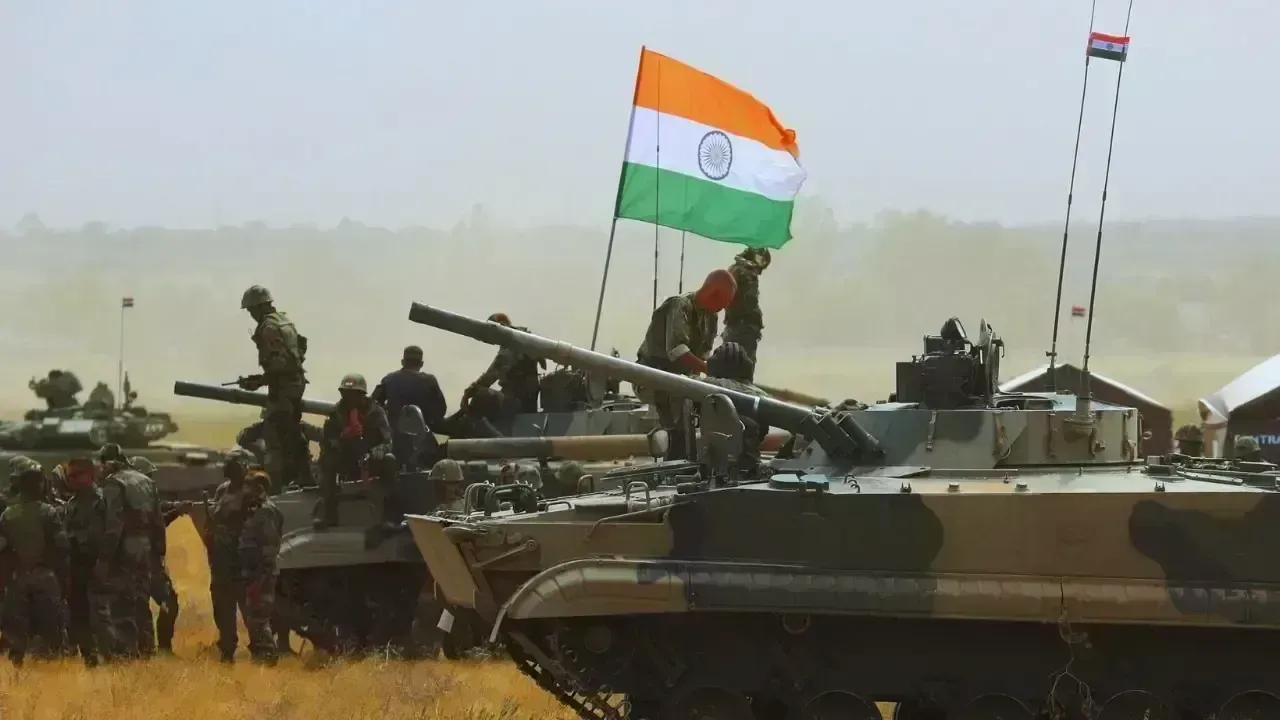
Defence procurement is rarely just about weapons. In today’s geopolitically charged environment, every contract signed, platform approved, or vendor shortlisted sends a message — to allies, rivals, and global markets alike. India’s latest defence procurement update has therefore drawn close attention, not merely for its scale or financial value, but for what it reveals about the country’s evolving strategic posture.
As global power equations shift and regional tensions remain high, India finds itself navigating a delicate balance: strengthening military preparedness without being drawn into rigid alliances, boosting domestic defence manufacturing while maintaining access to advanced technology, and asserting strategic autonomy without alienating key partners. The recent procurement decisions sit squarely at the intersection of these goals.
This is not an isolated announcement. It is part of a broader narrative about where India sees itself in a rapidly fragmenting global order.
The procurement update includes approvals and clearances for a mix of platforms, systems, and upgrades across the Army, Navy, and Air Force. Emphasis has been placed on multi-domain readiness, covering land, sea, air, cyber, and surveillance capabilities.
While defence acquisitions are routine, the timing and composition of this update elevate its importance. It aligns closely with evolving threat perceptions and long-term military modernisation goals rather than short-term operational needs.
India’s security environment remains complex, shaped by unresolved border issues, maritime competition, and emerging hybrid threats. Procurement decisions made now are intended to address not only present risks but anticipated challenges over the next two decades.
The world is witnessing a recalibration of alliances, with major powers reassessing commitments and smaller powers seeking greater self-reliance. India’s defence choices reflect awareness of this fluid landscape.
A key feature of the update is the emphasis on indigenous platforms and locally produced components. This aligns with India’s broader push to reduce dependence on imports and build a resilient domestic defence industrial base.
Domestic manufacturing is not just an economic objective; it is a strategic one. Control over production, maintenance, and upgrades reduces vulnerability during geopolitical crises when supply chains may be disrupted.
While indigenisation is prioritised, India continues to engage selectively with foreign suppliers for critical technologies that are not yet available domestically. This pragmatic approach avoids capability gaps while domestic systems mature.
Rather than outright imports, India increasingly seeks technology transfer, joint development, and local assembly. These conditions reshape traditional buyer-seller relationships into longer-term partnerships.
India’s procurement mix reassures partners that it remains committed to interoperability, regional stability, and shared security interests, without formally aligning itself with any military bloc.
At the same time, enhanced capabilities and accelerated modernisation send a clear signal of deterrence. The update underscores India’s intent to defend its interests across multiple theatres.
The procurement reflects growing emphasis on jointness among the three services. Platforms and systems are increasingly evaluated for their ability to operate seamlessly across domains.
Rather than focusing solely on legacy systems, the update prioritises adaptability, network-centric warfare, and readiness for non-traditional threats.
Naval acquisitions highlight India’s focus on maritime awareness, sea lane security, and power projection in the Indian Ocean region.
Strengthening naval capabilities sends a strong signal about India’s commitment to being a net security provider in its maritime neighbourhood.
Procurement plans indicate sustained focus on air superiority, surveillance, and rapid response. This is critical in a region where air power plays a decisive deterrent role.
Rather than chasing numbers alone, the emphasis appears to be on capability enhancement, force multipliers, and networked systems.
Procurement choices reflect lessons learned from high-altitude and diverse terrain operations. Mobility, logistics support, and situational awareness have been prioritised.
The focus extends beyond major platforms to include equipment that enhances soldier survivability and battlefield awareness.
Defence spending often attracts attention for its size, but the real story lies in allocation efficiency. The update suggests a shift toward value-driven procurement rather than headline-grabbing deals.
Lifecycle costs, maintenance, and upgrade potential are increasingly factored into procurement decisions, reflecting fiscal realism.
India’s procurement update is calibrated to strengthen deterrence without provoking escalation. The choices appear measured, avoiding sudden or aggressive posturing.
By diversifying suppliers and focusing on self-reliance, India retains diplomatic flexibility in a polarised global environment.
India’s procurement decisions influence global defence markets, shaping production lines, partnerships, and technology roadmaps.
Traditional suppliers face competition as India broadens its sourcing strategy, while domestic firms gain unprecedented opportunities.
The emphasis on indigenous procurement opens doors for Indian defence manufacturers, startups, and MSMEs.
Long-term contracts and assured demand encourage investment in research, skills, and advanced manufacturing.
Announcing procurement is only the first step. Execution delays have historically undermined defence modernisation efforts.
Bridging gaps in critical technologies remains a challenge and will require sustained policy support and international collaboration.
India has long spoken of strategic autonomy. This procurement update demonstrates how that principle is being operationalised through concrete decisions.
Autonomy enhances resilience, ensuring that India is not overly exposed to external pressures during global crises.
The update reflects growing confidence in India’s ability to chart its own security path while engaging constructively with the world.
Clear, consistent procurement strategy enhances India’s credibility as a reliable security partner in regional and global frameworks.
How quickly and effectively these procurements move from approval to deployment will determine their real impact.
Sustained political and institutional support will be essential to maintain momentum.
India’s latest defence procurement update is not just an administrative exercise; it is strategic communication. Through its choices, India is signalling preparedness without aggression, autonomy without isolation, and ambition grounded in realism.
In an era where power is measured as much by resilience as by firepower, these decisions reflect a country positioning itself carefully but confidently on the global stage. The message is clear: India intends to secure its interests on its own terms, with partners by choice, not compulsion.
This article is for informational and analytical purposes only. It does not constitute defence, security, or investment advice. Defence procurement policies and decisions are subject to change based on strategic, fiscal, and operational considerations.








AI Companies Expected to Drive Most US Earnings Growth in Q3
AI companies are expected to drive US third-quarter earnings growth as investors assess tech profits

Money Market Funds See Record Inflows as Global Bond Selloff Intensifies
Global money market funds attract $153.81 billion as bond yields rise, inflation fears persist and i

Meta Bans TikTok Ads on Facebook and Instagram in Seven Countries
Meta has banned TikTok ads in seven countries, escalating competition over social media users, adver

ASML and Zeiss Target Next-Generation Chip Technology in 10 Years
ASML and Carl Zeiss are developing Hyper NA technology to print smaller chip circuits, with the next

Rabada Misses First Australia Test as South Africa Pick Two Spinners
Kagiso Rabada misses the opener as South Africa vs Australia begins, with Anrich Nortje returning an

Starc Compares Australia's Tough Year to McIlroy's Major Sweep
Mitchell Starc says Australia winning three away Test series and the World Cup would match Rory McIl

