
You have not yet added any article to your bookmarks!
Join 10k+ people to get notified about new posts, news and tips.
Do not worry we don't spam!
Post by : Anis Farhan
Photo: PMI
In an era where governance is increasingly judged by speed, transparency, and outcomes, India’s PRAGATI platform has emerged as a silent but transformative force. Designed to cut through bureaucratic layers and accelerate decision-making, PRAGATI has steadily evolved into a cornerstone of India’s administrative architecture.
As the platform marks a significant milestone in 2026, its growing relevance highlights how technology-led governance can deliver measurable results in a country as large and complex as India. What began as an experiment in digital monitoring has now become a high-impact mechanism shaping project execution across sectors.
PRAGATI stands for Pro-Active Governance and Timely Implementation. It is an interactive digital platform that enables direct communication between the Prime Minister’s Office, Union ministries, state governments, and district administrations.
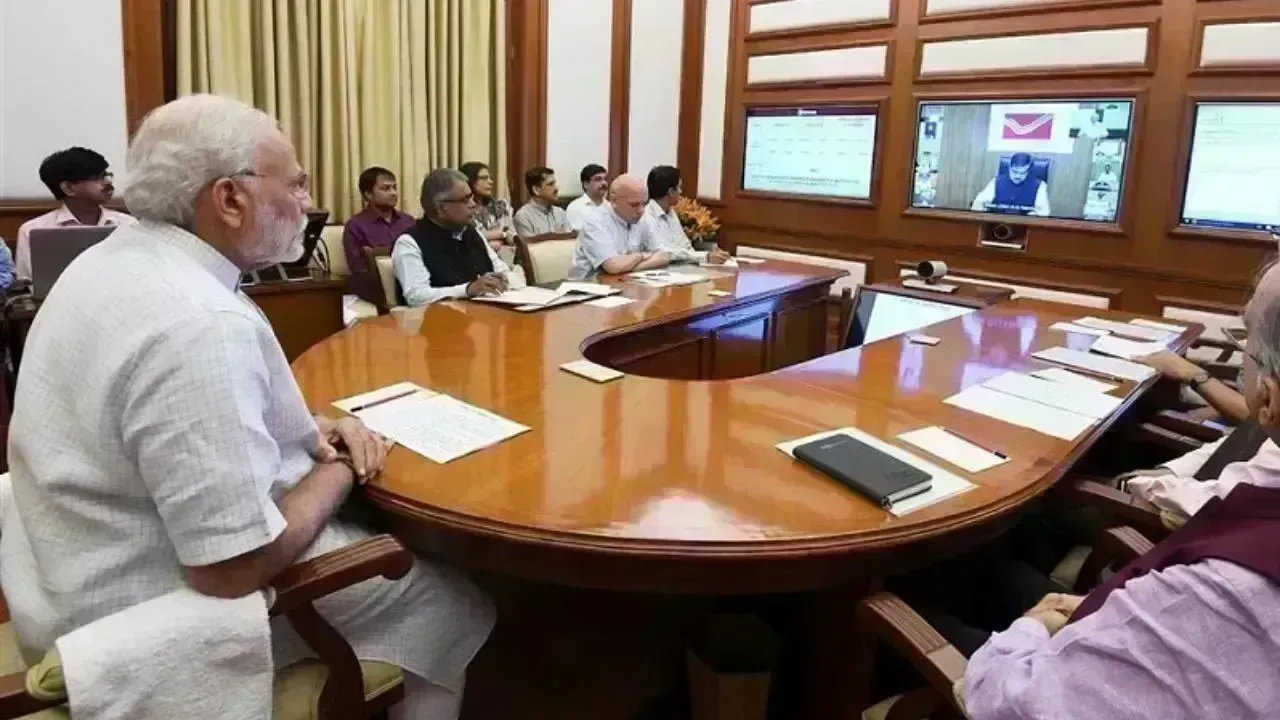
At its core, PRAGATI functions as a real-time review and monitoring system where critical projects and public grievances are discussed, assessed, and resolved through video conferences chaired by Narendra Modi.
PRAGATI integrates three key governance dimensions:
Review of critical infrastructure and welfare projects
Resolution of inter-ministerial and Centre-State issues
Redressal of long-pending public grievances
This convergence makes it far more than a monitoring dashboard—it is a decision-making tool.
India’s governance challenges have long included project delays, lack of coordination between departments, and accountability gaps. Major infrastructure and social projects often stalled due to procedural bottlenecks or inter-governmental disputes.
PRAGATI was conceptualised to address precisely these issues by placing unresolved matters directly under the Prime Minister’s review.
Traditional governance relied heavily on file movement and written correspondence. PRAGATI shifted the focus to outcomes, deadlines, and responsibility—bringing urgency and clarity into the system.
Each PRAGATI meeting follows a structured agenda. Selected projects and grievances are reviewed in the presence of senior officials from all relevant departments and states.
Officials are required to provide status updates, explain delays, and commit to clear timelines—often in real time during the interaction.
The platform uses digital dashboards, GIS mapping, and live data inputs to ensure discussions are evidence-based rather than anecdotal. This has significantly reduced scope for ambiguity or deflection.
By 2026, PRAGATI has reviewed hundreds of projects and thousands of grievances spanning infrastructure, energy, transport, education, health, and urban development.
The milestone underscores not just longevity, but institutionalisation—PRAGATI is no longer an initiative; it is a system.
One of the most significant achievements has been the deeper integration of state and district administrations, ensuring that governance does not remain confined to New Delhi.
PRAGATI has played a key role in resolving roadblocks in highways, rail corridors, ports, power plants, and urban infrastructure projects. Issues ranging from land acquisition to environmental clearances have seen faster resolution due to high-level intervention.
By identifying delays early and enforcing accountability, the platform has helped curb cost escalations—a chronic issue in large public projects.
Unlike traditional top-down reviews, PRAGATI encourages collaborative problem-solving. State governments are given direct access to central decision-makers, reducing procedural friction.
This has strengthened cooperative federalism by turning review meetings into solution-oriented dialogues rather than fault-finding exercises.
Beyond mega projects, PRAGATI also addresses long-pending citizen grievances that cut across departments. Many cases that remained unresolved for years have been closed after being flagged on the platform.
For citizens, the platform represents a rare assurance that grievances can reach the highest levels of government, restoring faith in administrative responsiveness.
One of PRAGATI’s defining features is personal accountability. Officials are clearly identified for each issue, and timelines are recorded and tracked.
This approach has reshaped administrative culture, making delays harder to justify.
PRAGATI reinforces the idea that governance performance is measurable, not abstract. Progress is tracked, reviewed, and followed up
The platform has nudged officials away from excessive risk-aversion. Knowing that issues will be reviewed at the highest level encourages proactive decision-making rather than defensive file-pushing.
District collectors and field officers gain direct visibility, ensuring that ground-level realities are heard and acted upon.
PRAGATI exemplifies how data and digital tools can improve governance quality. Discussions are anchored in metrics, maps, and progress reports rather than subjective narratives.
Globally, PRAGATI is often cited as an example of how digital platforms can enhance executive oversight without bypassing institutional processes.
Some critics argue that excessive reliance on top-level reviews may centralise decision-making. They caution against weakening institutional autonomy at lower levels.
While effective for high-priority projects, PRAGATI’s model may not be scalable for all routine administrative functions.
Supporters note that PRAGATI is meant for critical and long-pending issues, not day-to-day governance. Its selective use ensures focus without overreach.
The platform complements existing administrative processes rather than replacing them, strengthening oversight without dismantling structures.
PRAGATI fits seamlessly into India’s broader Digital India vision, where technology serves as a force multiplier for governance efficiency.
The platform bridges the gap between policy intent and ground execution—often the weakest link in public administration.
The direct involvement of the Prime Minister gives PRAGATI unparalleled authority, ensuring that decisions taken are followed through.
Unlike conventional review mechanisms, PRAGATI prioritises closure and outcomes over repetitive discussions.
Many countries struggling with bureaucratic delays and coordination failures can draw lessons from PRAGATI’s design and execution.
PRAGATI demonstrates that technology alone is insufficient; political will and institutional backing are equally critical.
Future iterations may integrate advanced analytics and predictive tools to flag delays before they occur.
There is potential to further strengthen citizen-facing components, making grievance redressal more participatory.
As PRAGATI marks a major milestone in 2026, its journey reflects a deeper shift in Indian governance—from reactive administration to proactive problem-solving. By combining technology, authority, and accountability, the platform has changed how decisions are made and implemented.
In a system often criticised for inertia, PRAGATI stands out as proof that governance reform is possible when intent meets execution.
This article is intended for informational and editorial purposes only. Governance outcomes may vary based on policy decisions, administrative capacity, and evolving institutional frameworks. Readers should rely on official government communications for authoritative updates.










PM Modi Pays Tribute to Mahatma Gandhi, Urges People to Support Khadi
PM Modi pays tribute to Mahatma Gandhi on Gandhi Jayanti and urges citizens to support Khadi and the

Amazon Seeks to Offload $8 Billion in Nvidia Chips to Investors
Amazon plans to move $8 billion in Nvidia chips to investors, using a new financing model to strengt

Samsung Raises Galaxy S26 Prices as Memory Chip Costs Rise
Samsung raises Galaxy S26 prices in South Korea as rising memory chip costs put pressure on smartpho

Lewis Hamilton Calls Singapore Grand Prix One of F1's Toughest Races
Lewis Hamilton discusses the demanding Singapore Grand Prix and brings Plus44 and Almave to Singapor

Denmark's Pandora Opens World's Largest Jewellery Factory in Vietnam
Pandora opens its largest jewellery factory in Vietnam, expanding global production, strengthening s

Gautam Gambhir Questions Batting-Friendly Pitches After India's Record ODI Chase
Gautam Gambhir questions batting-friendly ODI pitches after India’s record chase, calling for a bett

