You have not yet added any article to your bookmarks!
Join 10k+ people to get notified about new posts, news and tips.
Do not worry we don't spam!
Post by : Meena Ariff
Israel announced early Friday that it plans to take control of Gaza City as part of its ongoing 22-month conflict with Hamas. This decision came after a late-night meeting of top Israeli officials. The move comes even though many countries around the world are calling for an end to the fighting. Some people in Israel are also worried because about 20 hostages are still held by Hamas.
Heavy Toll of the War So Far
Israel’s air and ground attacks have caused huge damage in Gaza. Tens of thousands of people have died, many have been forced to leave their homes, and large parts of the area have been destroyed. The situation is so bad that there is a threat of famine—many people do not have enough food to eat. Experts say that if Israel begins a major ground attack on Gaza City, the humanitarian crisis will become even worse.
Netanyahu’s Statement on Gaza Control
Prime Minister Benjamin Netanyahu said in a recent interview that Israel plans to control all of Gaza to protect its security and remove Hamas from power. Right now, Israel controls about three-quarters of Gaza. The Security Cabinet, which met overnight, has not yet agreed to take all of Gaza, but the new plan focuses on Gaza City. The military will try to help civilians outside the fighting areas.
Military Concerns Over Hostages and Army Strain
Israel’s top general warned that occupying Gaza City could put the remaining hostages at risk and strain the Israeli army, which has been fighting in many regional conflicts for almost two years. The general’s concerns may have influenced the final decision to limit the operation to Gaza City, rather than all of Gaza.
Gaza City: The Last Major Area of Resistance
Gaza City has been heavily bombed many times by Israel, but militants have often regrouped and returned to different neighborhoods. It is one of the last major areas in Gaza that is not yet controlled by Israel or under evacuation orders. A ground attack there could cause tens of thousands of people to flee again and make it harder to deliver food and aid to those who remain.
Residents’ Situation and Casualties
Before the war, Gaza City was the largest city in Gaza. Many people left when evacuation orders were first given, but some returned during a ceasefire earlier this year. Palestinians expect more suffering as the conflict continues. On Thursday alone, at least 42 people were killed in airstrikes and shootings, according to hospitals in Gaza.
Netanyahu’s Vision for Gaza’s Future
In his interview, Netanyahu said Israel does not want to keep Gaza but wants to create a safe security area. He hopes to hand over control to Arab forces that will govern the area properly without threatening Israel, giving Gazans a better life.
Hostages and the Human Cost of War
Hamas militants kidnapped 251 people and killed around 1,200 during an attack in October 2023, which started the current war. Most hostages have been released through deals or ceasefires, but about 50 remain in Gaza, with 20 believed to be alive.
Relatives of some hostages recently sailed near Gaza’s maritime border, sending messages to their loved ones and expressing fears that the war is being prolonged for political reasons. Some critics say certain Israeli leaders want to escalate the war further, move Gaza’s population to other countries, and reestablish Jewish settlements.
Deaths While Seeking Food Aid
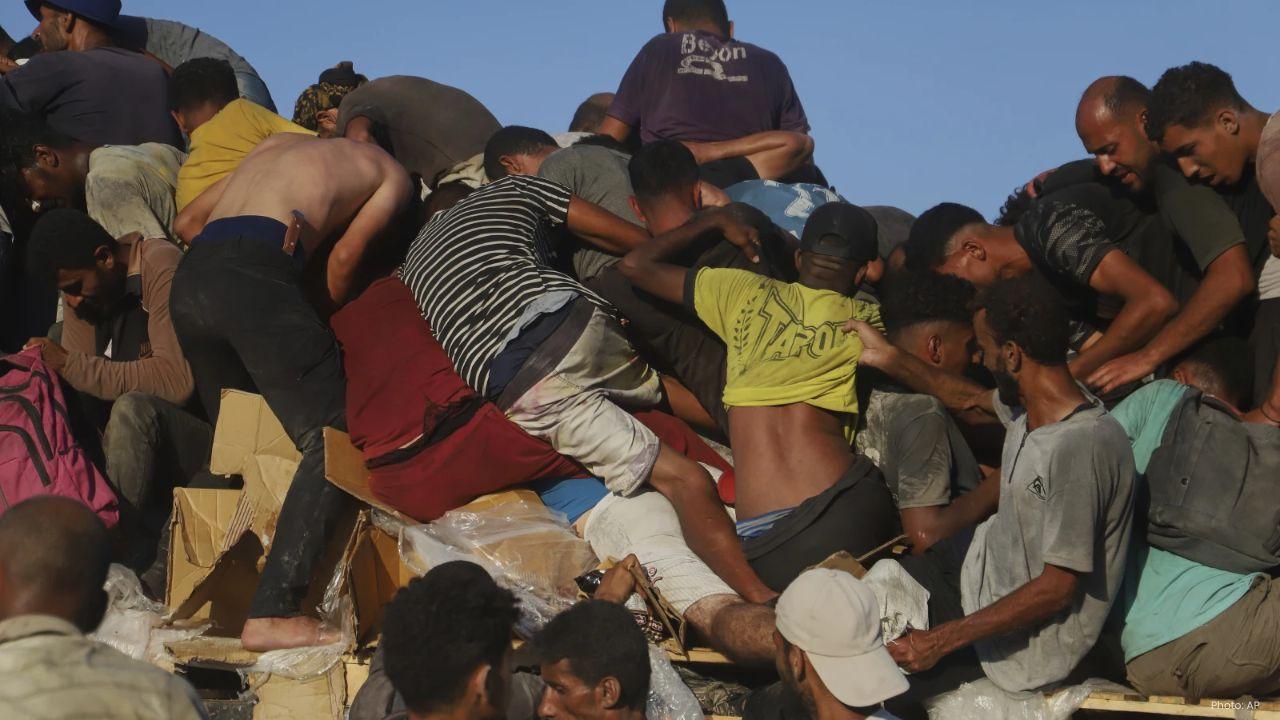
According to Gaza’s Health Ministry, over 61,000 Palestinians have died since the war began. This figure includes both fighters and civilians. On Thursday, 13 of those killed were trying to get food in a military zone in southern Gaza where aid convoys operate. These areas often become chaotic with desperate crowds and looting.
Chaos and Violence at Aid Sites
The Gaza Humanitarian Foundation (GHF) runs some of the food distribution sites, but these have faced strong criticism. Doctors Without Borders (MSF), a medical charity, reported many injuries and deaths linked to the crowded and poorly managed aid sites. MSF said people suffered gunshot wounds, pepper spray injuries, and physical assaults while trying to get food.
MSF called the aid distribution “reckless negligence” or a “designed death trap.” GHF denied the accusations and said the claims were false, blaming Hamas for spreading misinformation.
Controversy Over Aid Delivery
The U.S. and Israel set up GHF as an alternative to the U.N. aid system, accusing Hamas of stealing aid supplies. The U.N. denies this and criticizes GHF for forcing Palestinians to risk their lives for food, which some say supports Israel’s plans to move Gaza’s population.
The war between Israel and Hamas continues to cause heavy suffering in Gaza. Israel’s plan to take Gaza City marks a new phase that could increase the dangers for civilians and hostages. The humanitarian crisis is deepening, with many struggling to find food and safety. The future remains uncertain as political and military leaders work through difficult choices.








PSG Coach Luis Enrique Urges Players to Step Outside Comfort Zone
PSG coach Luis Enrique says players must leave their comfort zone and keep improving as the club tar

China’s Tiangong Sets New 400m Record at Robot Olympics
China’s Tiangong robot sets a new 400m record at the Robot Olympics, beating a South African robot i

George Russell Wins Dutch GP Sprint, Boosts Mercedes Morale
George Russell wins the Dutch GP Sprint from pole as Mercedes teammate Kimi Antonelli extends his F1

Australia 50/3 After Bangladesh Bowled Out for 64 in Second Test
Australia reached 50/3 after Bangladesh were bowled out for 64 in the second Test, with Mitchell Sta

Jordan Burroughs Returns to Wrestling with 2028 Olympic Dream
Jordan Burroughs returns to wrestling with Real American Freestyle as the Olympic champion eyes a po

Lamborghini Catches Fire on Singapore's ECP, Causing Heavy Traffic
A Lamborghini caught fire on Singapore's ECP, causing heavy traffic and bus delays. No injuries were