
You have not yet added any article to your bookmarks!
Join 10k+ people to get notified about new posts, news and tips.
Do not worry we don't spam!
Post by : Rohit Dhiman
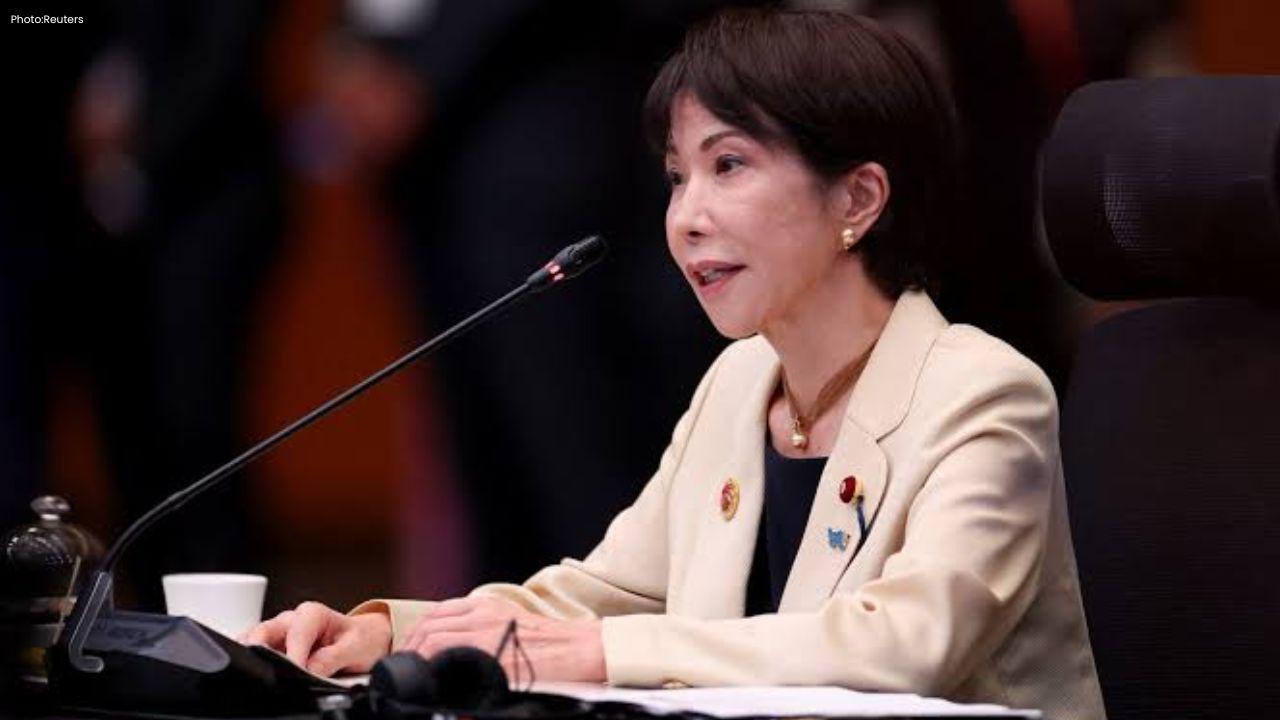
Japanese Prime Minister Sanae Takaichi is expected to signal a possible shift towards stabilising relations with Beijing when she addresses parliament on Monday, October 5. According to Japanese media reports, Takaichi is likely to describe China as an “important neighbour” and reiterate her intention to establish a constructive and stable relationship with the country. The expected remarks come at a particularly sensitive time for Japan-China relations, which have deteriorated sharply following disagreements over Taiwan and regional security. Takaichi's anticipated statement could be closely watched across Asia because Tokyo and Beijing are major economic powers with significant commercial links, while their strategic interests increasingly overlap in areas involving regional security.
According to reports based on an early draft of the speech, Takaichi is expected to say that Japan wants to develop a constructive and stable relationship with Beijing. The proposed description of China as an “important neighbour” could be significant given the deterioration in relations between the two countries. While the phrase does not suggest that Tokyo and Beijing have resolved their disagreements, it could indicate that the Japanese government wants to maintain communication and prevent existing disputes from developing into a broader confrontation. For Japan, maintaining a working relationship with China remains important because of the two countries' extensive economic ties. At the same time, Tokyo continues to have serious concerns about regional security and China's military activities.
The latest development follows months of tension over Taiwan. Takaichi previously suggested that Japan could potentially intervene if an attack on Taiwan created a situation that posed a serious threat to Japan's own security. Beijing strongly opposes any suggestion of outside military involvement in Taiwan and considers the island part of Chinese territory. Her comments contributed to a sharp deterioration in diplomatic relations between Tokyo and Beijing. The dispute has subsequently affected areas beyond political statements, including travel and trade. China warned its citizens about travelling to Japan and introduced trade restrictions that reportedly contributed to a significant decline in supplies of important rare earth minerals to Japanese companies.
There are signs that Beijing may also be interested in preventing relations from deteriorating further. China's top diplomat said last week that ties with Tokyo were “waiting to be normalised again” while meeting a former Japanese foreign minister who was leading a trade delegation in Beijing. The statement came at an important time because both governments face strong economic incentives to prevent prolonged confrontation. For Japan, China is a major trading partner and an important part of regional supply chains. For China, Japan remains one of the region's major economies and a significant player in Asian diplomacy. However, the possibility of improved relations will depend heavily on how both governments manage disagreements over Taiwan, security and trade.
Foreign policy is only one part of Takaichi's expected policy address. The Japanese prime minister is also expected to focus heavily on the country's demographic problems. According to reports, Takaichi will describe Japan's population decline as a “quietly advancing national crisis” and is expected to promise a comprehensive government strategy to address the issue by the end of the year. Japan has been experiencing a prolonged decline in its population, driven by falling birth rates and an ageing society. Government data released in July showed that the number of Japanese people living in the country had fallen below 120 million for the first time in 42 years. The demographic decline presents serious long-term challenges.
Read Also: Tuchel Says Alex Scott Can Challenge Declan Rice for England Midfield Spot
Japan's demographic challenge is not simply about the number of people living in the country. A declining population can gradually reduce the size of the workforce while increasing demand for healthcare, pensions and other social services. It can also create labour shortages in important sectors and put pressure on businesses and regional communities. For Takaichi's government, tackling the demographic issue will therefore require policies that address employment, family support, economic security and the country's long-term social structure. The expected policy announcement could become one of the most important domestic components of her parliamentary address.
Takaichi is also facing pressure over the rising cost of living. Inflation has increased the financial burden on households, while the government is simultaneously dealing with concerns over Japan's already large public debt. Her administration has pursued an expansive spending programme designed to support the economy and address domestic challenges. However, increased government spending has also generated concern in financial markets. Takaichi is therefore expected to reaffirm her commitment to a proactive but responsible fiscal policy. The government will need to balance support for households and economic growth with the need to maintain confidence in Japan's public finances.
One proposal expected to receive attention during the parliamentary session is a temporary reduction in the consumption tax on food. The plan reportedly involves cutting the tax for two years in an effort to reduce the impact of inflation on household budgets. Food prices have become an important political issue because increases in the cost of everyday necessities directly affect consumers. A tax reduction could provide some relief to households, but it could also reduce government revenue at a time when Japan is already facing significant fiscal pressures. The proposal is therefore likely to become an important part of the wider debate over how Takaichi's government intends to manage the economy.
Takaichi's address will mark the beginning of a parliamentary session scheduled to continue until December. Several bills and policy proposals are expected to be discussed during the session. Alongside economic measures, the government is expected to address Japan's demographic decline, fiscal policy and foreign relations. The wide-ranging agenda means Takaichi's speech will offer an important indication of the government's priorities for the months ahead.
The prime minister is also expected to reaffirm Japan's support for the International Criminal Court. This comes after the United States imposed sanctions in August on Tomoko Akane, the Japanese president of the court. Japan's expected position reflects a broader debate over the role of international institutions and the rules governing international justice. The issue adds another foreign-policy dimension to an already significant parliamentary address.
Calling China an “important neighbour” does not mean that Japan has abandoned its concerns about Beijing. Instead, the wording could indicate an attempt to keep diplomatic channels open while maintaining Tokyo's position on security-related issues. Japan has to balance several competing priorities. It wants to protect its national security, maintain its alliance with the United States, preserve economic links with China and respond to developments involving Taiwan. This makes the government's approach to Beijing particularly important. A more measured diplomatic tone could help both countries maintain dialogue, but major disagreements are likely to remain.
The Taiwan issue is likely to remain the most difficult challenge for Japan-China relations. Beijing considers Taiwan part of China and strongly opposes any suggestion that other countries could intervene militarily. Japan, meanwhile, views developments around Taiwan through the lens of its own national security because of Taiwan's geographic proximity to Japanese territory and important regional sea routes. Any significant change in the Taiwan situation could therefore have immediate implications for Tokyo. For Takaichi, the challenge will be to maintain a firm security position without allowing diplomatic tensions with Beijing to escalate uncontrollably.








Michael Bracewell Chooses Casual Contract, Targets BBL Opportunity
Michael Bracewell moves to a casual contract as he eyes a BBL opportunity while remaining available

Tuchel Says Alex Scott Can Challenge Declan Rice for England Midfield Spot
Thomas Tuchel says Alex Scott can challenge Declan Rice for an England midfield place after his impr

Air Quality Turns Unhealthy in Central and Western Singapore Amid Haze
Singapore haze pushes PSI above 100 in central and western areas as smoke from regional hotspots rai

PM Modi Pays Tribute to Mahatma Gandhi, Urges People to Support Khadi
PM Modi pays tribute to Mahatma Gandhi on Gandhi Jayanti and urges citizens to support Khadi and the

Amazon Seeks to Offload $8 Billion in Nvidia Chips to Investors
Amazon plans to move $8 billion in Nvidia chips to investors, using a new financing model to strengt

Samsung Raises Galaxy S26 Prices as Memory Chip Costs Rise
Samsung raises Galaxy S26 prices in South Korea as rising memory chip costs put pressure on smartpho

