You have not yet added any article to your bookmarks!
Join 10k+ people to get notified about new posts, news and tips.
Do not worry we don't spam!
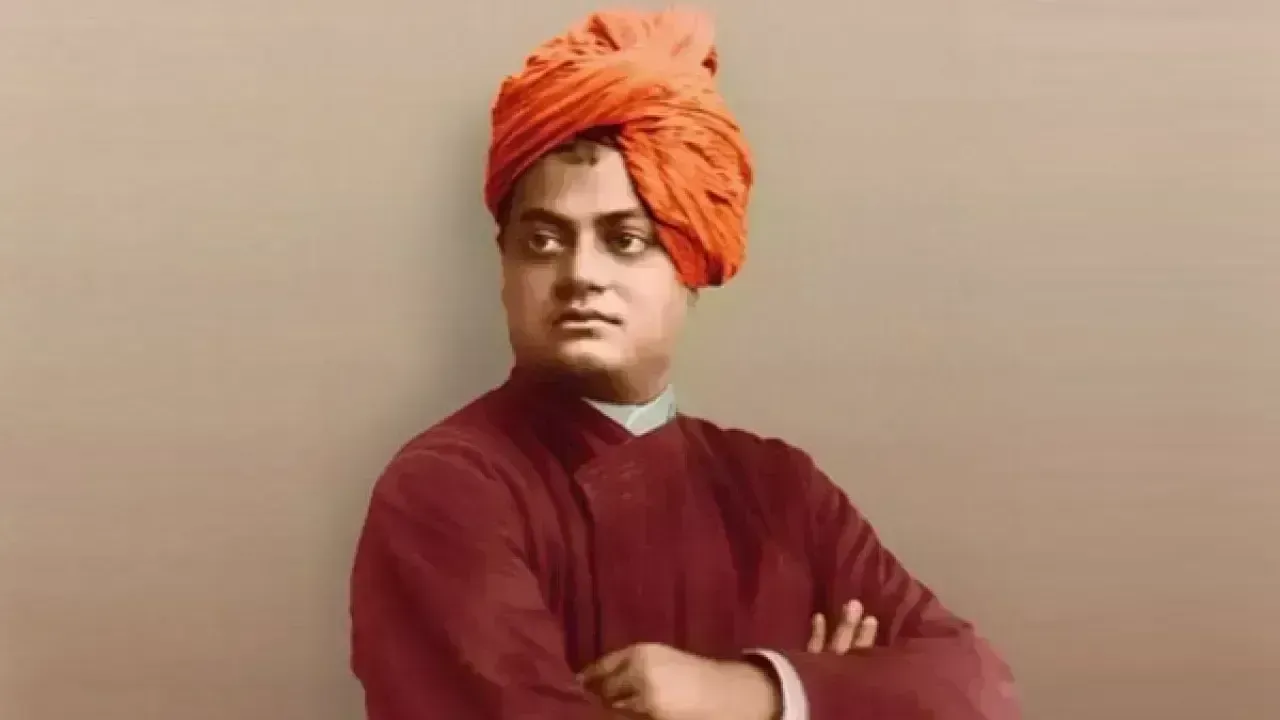
Post by : Anis Farhan
National Youth Day is observed annually on January 12 across India to honor the birth anniversary of Swami Vivekananda, one of the country’s most influential thinkers and spiritual leaders. The day was officially declared in 1984, with the first observance taking place in 1985. Since then, it has grown into a nationwide movement focused on motivating young people to channel their energy toward nation-building.
At its core, National Youth Day reflects a simple but powerful idea: a nation’s progress depends on how it nurtures its youth. In a country where more than half the population falls under the age of 35, this day holds exceptional relevance. It is not limited to ceremonial speeches or formal programs; it is a call to action for self-development, discipline, and social responsibility.
January 12 marks the birth of Swami Vivekananda in 1863. His life and teachings continue to resonate because they addressed both personal growth and collective progress. He believed that strength, confidence, and character were the foundations of a strong nation. Choosing his birthday as National Youth Day was a conscious decision to align the celebration of youth with ideals of fearlessness, clarity of thought, and service to humanity.
Vivekananda’s philosophy did not promote withdrawal from society. Instead, it emphasized engagement with the world, self-belief, and responsibility. This approach makes January 12 not just a commemorative occasion, but a guiding marker for young Indians navigating modern challenges.
Unlike many observances that are symbolic in nature, National Youth Day is deeply intellectual. It encourages reflection on questions such as purpose, ethics, resilience, and leadership. This reflective aspect distinguishes it from conventional celebrations and gives it lasting relevance.
Swami Vivekananda’s message to the youth was direct and uncompromising. He believed that young people should be strong in mind and body, confident in thought, and compassionate in action. His famous emphasis on character-building over mere accumulation of information remains particularly relevant in today’s fast-paced, achievement-driven world.
One of the central ideas associated with National Youth Day is the importance of inner strength. Vivekananda often spoke about courage, self-control, and perseverance. For him, real education was not about degrees alone but about developing the ability to stand firm in adversity and act ethically even when it is difficult.
In a modern context, this philosophy encourages young people to look beyond instant success and focus on long-term growth. It reminds them that setbacks are part of progress and that resilience is a skill worth cultivating.
Vivekananda viewed education as a means to awaken the potential already present within individuals. This idea aligns closely with contemporary discussions around skill-based learning, critical thinking, and emotional intelligence. National Youth Day brings these conversations to the forefront, urging institutions and individuals alike to rethink what meaningful education truly means.
Every year on January 12, educational institutions, youth organizations, and community groups across the country organize a wide range of activities. These include seminars, debates, cultural programs, awareness drives, and social service initiatives. While the format may vary, the underlying objective remains consistent: inspiring young people to think beyond themselves and contribute positively to society.
Schools and colleges play a central role in National Youth Day celebrations. Special assemblies, essay competitions, and discussions on leadership and values are commonly organized. These activities introduce students to the life and ideas of Swami Vivekananda while encouraging them to reflect on their own aspirations and responsibilities.
Such observances also provide a platform for young voices to be heard. Students are encouraged to share their perspectives on social issues, innovation, and national development, reinforcing the idea that youth participation matters.
Beyond classrooms, many organizations use National Youth Day as an opportunity to engage in community service. Blood donation camps, cleanliness drives, tree plantation programs, and awareness campaigns are frequently organized. These initiatives translate ideals into action, showing that patriotism and social responsibility are expressed through everyday efforts.
In an era defined by rapid technological change, social media influence, and global uncertainty, the relevance of National Youth Day has only increased. Young people today face a complex mix of opportunities and pressures, from career competition to mental health challenges. The principles highlighted on January 12 offer guidance in navigating this landscape.
Modern youth are often encouraged to aim high, innovate, and compete globally. While ambition is essential, National Youth Day emphasizes that success should not come at the cost of integrity. Vivekananda’s teachings remind young people that ethical grounding is what gives lasting meaning to achievement.
This balance between ambition and values is particularly important in professional and entrepreneurial spaces, where decisions can have wide-ranging social impact.
The emphasis on inner strength is especially relevant in discussions around mental well-being. National Youth Day indirectly promotes self-awareness, discipline, and purpose as tools to cope with stress and uncertainty. By encouraging young people to build confidence from within, it offers a counter-narrative to constant external validation.
One of the most powerful messages associated with National Youth Day is the idea that young people are not merely future leaders; they are leaders of the present. History repeatedly shows that social movements, technological breakthroughs, and cultural shifts are often driven by youth.
Young minds are naturally inclined toward innovation. When guided by a sense of responsibility, this innovative spirit can address pressing challenges such as climate change, inequality, and access to education. National Youth Day reinforces the idea that creativity should be paired with compassion.
By highlighting role models and success stories, the day inspires young individuals to use their skills not just for personal gain, but for collective benefit.
Another important aspect is civic engagement. An informed and active youth population strengthens democracy. National Youth Day serves as a reminder of the importance of awareness, critical thinking, and participation in public life, whether through dialogue, volunteering, or responsible use of digital platforms.
Although National Youth Day is an Indian observance, its message has universal appeal. Vivekananda’s ideas were global in outlook, emphasizing unity, tolerance, and mutual respect. His speeches abroad highlighted the interconnectedness of humanity, a concept that resonates strongly in today’s globalized world.
The challenges faced by young people today, such as employment uncertainty and environmental concerns, are not confined by national boundaries. National Youth Day, while rooted in Indian tradition, echoes a global call for youth empowerment and ethical leadership.
The day also encourages cultural self-confidence. It reminds young Indians that embracing modernity does not require abandoning cultural roots. This balance between global engagement and cultural identity is crucial in an interconnected world.
National Youth Day is not meant to end with speeches or events. Its real impact lies in what follows on January 13 and beyond. It challenges young people to set goals, cultivate discipline, and remain socially conscious throughout the year.
Inspiration without action fades quickly. The true spirit of National Youth Day is realized when young individuals apply its lessons in daily life, whether by pursuing excellence in their chosen fields, helping their communities, or standing up for what is right.
As India continues its journey of growth and transformation, the role of youth will remain central. National Youth Day serves as both a reminder and a roadmap, pointing toward a future built on confidence, compassion, and clarity of purpose.
National Youth Day, observed on January 12, stands as a living reminder of the power of young minds guided by strong values. Inspired by the enduring vision of Swami Vivekananda, the day calls for strength with humility, ambition with ethics, and knowledge with service.
It is not just a celebration of youth, but a celebration of what youth can become when purpose meets action. In that sense, National Youth Day is not limited to a single date; it is an idea meant to be lived every day.
Disclaimer:
This article is intended for informational and educational purposes only. It reflects historical facts, widely accepted interpretations, and general perspectives on National Youth Day and does not claim to represent any official policy or institutional viewpoint.










Starc Compares Australia's Tough Year to McIlroy's Major Sweep
Mitchell Starc says Australia winning three away Test series and the World Cup would match Rory McIl

France’s Sesterce Plans $11 Billion AI Data Centre in Finland
Sesterce plans a $11 billion AI data centre in Finland, with major expansion, green energy plans and

Danaher to Launch AI-Powered Autonomous Research Lab in 2027
Danaher plans an AI research lab for 2027, combining robotics and automation to speed up drug discov

Musk Welcomes German Support for Tesla Driver Assistance Tech as EU Approval Push Continues
Elon Musk welcomes Germany's backing for Tesla FSD as the company seeks EU approval amid speed, safe

Microsoft and Nvidia CEOs to Unveil AI Laptop at San Francisco Event
Microsoft and Nvidia showcase a new AI laptop with RTX Spark chips as they push powerful local AI co

Man to face charges over perfume thefts at Changi Airport
A 47-year-old man faces charges over perfume theft at Changi Airport after six items worth nearly S$