You have not yet added any article to your bookmarks!
Join 10k+ people to get notified about new posts, news and tips.
Do not worry we don't spam!
Post by : Meena Ariff
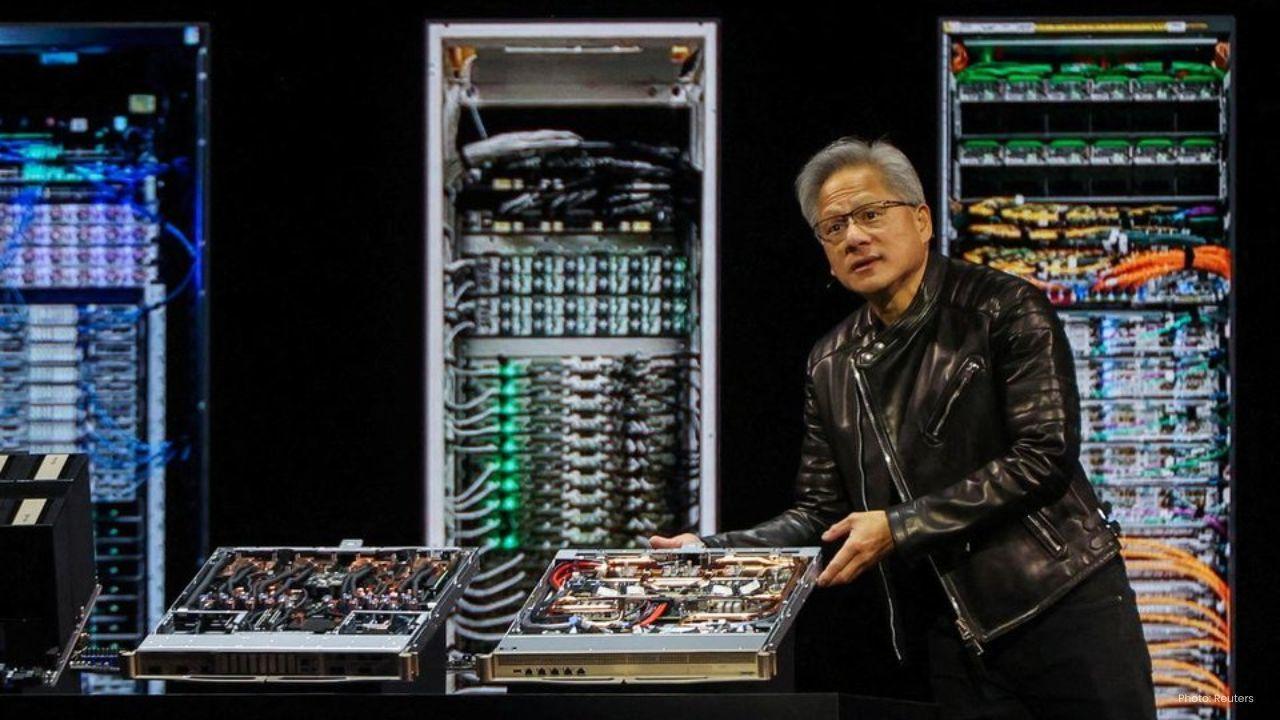
Just two weeks after Nvidia’s chief, Jensen Huang, made efforts to win back the trust of China’s tech community, the American chip-making giant is once again facing serious challenges in the country. This time, the concern is not about business strategy — it’s about security and trust.
On July 31, Chinese authorities summoned Nvidia’s representatives to discuss what they called "serious security issues" related to one of the company’s processors, the H20 chip. The next day, a commentary from the People’s Daily — a newspaper known for expressing the views of China’s Communist Party — asked bluntly, "Nvidia, how can I trust you?"
The H20 Chip at the Center of the Storm
The chip in question, called the H20, is currently the most advanced chip that Nvidia can legally sell to China under the U.S. government’s export rules. These restrictions were part of broader efforts by the U.S. to limit China’s access to powerful technologies like artificial intelligence (AI) and advanced semiconductors.
Back in April, Washington tightened its controls and banned the export of the H20 to China. But in July, the U.S. decided to lift the ban and allow shipments again. Some U.S. officials hinted that this move could help in negotiations with China over trade matters.
At first, this seemed like good news for Chinese AI companies. They had been struggling to find strong chips for their AI systems. But many experts now believe the move may have had a hidden cost.
“The lifting of the ban brings short-term help to China’s AI industry,” said a tech analyst, “but it might also slow down the use of local chips and reduce China’s efforts to become more self-reliant in technology.”
Why Nvidia’s Chips Are Still Popular in China
China has been pushing for the use of home-grown chips for years. This is part of a bigger plan to reduce reliance on foreign technology. However, many Chinese tech companies still prefer Nvidia chips for developing and running their AI models.
Nvidia’s H20 chip may not be the company’s most powerful product, but it is still far ahead of many local options. After news broke that the U.S. would allow exports again, Chinese companies rushed to buy the chips. Reports said Nvidia even placed a new order for 300,000 units from its factory to meet the demand from China.
Big Chinese firms like ByteDance, Tencent, Baidu, and Alibaba still prefer Nvidia chips. According to experts, Nvidia’s chips have better memory capacity, which is useful for AI tasks. The company also has a strong software platform and better networking technology that helps multiple chips work together more effectively.
Another reason why Chinese firms still prefer Nvidia is competition. Huawei, China’s largest chip company, is also a major player in AI and cloud computing. This makes other companies like Alibaba and Tencent think twice before buying chips from a direct rival.
“If you’re Tencent, would you want to rely on Huawei for your most important computing needs?” said one industry expert.
China’s Push for Technology Independence
Despite Nvidia’s strengths, China is not giving up on its plan to build a self-reliant tech industry. The recent concerns raised by Chinese regulators over the H20 chip could give a boost to local chipmakers.
Authorities in China’s internet and data security office warned that the H20 might have “backdoor” vulnerabilities. They demanded that Nvidia provide evidence to prove the chip is safe. The People’s Daily even suggested dramatic scenarios, such as electric cars losing power in the middle of highways due to hidden chip flaws.
Because of this, Chinese companies may hesitate to use Nvidia’s chips, even if they are in high demand. This could give local chip companies a better chance to grow.
A tech analyst pointed out, “Even if companies keep using Nvidia chips for now, the long-term trend will push them toward local options.”
Many Chinese companies have already been working with local chipmakers or developing their own. Banks, telecom firms, and cloud services have all increased their use of domestic chips. Even big names like Baidu and Alibaba are designing their processors.
Chinese Firms Take Action
On July 25, a Chinese AI start-up named StepFun announced that it had joined hands with several local chipmakers, including Huawei and Cambricon, to build a new ecosystem. They plan to build AI models that work best with local chips.
That same day, StepFun also launched a large language model developed to run smoothly on domestic chips. It was seen as a sign that Chinese firms are now more serious about supporting home-grown technology.
Meanwhile, another Chinese tech figure, Zhou Hongyi — the co-founder of Qihoo 360 — said his company had stopped buying American chips and was now using only Huawei products. His company, which also works in AI and cybersecurity, is on the U.S. blacklist that restricts access to American technology.
In a video posted online, Mr. Zhou admitted that Chinese chips still have a performance gap compared to Nvidia’s. But he said using domestic products was the only way to help them improve.
“If you never use them, the gap will always remain,” he said. “The more we use them, the faster they’ll catch up.”
A Tech Battle with Global Impact
The situation between Nvidia and China shows how complex and sensitive the global technology race has become. While Chinese firms continue to rely on Nvidia’s expertise and advanced chips, the government is pressing hard for independence.
At the same time, U.S. policies are shifting — trying to balance national security concerns with global trade and business interests. For Nvidia, the path forward in China may not be easy. On one hand, there’s a huge market and high demand. On the other hand, trust issues and political tensions continue to grow.
For Chinese tech companies, the choice may soon come down to either sticking with what’s best today or investing in what may be better for tomorrow.
One thing is clear: the global chip war is not just about machines — it’s also about trust, power, and the future of technology leadership.







PSG Coach Luis Enrique Urges Players to Step Outside Comfort Zone
PSG coach Luis Enrique says players must leave their comfort zone and keep improving as the club tar

China’s Tiangong Sets New 400m Record at Robot Olympics
China’s Tiangong robot sets a new 400m record at the Robot Olympics, beating a South African robot i

George Russell Wins Dutch GP Sprint, Boosts Mercedes Morale
George Russell wins the Dutch GP Sprint from pole as Mercedes teammate Kimi Antonelli extends his F1

Australia 50/3 After Bangladesh Bowled Out for 64 in Second Test
Australia reached 50/3 after Bangladesh were bowled out for 64 in the second Test, with Mitchell Sta

Jordan Burroughs Returns to Wrestling with 2028 Olympic Dream
Jordan Burroughs returns to wrestling with Real American Freestyle as the Olympic champion eyes a po

Lamborghini Catches Fire on Singapore's ECP, Causing Heavy Traffic
A Lamborghini caught fire on Singapore's ECP, causing heavy traffic and bus delays. No injuries were