You have not yet added any article to your bookmarks!
Join 10k+ people to get notified about new posts, news and tips.
Do not worry we don't spam!

Post by : Anis Farhan
In a significant development for global trade and strategic economic cooperation, the United States and Taiwan have concluded a landmark trade agreement aimed at cutting tariffs on each other’s goods and substantially increasing Taiwan’s purchases of American products over the next several years. The deal — formalised on February 12, 2026 — marks a deepening of commercial engagement between the two partners and aligns Taiwan’s tariff structure more closely with those of other major U.S. trade allies.
Under the terms of the agreement, the U.S. will maintain a 15 percent tariff rate on Taiwanese imports, down from an earlier 20 percent level, while Taiwan will either reduce or eliminate its tariffs on a wide range of U.S. products. Additionally, Taipei has agreed to significantly **boost its purchases of American goods and services through 2029, including energy supplies, aircraft, industrial equipment and more.
This article provides a detailed overview of the pact’s key provisions, strategic context, economic implications for both parties, reactions from political and business circles, and what it could mean for broader U.S.–Asia trade dynamics.
Under the signed deal, the tariff on Taiwanese exports to the United States is set at 15 percent, placing these goods on equal footing with Taiwan’s competitors such as Japan and South Korea. Meanwhile, Taiwan has committed to a schedule for reducing or eliminating tariffs on nearly all U.S. goods, effectively boosting American export opportunities in the Taiwanese market.
Ta ipei also secured exemptions for more than 2,000 Taiwanese products exported to the United States, further reducing average tariff burdens. Taiwanese officials have described this outcome as “most favoured nation” treatment, reinforcing Taiwan’s competitiveness in the U.S. market.
These tariff adjustments are legally confirmed but must still be ratified by Taiwan’s legislature before full implementation. The approval process is expected to draw significant debate in Taipei’s opposition-controlled parliament.
One of the most consequential aspects of the deal is Taiwan’s pledge to dramatically increase its purchases of American products from 2025 through 2029. Specific allocations include:
$44.4 billion in liquefied natural gas (LNG) and crude oil,
$15.2 billion in civil aircraft and engines, and
$25.2 billion in power grid equipment and generators.
These figures reflect commitments to deepen trade ties across energy, aviation, and industrial sectors, which could catalyse new export opportunities for U.S. producers in Asia.
Although primarily a tariff-focused deal, the broader U.S.–Taiwan trade relationship includes massive investment commitments tied to the technology and manufacturing spheres. Taiwan’s semiconductor and high-technology companies have pledged substantial capital flows to the U.S., aimed at boosting production of advanced chips, AI components, and other critical infrastructure elements.
This investment trajectory builds on earlier agreements and highlights an evolving economic partnership where capital markets and industrial strategy intersect with trade policy. While not a legally binding aspect of the tariff deal itself, these investments augment the strategic dimension of the partnership.
The U.S.–Taiwan agreement arrives amid broader tensions in the Asia-Pacific region and recurring debates about supply chain security, especially in semiconductors and advanced technologies. For the United States, enhancing market access with Taiwan — a major producer of high-end chips and electronics — supports efforts to strengthen resilient supply chains and diversify technology supply dependencies.
From Taiwan’s perspective, deeper economic ties with the U.S. help diversify export markets and reduce reliance on any single regional partner, which also has geopolitical implications given cross-strait (China–Taiwan) tensions.
Trade analysts note that while the agreement facilitates greater American access to Taiwanese markets and encourages increased exports, it may not dramatically reduce the U.S. trade deficit with Taiwan in the near term. This is due in part to the structure of bilateral trade flows — particularly Taiwan’s robust exports of semiconductors and ICT products, which account for a significant share of total shipments.
However, by setting predictable tariff levels and expanding market access, the pact could contribute to long-term economic integration and supply chain alignment that benefits firms and consumers on both sides. The potential for expanded U.S. investment in Taiwanese technology production and Taiwanese investment in U.S. sectors may yield broader economic dividends beyond short-term trade statistics.
U.S. Trade Representative Jamieson Greer emphasised that the agreement builds on the longstanding economic relationship with Taiwan and expected it to enhance export opportunities for American sectors such as agriculture, manufacturing, energy and high technology. Officials highlighted the pact’s role in bolstering supply chain resilience and reinforcing U.S. leadership in promoting open trade.
Political figures and trade advocates in the U.S. have generally welcomed the framework, describing it as a strategic commercial advance in Asia — particularly as global competition in technology and energy markets intensifies.
Taiwanese President Lai Ching-te praised the agreement as a transformative moment for the island’s economy and industries, asserting that reduced tariffs and expanded trade commitments would foster growth and innovation. Officials in Taipei have sought to balance enthusiasm for foreign trade with domestic concerns over protecting sensitive local industries, leading to nuanced political debate at home.
Opposition parties and industry groups in Taiwan have also voiced questions about legislative procedures and the broader implications of tariff reductions — underscoring that parliamentary ratification remains a critical next step.
The agreement, while finalised in Washington and Taipei, must clear Taiwan’s parliament before it takes full effect. This legislative hurdle introduces potential for amendments or delays, particularly given opposition control in the legislature. Implementation timelines hinge on political negotiations in both capitals.
Looking ahead, the pact sets a foundation for closer economic alignment between the United States and Taiwan — particularly in sectors like energy, aviation, advanced manufacturing and technology. As both economies adapt to shifting global trade patterns, this agreement could serve as a cornerstone for expanded commercial cooperation and strategic dialogue.
The 2026 U.S.–Taiwan trade agreement to cut tariffs and enhance purchases of U.S. goods represents a significant milestone in bilateral economic relations. By formalising tariff reductions and securing ambitious purchase commitments, the deal strengthens market access for American exporters while positioning Taiwan as a deeper trading partner. Its full impact will unfold over the coming years — shaped by implementation decisions, geopolitical dynamics, and evolving global trade patterns.
Disclaimer: This article summarises developments based on reporting available at the time of writing. Future policy changes and legislative action may affect the implementation and outcomes of the trade agreement.





George Russell Wins Dutch GP Sprint, Boosts Mercedes Morale
George Russell wins the Dutch GP Sprint from pole as Mercedes teammate Kimi Antonelli extends his F1

Australia 50/3 After Bangladesh Bowled Out for 64 in Second Test
Australia reached 50/3 after Bangladesh were bowled out for 64 in the second Test, with Mitchell Sta

Jordan Burroughs Returns to Wrestling with 2028 Olympic Dream
Jordan Burroughs returns to wrestling with Real American Freestyle as the Olympic champion eyes a po

Lamborghini Catches Fire on Singapore's ECP, Causing Heavy Traffic
A Lamborghini caught fire on Singapore's ECP, causing heavy traffic and bus delays. No injuries were

Bangkok Airport Duty-Free Area Flooded by Pipe Burst
A burst water pipe flooded the duty-free shopping area at Bangkok's Suvarnabhumi Airport on July 16,
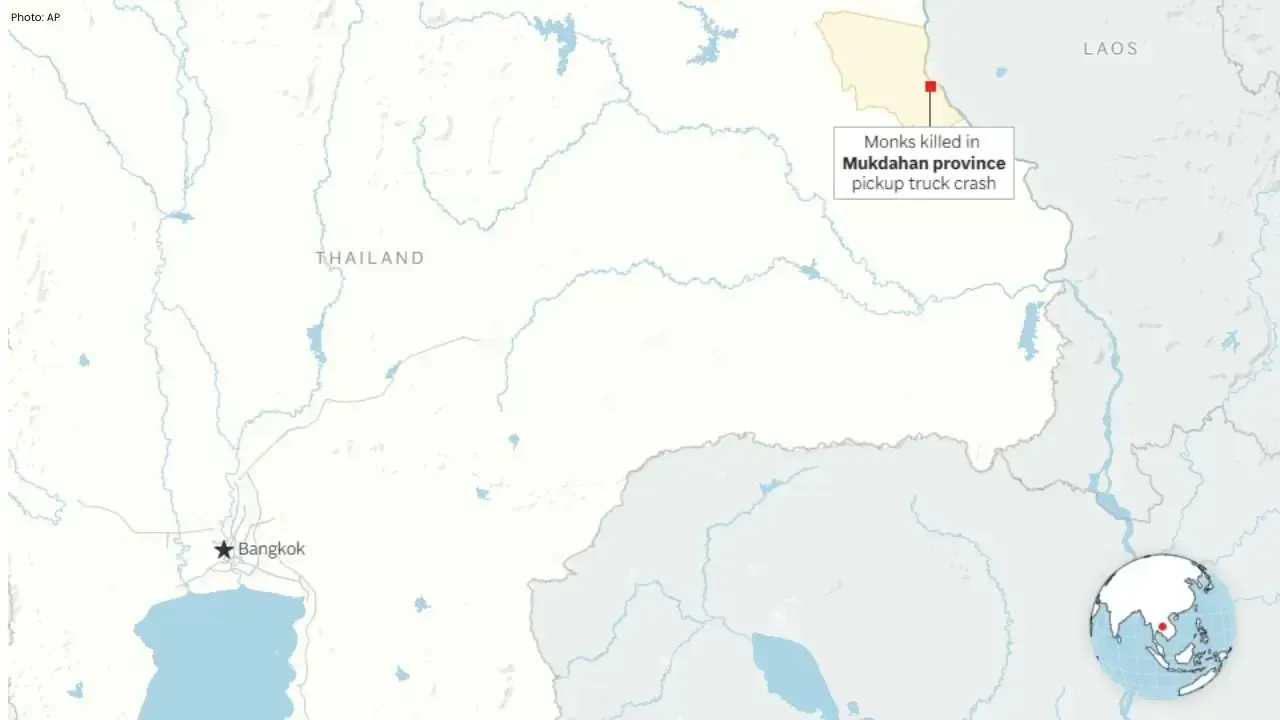
Nine Monks Killed in Thailand Pickup Truck Tragedy
An 11-year-old boy driving a pickup truck crashed into monks during a pilgrimage in northeastern Tha