
You have not yet added any article to your bookmarks!
Join 10k+ people to get notified about new posts, news and tips.
Do not worry we don't spam!
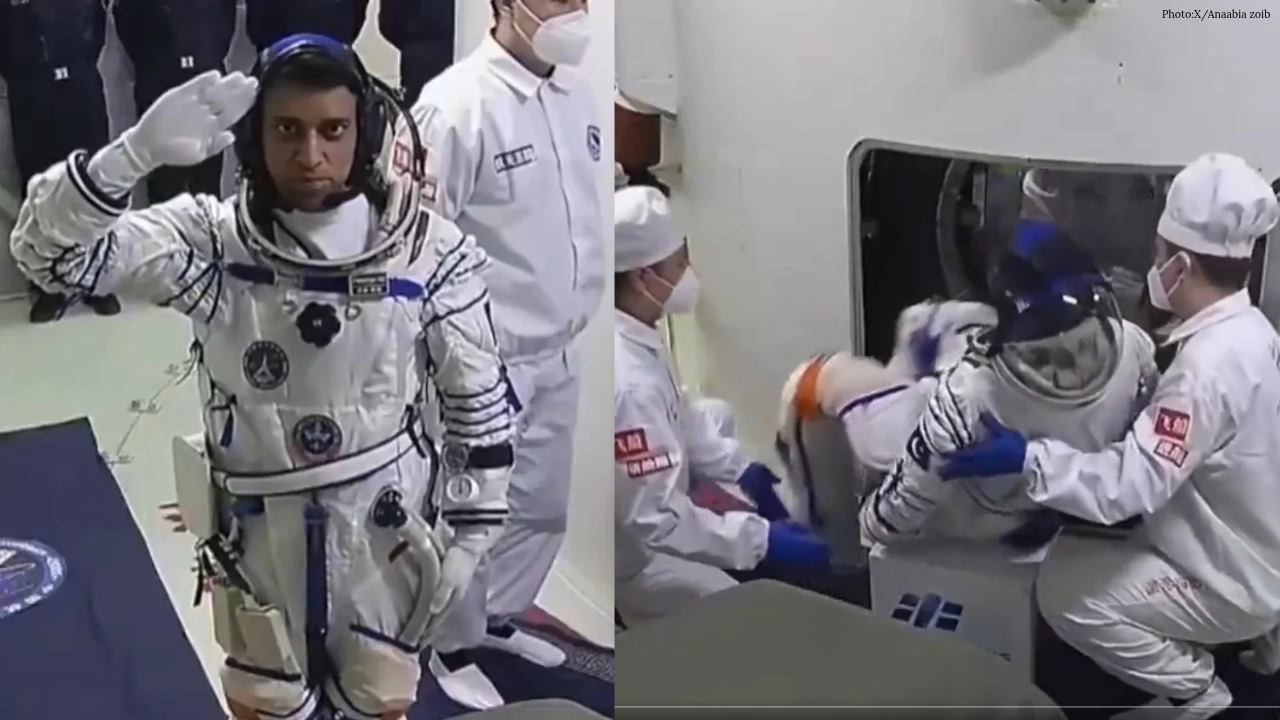
Post by : Rohit Dhiman
Pakistan has taken an important step in its space exploration journey as astronaut Muhammad Zeeshan Ali has launched into space aboard a Chinese rocket, beginning his journey towards China's Tiangong space station. The mission marks another significant development in the growing space partnership between Pakistan and China, bringing the two countries closer in the field of human spaceflight and scientific research. Under a bilateral agreement between the two nations, Ali will travel to the Chinese space station to participate in scientific activities and conduct research in specialised fields. His research assignments will primarily focus on biotechnology and materials science, two areas that have considerable potential for technological advancement and future scientific applications. The mission also reflects China's expanding role in international space cooperation and Pakistan's efforts to develop its capabilities in advanced space research.
The launch of Muhammad Zeeshan Ali aboard a Chinese rocket represents an important milestone for Pakistan's participation in human space exploration. His journey towards the Tiangong space station is part of a wider scientific partnership through which Pakistan and China are working together to create opportunities for research beyond Earth's atmosphere. Reaching an orbiting space station requires a carefully coordinated process involving rocket launch operations, spacecraft navigation, orbital positioning and docking procedures. Once the spacecraft reaches the appropriate orbit, it must complete the necessary steps to approach and connect with the station. For Ali, the mission is not simply a journey into space. It is also an opportunity to participate in scientific experiments in an environment that is significantly different from conditions on Earth. The microgravity environment inside an orbital space station allows researchers to study certain biological and physical processes under conditions that cannot be easily reproduced in conventional laboratories.
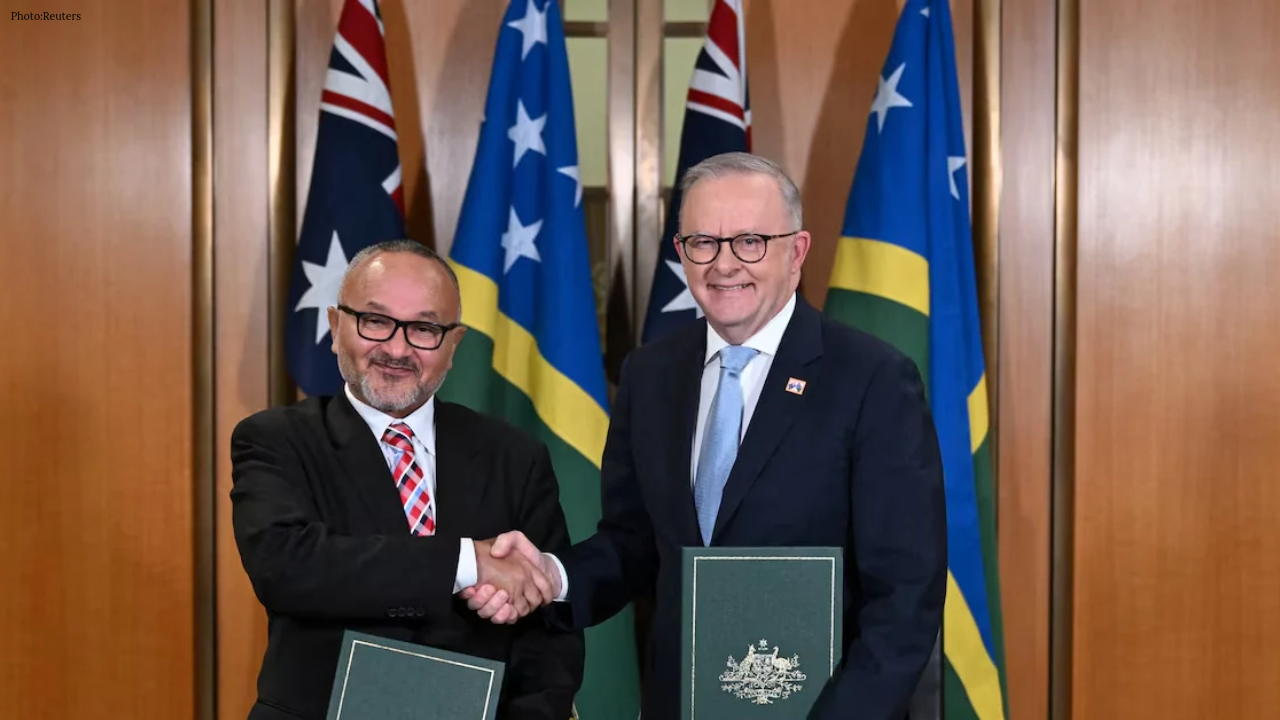
Read Also: Australia and Solomon Islands Sign Major Pact to Counter China
According to the mission agreement, Ali will work on scientific projects involving biotechnology and materials science. Both research areas are important for understanding how different biological and physical processes behave in space.
1. Biotechnology Research in Space
Biotechnology research involves studying biological systems, living organisms and their applications in science and technology. Experiments conducted in space can help researchers understand how microgravity influences biological processes. These investigations may provide useful scientific knowledge in areas such as cell behaviour, biological development and the effects of unusual environmental conditions on living systems. Research in this field could contribute to a broader understanding of biological processes and help scientists explore new possibilities for future space missions.
2. Materials Science Experiments
Materials science is another major area of research planned during the mission. Scientists study how different materials behave under specific environmental conditions, including the microgravity environment found aboard an orbital space station. Such experiments can help researchers investigate material formation, structural properties and other physical processes. The findings from these studies may support future developments in advanced materials, manufacturing technologies and engineering applications. For space programmes, understanding the behaviour of materials is particularly important because spacecraft, satellites and space station equipment must operate in challenging conditions.
The mission highlights the growing importance of Pakistan-China space cooperation. China has developed an extensive space programme that includes human spaceflight, satellite technology, lunar exploration and the construction and operation of its own space station. Through cooperation with China, Pakistan is gaining opportunities to participate in advanced scientific activities and expand its experience in space-related research. For Pakistan, international partnerships can provide access to specialised infrastructure, technical expertise and research opportunities that would otherwise require significant investment and long-term development. The partnership also creates opportunities for Pakistani scientists and researchers to engage with international scientific programmes and contribute to experiments conducted in space. For China, cooperation with Pakistan strengthens its international scientific partnerships and demonstrates the potential of its space infrastructure to support collaborative research.
China's Tiangong space station is one of the country's most significant achievements in modern space exploration. The orbital laboratory provides a platform for astronauts and scientists to conduct experiments in microgravity and study scientific questions related to space, biology, physics and engineering. Unlike laboratories on Earth, an orbital research facility offers a different environment in which scientists can investigate how materials and biological systems respond to prolonged exposure to microgravity. The station also supports China's long-term ambitions in human spaceflight and scientific exploration. Research conducted aboard the facility can contribute to future space missions and the development of technologies needed for extended human activities beyond Earth. International participation in such programmes can also encourage scientific exchange and create opportunities for countries with developing space programmes.
Muhammad Zeeshan Ali's participation in the Chinese space mission represents a noteworthy development in Pakistan's efforts to strengthen its position in the global space research community. The mission is particularly important because it connects Pakistan's scientific ambitions with an operational human spaceflight programme. Rather than limiting cooperation to conventional satellite-related activities, the partnership creates opportunities for direct participation in research conducted aboard an orbital space station. The experience gained through this mission could prove valuable for Pakistan's future scientific planning, particularly in biotechnology, materials science and other advanced research disciplines. It also highlights how international partnerships are becoming increasingly important in modern space exploration. Countries can share technical knowledge, scientific resources and research opportunities to advance their respective space programmes. As Ali begins his mission towards the Tiangong space station, attention will remain focused on the scientific work planned during his stay and the broader implications of Pakistan's growing cooperation with China. The mission is another reminder that space exploration is no longer limited to a small group of established space powers. Through international partnerships and scientific collaboration, more countries are finding opportunities to participate in research beyond Earth's atmosphere.





Shubman Gill Wants Bowler-Friendly Pitch for 2nd Test
Shubman Gill wants a bowler-friendly Christchurch pitch as India prepare to bounce back after a draw
Cadillac Targets F1 Progress After Difficult Debut Season
Cadillac F1 retains Valtteri Bottas for 2027 as Dan Towriss focuses on team stability, performance a

GTA 6 Launches Worldwide After 13 Years With a New Vice City Story
GTA 6 arrives after 13 years with Jason and Lucia, a new Vice City world, immersive gameplay, major

Arda Guler Signs Six-Year Real Madrid Contract Extension Until 2032
Arda Guler signs a new six-year Real Madrid deal, extending his stay until 2032 after an impressive
APEC Members Emphasise Safe and Responsible Use of Artificial Intelligence
APEC members discuss responsible AI use, digital innovation and data governance as China and the US

Union of European Clubs Challenge UEFA and EFC Over EU Competition Rules
UEC files an EU competition complaint against UEFA and EFC, challenging club representation, governa