
You have not yet added any article to your bookmarks!
Join 10k+ people to get notified about new posts, news and tips.
Do not worry we don't spam!
Post by : Saif Rahman
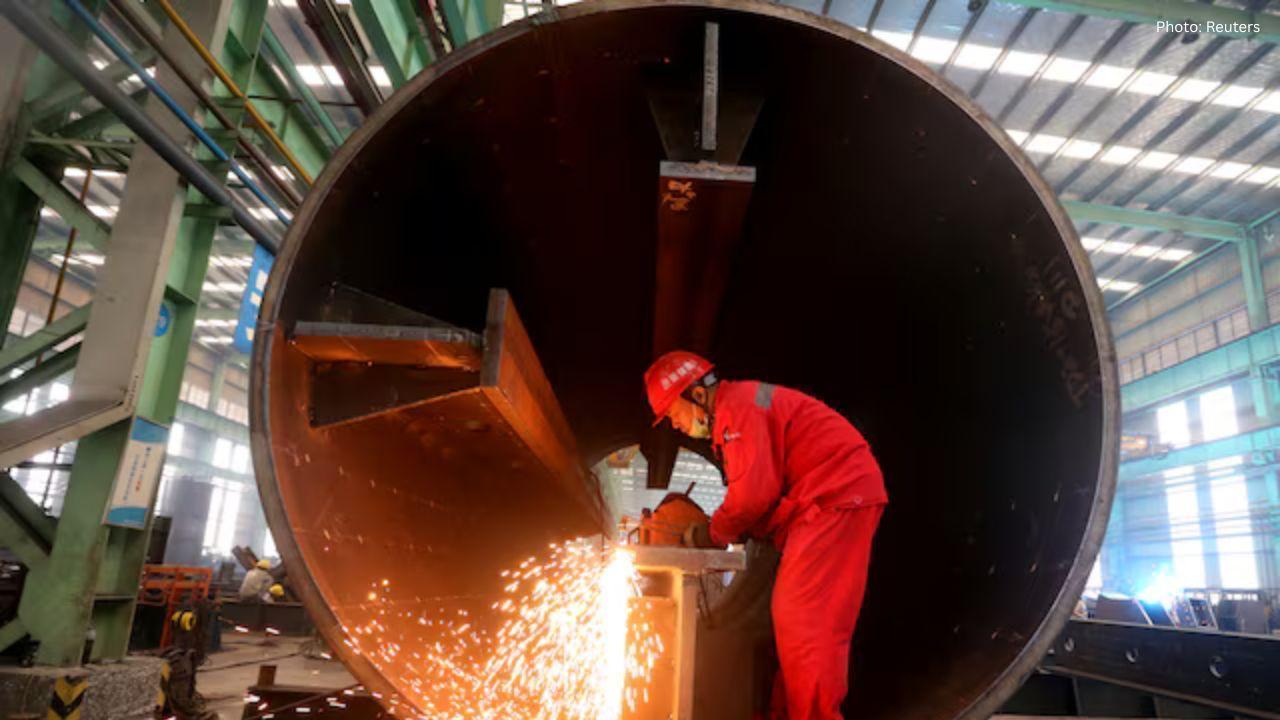
Asia’s manufacturing giants wrapped up 2025 on an unexpectedly optimistic note. Recent figures indicate that factory activities in the region improved in December, propelled by a rise in export orders and an upswing in global demand. This recovery signals a promising start as countries gear up for 2026.
Data released by S&P Global, specifically the purchasing managers’ indexes (PMIs), show that key tech-driven economies such as Taiwan and South Korea returned to growth after a tumultuous year. This resurgence is particularly significant given the extended periods of contraction these nations experienced earlier.
The PMI serves as a crucial health indicator for manufacturing sectors. A score above 50 denotes growth, whereas a score below indicates contraction. Taiwan’s PMI climbed to 50.9 in December, marking its first growth in ten months, while South Korea’s PMI reached 50.1, breaking a lengthy decline.
Analysts attribute this recovery largely to the rising global demand for electronics linked to artificial intelligence. As the year drew to a close, orders surged, pushing factories to ramp up production and hire more employees.
Taiwan and South Korea, significant players in semiconductor manufacturing, have witnessed a notable spike in demand for these essential components, driven by global investment in AI technologies. This has reinvigorated production levels in both countries.
Manufacturers in Taiwan reported heightened production activities and burgeoning business opportunities. Many expressed increased confidence about the future, demonstrated by their decision to stockpile inventory in expectation of sustained demand into 2026.
Similarly, South Korean factories exhibited a marked improvement, with surveys indicating the most significant rise in new orders in over a year. Companies mentioned that better international demand and new launches stimulated sales. Manufacturer confidence soared to levels not seen in years, prompting increased hiring and capital investment.
Trade statistics corroborated these trends, with South Korean exports outperforming expectations in December, signaling positive momentum for global trade, as the nation often serves as an early barometer for worldwide economic health.
In other parts of Asia, factory operations remained largely stable. Several Southeast Asian economies continued to experience growth, albeit at a slightly reduced pace in places like Indonesia and Vietnam, benefiting from robust regional trade and sound domestic demand.
India’s manufacturing sector expanded at its slowest rate in two years, yet still ranks as one of the strongest in the region. This deceleration indicates a cooling after a protracted expansion phase without being a red flag.
China also showed positive signs of recovery earlier in the week, with factory activities gaining traction thanks to a last-minute surge in orders before holiday seasons. This enhances the notion that Asia’s manufacturing sector could be stabilizing following a challenging stretch.
Experts caution that it is premature to assess the long-term implications of global trade frictions, such as U.S. tariffs, on Asian manufacturing. Nonetheless, many hold that the rising appetite for AI-related goods and shifts in supply chains could continue to bolster the region's industries.
As 2026 approaches, Asia’s factories project a more stable and confident outlook compared to earlier in the year. While hurdles remain, the increasing orders and production instills cautious optimism among labor forces, businesses, and economies across the region.










PM Modi Pays Tribute to Mahatma Gandhi, Urges People to Support Khadi
PM Modi pays tribute to Mahatma Gandhi on Gandhi Jayanti and urges citizens to support Khadi and the

Amazon Seeks to Offload $8 Billion in Nvidia Chips to Investors
Amazon plans to move $8 billion in Nvidia chips to investors, using a new financing model to strengt

Samsung Raises Galaxy S26 Prices as Memory Chip Costs Rise
Samsung raises Galaxy S26 prices in South Korea as rising memory chip costs put pressure on smartpho

Lewis Hamilton Calls Singapore Grand Prix One of F1's Toughest Races
Lewis Hamilton discusses the demanding Singapore Grand Prix and brings Plus44 and Almave to Singapor

Denmark's Pandora Opens World's Largest Jewellery Factory in Vietnam
Pandora opens its largest jewellery factory in Vietnam, expanding global production, strengthening s

Gautam Gambhir Questions Batting-Friendly Pitches After India's Record ODI Chase
Gautam Gambhir questions batting-friendly ODI pitches after India’s record chase, calling for a bett

