You have not yet added any article to your bookmarks!
Join 10k+ people to get notified about new posts, news and tips.
Do not worry we don't spam!
Post by : Maya Rahman
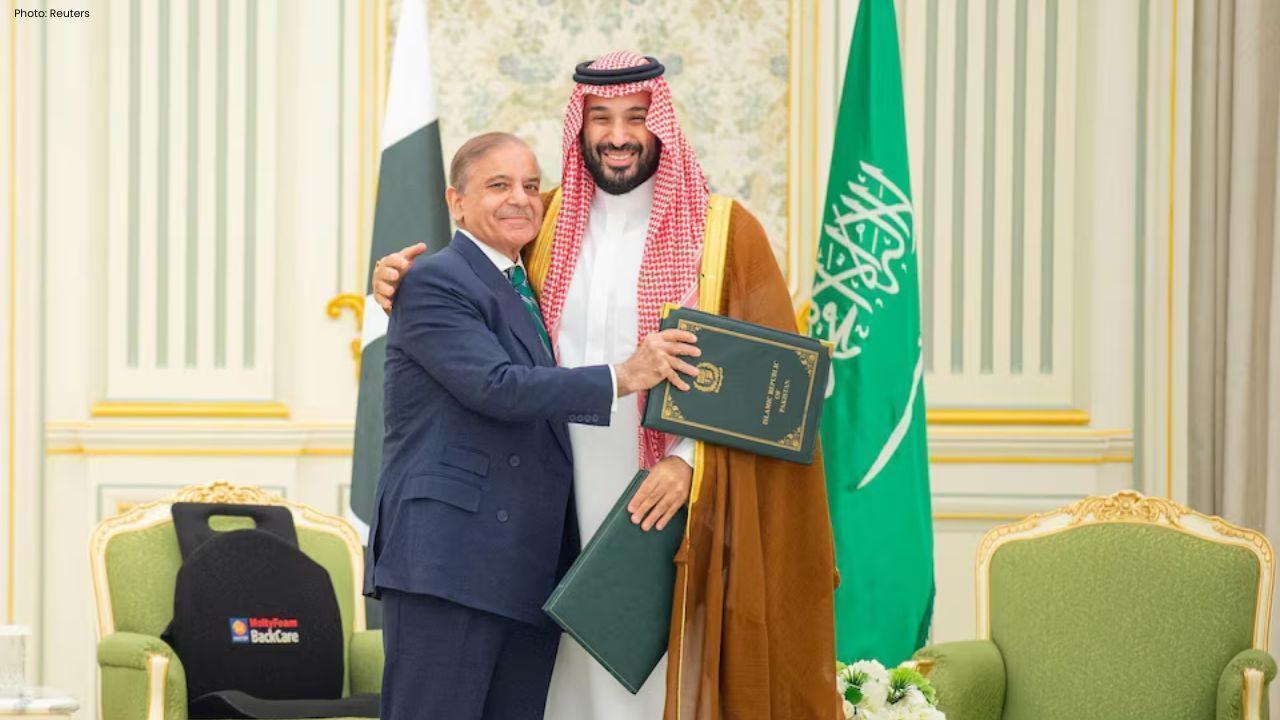
Pakistan’s Prime Minister Shehbaz Sharif recently visited Saudi Arabia on the invitation of Crown Prince Mohammed bin Salman. His visit came at a time when Pakistan was facing growing political pressure at home and also regional security challenges. The meeting between the two leaders was held at the Al-Yamamah Palace in Riyadh, a historic place where many key agreements have been signed before.
The visit was not only ceremonial but carried a very strong message of friendship, unity, and partnership between Pakistan and Saudi Arabia. Sharif was also joined by Pakistan’s Army Chief, Field Marshal Asim Munir, showing the importance of military cooperation in this trip.
Signing of the Mutual Defence Pact
During this visit, the two countries signed a new mutual defence agreement. This pact was described as a very important step forward in their long relationship. The agreement clearly says that if either Saudi Arabia or Pakistan faces aggression from any outside country, it will be treated as aggression against both nations.
This means that if one country is attacked, the other is bound to stand with it and act as if it was also attacked. It strengthens military cooperation and builds on their eight decades of historic partnership.
A Partnership Based on Brotherhood
According to the joint statement, Saudi Arabia and Pakistan share deep bonds of Islamic brotherhood and friendship. Their relationship is not just political but also cultural, religious, and economic. Both countries have supported each other during difficult times.
The defence pact is meant to carry forward this historic connection. It reflects their shared goal to protect their national security and to work together for peace and stability in the Middle East and South Asia.
Focus on Security and Peace
The joint statement after the meeting explained that the agreement aims to develop defence cooperation between the two countries. It also strengthens their joint ability to prevent or deter any kind of attack.
The leaders stressed that their goal is not just to defend themselves but also to contribute to peace in the wider region and even across the world. They want to show that close partnerships can make countries stronger and safer.
India’s Response to the Pact
India, which has been watching regional developments closely, responded in a measured and careful way. The Ministry of External Affairs in New Delhi said that this agreement only formalizes something that has existed between Saudi Arabia and Pakistan for many years.
India’s statement also said that the government was already aware of this pact being under discussion. Now that it is signed, India will carefully study its implications for national security and for regional and global stability. The Ministry made it clear that India will continue to protect its national interests in every domain.
Tense Relations Between India and Pakistan
The timing of this agreement is important. Relations between India and Pakistan have been very tense since the Pahalgam terror attack, in which many lives were lost. India responded strongly with an operation called Operation Sindoor.
In this background, Pakistan signing a defence pact with Saudi Arabia has raised questions about how it may affect the region. For India, the concern is whether this agreement could encourage Pakistan to take a more aggressive stand.
India and Saudi Arabia’s Growing Partnership
Even though Saudi Arabia has signed this pact with Pakistan, India also enjoys very strong relations with Riyadh. In fact, under the leadership of Prime Minister Narendra Modi, ties between India and Saudi Arabia have grown steadily.
India is now the second-largest trading partner of Saudi Arabia. Trade, energy cooperation, and investment links are very strong. This is why India continues to focus on maintaining strong ties with Saudi Arabia, even while observing the new pact with caution.
Saudi Arabia’s Stand Against Terrorism
It is important to note that Saudi Arabia has openly stood with India in its fight against terrorism. During Prime Minister Modi’s visit to Riyadh earlier this year, both sides strongly condemned the Pahalgam terror attack.
In their joint statement, they agreed that there can never be any justification for terrorism of any kind. They also urged all countries to reject cross-border terrorism, dismantle terrorist infrastructure, and bring those responsible to justice. This shows that Saudi Arabia’s stand on terrorism is very close to India’s position.
Historic Visits by Prime Minister Modi
Prime Minister Modi has visited Saudi Arabia three times during his tenure. His first visit created new energy in the relationship, and in 2016, he was even awarded the King Abdulaziz Sash, the highest civilian honour in Saudi Arabia.
These visits have helped build a strong personal connection between Modi and the Saudi leadership, which has supported India’s position in many international forums. India sees Saudi Arabia not only as a trading partner but also as a reliable strategic ally in the region.
Broader Regional Impact of the Pact
The Saudi-Pakistan defence agreement is also being seen as part of larger geopolitical changes in the Middle East and South Asia. For Pakistan, it provides a strong message that it has powerful friends standing with it. For Saudi Arabia, it strengthens its leadership role in the Islamic world.
At the same time, this agreement could add new layers to the already complex relations between India, Pakistan, and Saudi Arabia. Analysts believe that while India and Saudi Arabia have strong ties, Pakistan will also continue to deepen its relations with Riyadh.
Balancing Relationships Carefully
For India, the challenge will be to balance its growing relationship with Saudi Arabia while keeping a close watch on how Pakistan may use this agreement. India will carefully study the details and will continue its diplomatic efforts to make sure its interests are protected.
Saudi Arabia, on the other hand, will likely try to maintain good ties with both India and Pakistan. It has large economic and strategic interests in both countries. Its decision to condemn terrorism during Modi’s visit shows that it values India’s friendship.
A New Chapter in Regional Politics
The signing of the Saudi-Pakistan mutual defence pact is a major development in regional politics. It shows the strong trust between Riyadh and Islamabad, and their commitment to support each other in times of need.
For India, the pact is a reminder of the importance of keeping a strong and independent foreign policy while maintaining close ties with Saudi Arabia. At the same time, it underlines the need to stay alert to regional shifts that could affect national security.
As the situation develops, the world will be watching how this new agreement plays out, and whether it strengthens peace or deepens rivalries in the region.





Rabada Misses First Australia Test as South Africa Pick Two Spinners
Kagiso Rabada misses the opener as South Africa vs Australia begins, with Anrich Nortje returning an

Starc Compares Australia's Tough Year to McIlroy's Major Sweep
Mitchell Starc says Australia winning three away Test series and the World Cup would match Rory McIl

France’s Sesterce Plans $11 Billion AI Data Centre in Finland
Sesterce plans a $11 billion AI data centre in Finland, with major expansion, green energy plans and

Danaher to Launch AI-Powered Autonomous Research Lab in 2027
Danaher plans an AI research lab for 2027, combining robotics and automation to speed up drug discov

Musk Welcomes German Support for Tesla Driver Assistance Tech as EU Approval Push Continues
Elon Musk welcomes Germany's backing for Tesla FSD as the company seeks EU approval amid speed, safe
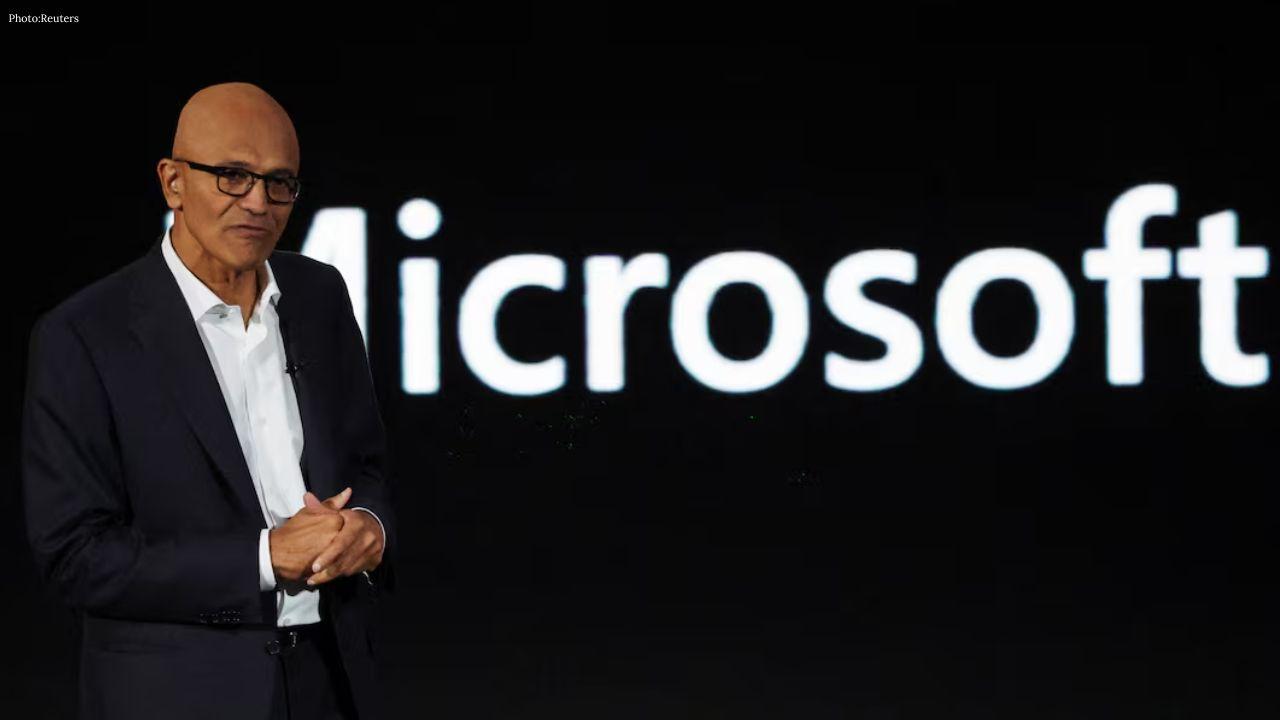
Microsoft and Nvidia CEOs to Unveil AI Laptop at San Francisco Event
Microsoft and Nvidia showcase a new AI laptop with RTX Spark chips as they push powerful local AI co