You have not yet added any article to your bookmarks!
Join 10k+ people to get notified about new posts, news and tips.
Do not worry we don't spam!
Post by : Anis Farhan
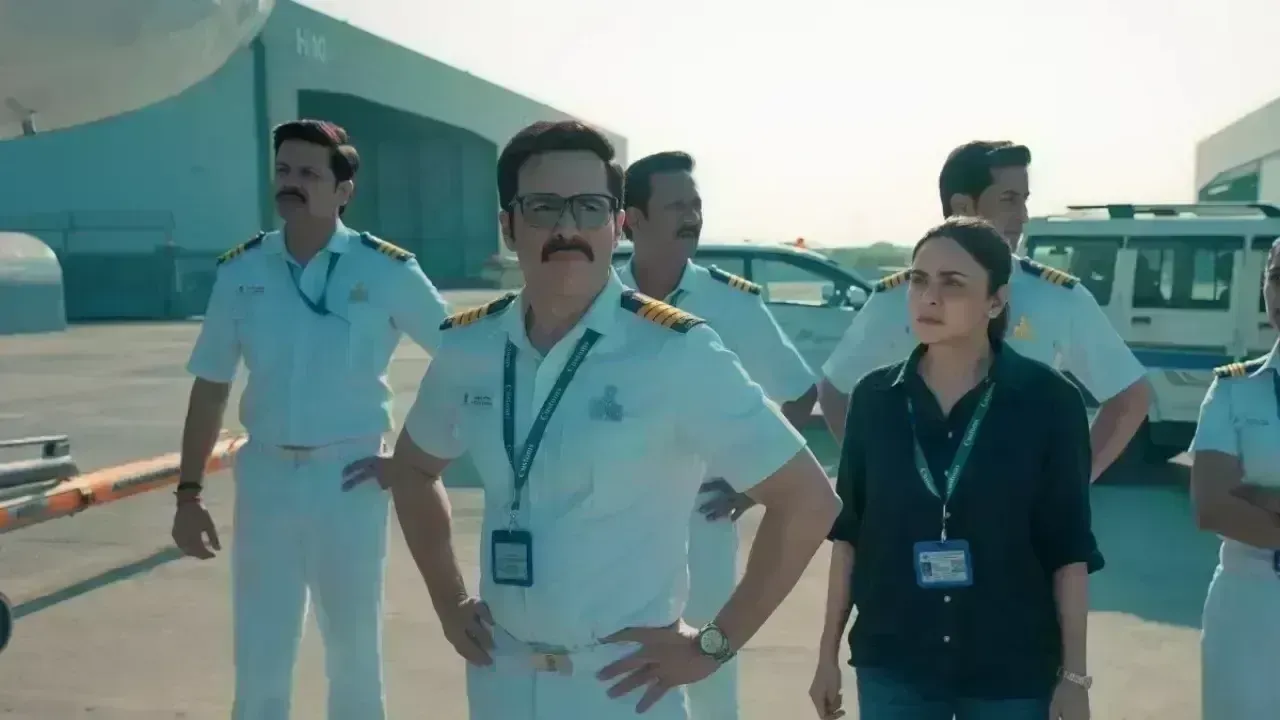
Streaming on Netflix, Taskaree: The Smuggler’s Web arrives as a crime thriller that deliberately steps away from the noise and velocity often associated with the genre. Instead of high-decibel action or exaggerated heroism, the series chooses restraint, detail, and realism as its guiding principles. It unfolds within the tightly regulated yet porous world of airport customs, revealing how global smuggling networks exploit systems that appear secure on the surface.
Set largely within Mumbai’s international airport ecosystem, the show examines contraband trafficking, institutional pressures, moral compromise, and the psychological toll of law enforcement. The narrative is grounded, methodical, and patient—asking viewers to lean in rather than sit back. Backed by Neeraj Pandey, the series continues his long-standing fascination with systems, intelligence, and individuals operating within grey zones of authority.
At the heart of Taskaree is Arjun Meena, a customs superintendent who returns to active duty after an unexplained suspension. His reinstatement is not ceremonial; it is driven by necessity. A sophisticated smuggling syndicate has grown too confident, too efficient, and too deeply embedded within legal transit routes to be dismantled through routine enforcement.
Arjun is tasked with identifying how contraband continues to move freely despite layers of surveillance, documentation, and personnel. Gold, luxury watches, narcotics, and high-value items are slipping through gaps that are not accidental but carefully engineered. Each seizure hints at a much larger operation—one that thrives on timing, manipulation, and human error.
Opposing Arjun is Bada Choudhary, the unseen architect of the smuggling network. Unlike stereotypical crime lords, Choudhary does not rely on brute force. His power comes from planning, patience, and an understanding of systems better than those meant to protect them. The conflict between the two becomes a slow-burning chess match, where intelligence matters more than aggression.
Across seven episodes, the narrative builds tension through incremental discoveries rather than dramatic confrontations. Each lead opens new questions, and every apparent victory reveals deeper layers of compromise.
Taskaree is unapologetically procedural. Surveillance, profiling, paperwork, intelligence-sharing, and interrogation form the backbone of the storytelling. The series spends time explaining how customs operations work, why certain decisions are delayed, and how even minor oversights can be exploited by organised crime.
This approach demands patience from the audience but rewards it with authenticity. The show trusts viewers to follow complex threads without spoon-feeding information or relying on dramatic shortcuts.
Rather than escalating tension through action sequences, the series allows suspense to emerge organically. Conversations carry weight. Silences linger. Decisions are debated rather than declared. This deliberate pacing aligns with the show’s thematic focus: that real-world crime fighting is often slow, exhausting, and psychologically demanding.
Emraan Hashmi delivers one of his most restrained performances as Arjun Meena. Gone are the familiar dramatic flourishes; in their place is quiet intensity. Hashmi portrays Arjun as a man shaped by duty and disappointment, someone who understands that victories in his line of work are rarely celebrated and often incomplete.
His performance relies heavily on internalised emotion—subtle expressions, measured dialogue, and controlled body language. This restraint makes the character believable, especially in moments where ethical lines blur and professional isolation becomes evident.
Sharad Kelkar’s portrayal of Bada Choudhary is defined by composure. He does not dominate scenes through volume or threat but through confidence and calculation. His calm demeanour reinforces the idea that the most dangerous adversaries are those who rarely raise their voices.
The dynamic between protagonist and antagonist remains largely indirect, enhancing tension and reinforcing the procedural tone of the series.
The supporting cast plays a crucial role in grounding the narrative. Characters within the customs department reflect varying motivations—idealism, fatigue, ambition, and compromise. Their interactions capture the complexity of institutional work, where loyalty to the system often clashes with personal conscience.
Rather than existing as narrative tools, these characters feel lived-in, contributing to the emotional and ethical texture of the series.
One of the series’ strongest assets is its attention to detail. From the language used by officials to the depiction of airport logistics, Taskaree avoids exaggeration. The smuggling operations feel plausible, rooted in research rather than imagination.
This authenticity elevates the series above generic crime dramas, making it particularly appealing to viewers who value realism over spectacle.
The airport is not just a setting; it is an active participant in the story. Its constant movement, anonymity, and layered security systems create a backdrop where illegal activity can hide in plain sight. The series uses this environment effectively, highlighting how scale and routine can be manipulated by those who understand them.
Every interception, delay, and inspection gains significance because it unfolds within this carefully constructed ecosystem.
Taskaree does not rely on melodrama to generate engagement. Instead, it trusts its narrative complexity and thematic depth. Viewers are encouraged to think, connect dots, and question motives. This intellectual engagement sets it apart in an OTT landscape often dominated by high-impact storytelling.
While the slow-burn approach works thematically, it occasionally falters in execution. Certain episodes dwell too long on procedural detail without sufficient narrative progression. These stretches risk testing viewer patience, particularly for audiences accustomed to faster-paced thrillers.
Despite its grounded approach, some plot developments follow familiar genre patterns. Experienced viewers may anticipate certain twists, which slightly undercuts the suspense. While execution remains solid, the lack of surprise in key moments prevents the series from reaching its full potential.
At times, stylistic choices—such as background scoring or visual polish—feel at odds with the show’s commitment to realism. These moments are brief but noticeable, momentarily pulling the viewer out of the otherwise immersive world.
Audience reactions to Taskaree reflect its unconventional approach. Many viewers have praised the series for treating them as active participants rather than passive consumers. Emraan Hashmi’s performance, in particular, has been widely appreciated for its maturity and restraint.
However, some viewers have expressed frustration with the pacing, noting that the show demands sustained attention and may not suit binge-watching expectations shaped by faster narratives. This division highlights the series’ niche appeal—it resonates deeply with some while leaving others unconvinced.
Taskaree fits comfortably within Neeraj Pandey’s body of work, which often explores systems under stress and individuals navigating moral ambiguity. Like his earlier projects, the series prioritises intelligence and process over spectacle.
In the broader context of Indian OTT crime dramas, Taskaree stands out for its refusal to sensationalise crime. It presents law enforcement not as heroic fantasy but as sustained, often thankless labour.
Beyond smuggling and enforcement, the series engages with themes of institutional decay, ethical compromise, and the personal cost of integrity. It questions whether systems designed to protect can remain effective when those operating them are stretched thin or morally conflicted.
Arjun Meena’s journey is as much internal as it is procedural. His struggle reflects a broader commentary on how institutions rely on individuals willing to absorb pressure without recognition.
Taskaree: The Smuggler’s Web does not attempt to redefine the crime genre, but it refines it with intelligence and restraint. Its strengths lie in realism, performance, and thematic consistency. While pacing issues and familiar beats limit its mass appeal, the series succeeds in offering a more mature alternative to conventional thrillers.
For viewers willing to invest time and attention, Taskaree delivers a layered, intellectually engaging experience that lingers long after the final episode.
This article is based on publicly available information and critical responses to Taskaree: The Smuggler’s Web following its release on Netflix in January 2026. The analysis reflects an interpretative review intended for informational purposes.









Danaher to Launch AI-Powered Autonomous Research Lab in 2027
Danaher plans an AI research lab for 2027, combining robotics and automation to speed up drug discov

Musk Welcomes German Support for Tesla Driver Assistance Tech as EU Approval Push Continues
Elon Musk welcomes Germany's backing for Tesla FSD as the company seeks EU approval amid speed, safe

Microsoft and Nvidia CEOs to Unveil AI Laptop at San Francisco Event
Microsoft and Nvidia showcase a new AI laptop with RTX Spark chips as they push powerful local AI co

Man to face charges over perfume thefts at Changi Airport
A 47-year-old man faces charges over perfume theft at Changi Airport after six items worth nearly S$

Google Signs 3.6-GW Power Deal With Constellation Energy in US
Google signs a 3.6-GW power deal with Constellation Energy, including nuclear power upgrades to supp

Harmanpreet Kaur Steps Down as India Captain Across All Formats
Harmanpreet Kaur steps down as India captain across all formats after a remarkable leadership journe