
You have not yet added any article to your bookmarks!
Join 10k+ people to get notified about new posts, news and tips.
Do not worry we don't spam!
Post by : Rameen Ariff
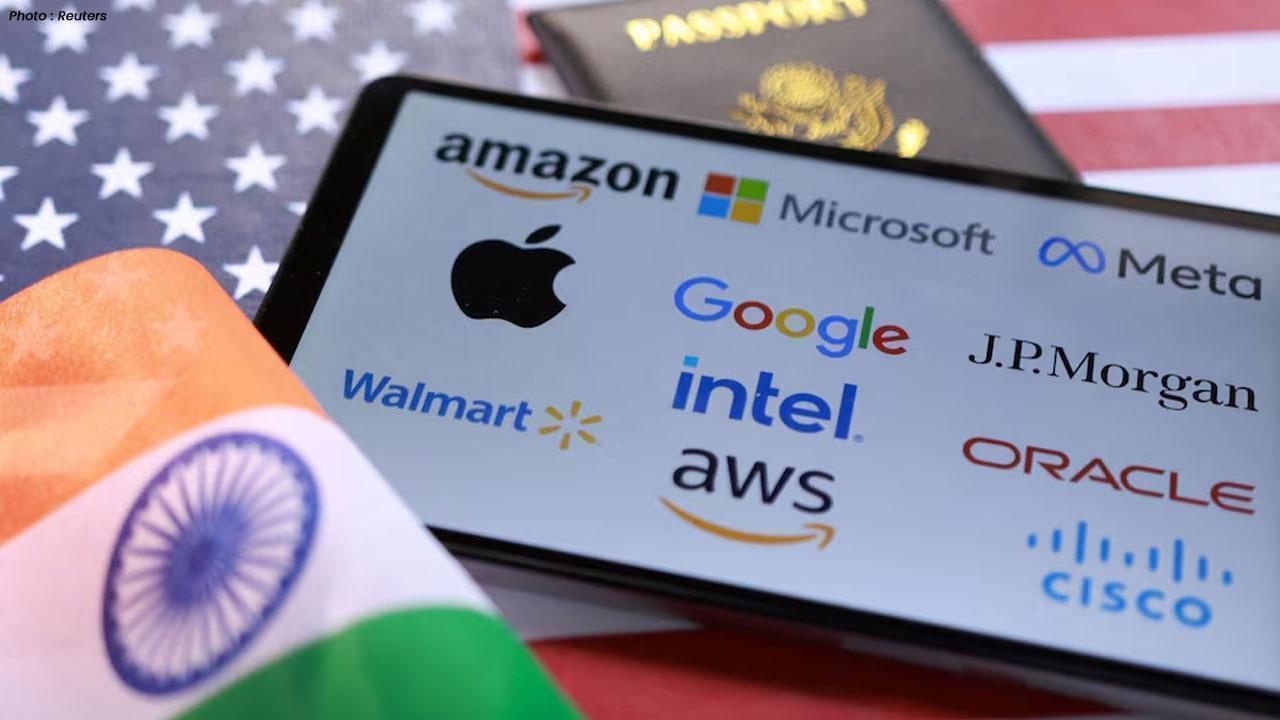
The recent H-1B visa policy changes by U.S. President Donald Trump are accelerating the shift of high-value work from American companies to India, industry experts and economists say. The move is expected to boost the growth of Global Capability Centres (GCCs) in India, which manage critical operations ranging from finance to research and development.
India, already home to over 1,700 GCCs—more than half of the global total—has evolved from a hub of tech support to a centre of high-value innovation. These centres now handle strategic tasks such as luxury car design, drug research, AI development, and advanced analytics.
The new visa fees, which have increased to $100,000 for H-1B applications from the previous range of $2,000 to $5,000, are putting pressure on U.S. firms that rely on skilled foreign workers. Several companies are reassessing their workforce strategies to mitigate rising costs and visa uncertainties.
“GCCs are uniquely positioned to serve as in-house engines for global firms,” said Rohan Lobo, partner and GCC industry leader at Deloitte India. “Many U.S. companies are already planning to move more strategic and innovation-led roles to their India centres.”
The trend is particularly strong in sectors such as financial services, technology, AI, cybersecurity, and product development. GCCs offer the advantage of maintaining strategic control while leveraging India’s skilled workforce and cost benefits.
While some experts urge caution, highlighting potential U.S. tax penalties on overseas outsourcing under the proposed HIRE Act, India’s GCCs are expected to benefit from the growing demand for high-value services. Analysts say that even if visa restrictions reduce some business in traditional IT services, increased GCC activity could offset revenue losses.
Industry insiders predict that by 2030, India will host more than 2,200 GCCs, with a market value approaching $100 billion. The combination of visa curbs, rising adoption of AI, and global labour strategy shifts is creating a sense of urgency among U.S. firms to expand their Indian operations.
As the global business landscape evolves, India’s GCCs are emerging as resilient hubs that blend domestic talent with global expertise, helping multinational corporations navigate geopolitical and regulatory challenges while maintaining innovation-led growth.










PM Modi Pays Tribute to Mahatma Gandhi, Urges People to Support Khadi
PM Modi pays tribute to Mahatma Gandhi on Gandhi Jayanti and urges citizens to support Khadi and the

Amazon Seeks to Offload $8 Billion in Nvidia Chips to Investors
Amazon plans to move $8 billion in Nvidia chips to investors, using a new financing model to strengt

Samsung Raises Galaxy S26 Prices as Memory Chip Costs Rise
Samsung raises Galaxy S26 prices in South Korea as rising memory chip costs put pressure on smartpho

Lewis Hamilton Calls Singapore Grand Prix One of F1's Toughest Races
Lewis Hamilton discusses the demanding Singapore Grand Prix and brings Plus44 and Almave to Singapor

Denmark's Pandora Opens World's Largest Jewellery Factory in Vietnam
Pandora opens its largest jewellery factory in Vietnam, expanding global production, strengthening s

Gautam Gambhir Questions Batting-Friendly Pitches After India's Record ODI Chase
Gautam Gambhir questions batting-friendly ODI pitches after India’s record chase, calling for a bett

