
You have not yet added any article to your bookmarks!
Join 10k+ people to get notified about new posts, news and tips.
Do not worry we don't spam!
Post by : Meena Ariff
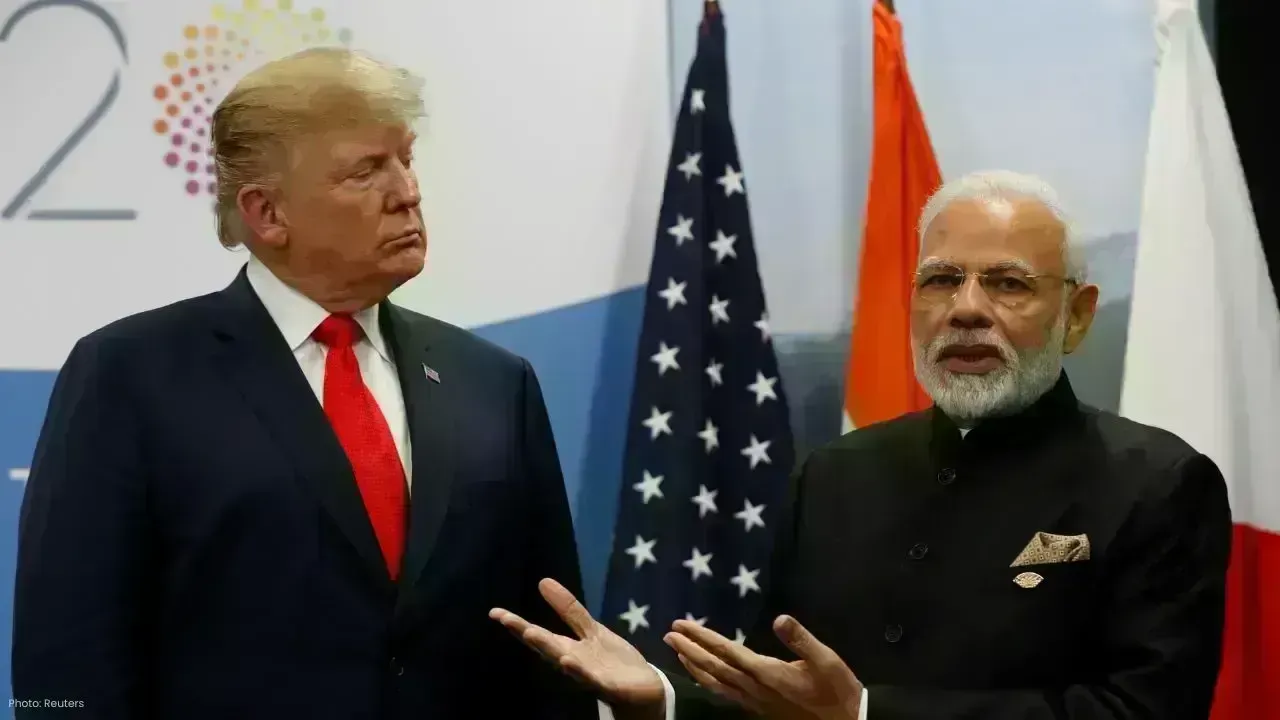
US President Donald Trump has issued a renewed warning to India, signaling that Washington may impose higher tariffs if New Delhi continues importing crude oil from Russia. Speaking to reporters aboard Air Force One on Sunday, Trump said the United States was prepared to act “very quickly” if India does not align with Washington’s position on Russian energy exports.
“We could raise tariffs on India if they don’t help on the Russian oil issue,” Trump said, making clear that India’s ongoing energy trade with Moscow remains a point of concern for the US administration.
The remarks highlight increasing pressure from Washington as it seeks to tighten economic and diplomatic measures aimed at isolating Russia, particularly through restrictions on energy revenues that fund Moscow’s global operations.
Trump Claims India Has Reduced Russian Oil Purchases
Trump also claimed that India has already scaled back a significant portion of its oil imports from Russia, suggesting that New Delhi has responded, at least partially, to US concerns.
According to Trump, Prime Minister Narendra Modi was fully aware of Washington’s dissatisfaction and had taken steps to address the issue.
“They wanted to make me happy, basically. PM Modi is a very good man. He knew I wasn’t happy, and it was important to make me happy,” Trump said. He added that the US holds substantial leverage over India through trade policy, noting that tariffs could be imposed rapidly if cooperation does not continue.
Sensitive Timing Amid Trade and Diplomatic Talks
Trump’s warning comes at a sensitive moment in US-India relations. While the two countries have strengthened strategic cooperation in recent years, trade and tariff disputes have remained a recurring source of tension.
India has consistently defended its oil purchases from Russia, arguing that access to affordable crude is essential for maintaining domestic energy security, controlling inflation, and sustaining economic growth. Indian officials have also maintained that energy decisions are driven by national interest rather than geopolitical alignment.
The comments follow a recent phone conversation between Trump and Prime Minister Modi, during which both leaders stressed the importance of maintaining momentum in bilateral trade ties despite ongoing disagreements over tariffs and market access.
That call coincided with the launch of a fresh round of negotiations between Indian and US officials aimed at resolving a long-standing trade impasse. The talks, which began earlier this year, were disrupted after the US imposed steep tariffs on several Indian imports, with some duties reportedly reaching as high as 50 per cent.
Praise and Pressure: Mixed Signals From Washington
Despite the sharp warning, Trump has continued to publicly praise India and Prime Minister Modi, reflecting a complex mix of pressure and partnership in US policy toward New Delhi.
Recently, the US Embassy in India quoted Trump describing India as “an amazing country” and Modi as a “great friend,” underlining India’s strategic importance to the United States, particularly in the Indo-Pacific region.
“India is home to one of the world’s oldest civilisations and an important strategic partner for America,” Trump said in a social media post, reinforcing the broader geopolitical alignment between the two democracies even as trade and energy disputes persist.
Oil Returns to the Center of Global Geopolitics
The issue of oil has re-emerged as a central factor in global geopolitics following recent US military action in Venezuela. The South American nation holds the world’s largest proven oil reserves—estimated at more than 300 billion barrels—but production has declined sharply to around one million barrels per day due to prolonged US sanctions, underinvestment, and infrastructure challenges.
With energy markets under strain and geopolitical rivalries intensifying, oil trade has once again become a key tool of diplomatic leverage.
As sanctions, energy security, and trade policies increasingly intersect, India’s balancing act between securing affordable energy and managing strategic partnerships with major global powers remains under close international scrutiny.







PM Modi Pays Tribute to Mahatma Gandhi, Urges People to Support Khadi
PM Modi pays tribute to Mahatma Gandhi on Gandhi Jayanti and urges citizens to support Khadi and the

Amazon Seeks to Offload $8 Billion in Nvidia Chips to Investors
Amazon plans to move $8 billion in Nvidia chips to investors, using a new financing model to strengt

Samsung Raises Galaxy S26 Prices as Memory Chip Costs Rise
Samsung raises Galaxy S26 prices in South Korea as rising memory chip costs put pressure on smartpho

Lewis Hamilton Calls Singapore Grand Prix One of F1's Toughest Races
Lewis Hamilton discusses the demanding Singapore Grand Prix and brings Plus44 and Almave to Singapor

Denmark's Pandora Opens World's Largest Jewellery Factory in Vietnam
Pandora opens its largest jewellery factory in Vietnam, expanding global production, strengthening s

Gautam Gambhir Questions Batting-Friendly Pitches After India's Record ODI Chase
Gautam Gambhir questions batting-friendly ODI pitches after India’s record chase, calling for a bett

