
You have not yet added any article to your bookmarks!
Join 10k+ people to get notified about new posts, news and tips.
Do not worry we don't spam!
Post by : Rameen Ariff
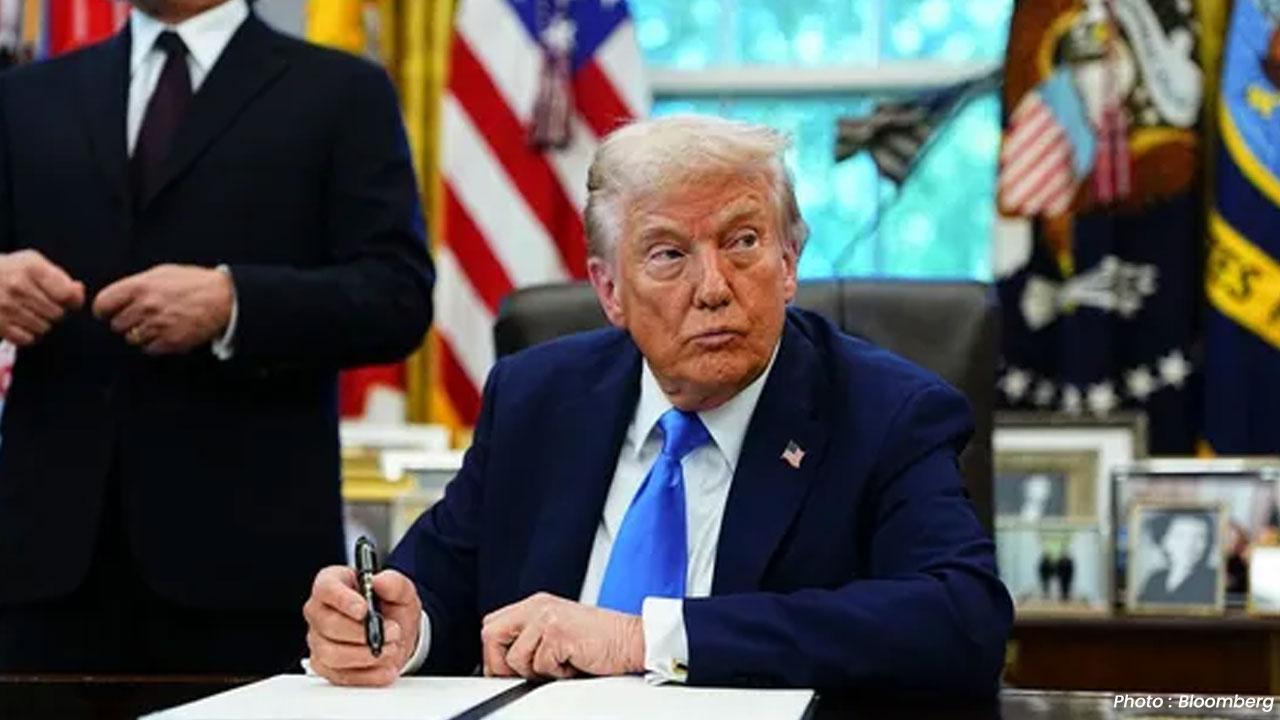
US President Donald Trump has created widespread panic among skilled foreign workers after announcing a sudden $100,000 fee on H-1B visas. The decision, which shook Silicon Valley and overseas professionals, led to confusion and fears of mass disruption before the White House clarified that the fee would only apply to new applications and was a one-time measure.
Tech firms across the US, including Amazon, Microsoft, Google, Apple, and Meta, rely heavily on H-1B visas to hire engineers, scientists, and coders, many of them from India. Following the announcement, several companies advised immigrant employees not to travel outside the country, fearing they might not be allowed to re-enter under the new rule.
Economists believe the policy will hurt the US economy more than the immigrants. Atakan Bakiskan, an economist at investment bank Berenberg, called it an “anti-growth policy,” warning that restricting global talent could reduce productivity and slow economic growth. Berenberg has already cut its US growth forecast from 2% to 1.5%, adding that it may fall further if anti-immigration policies continue.
Kathleen Brooks of brokerage firm XTB pointed out that while tech giants may be able to afford the visa costs, other sectors like healthcare and education—which also depend on H-1B workers—could struggle to hire skilled talent.
Indian professionals dominate the H-1B program, accounting for more than 70% of visas. Many of them hold key positions in US firms or serve in critical roles such as doctors, who make up nearly 6% of America’s physician workforce.
Industry body NASSCOM has warned that the hike could disrupt ongoing projects in the US, delay new deals, and push companies to adopt offshore staffing models. Indian IT giants such as TCS and Infosys have already been preparing for such changes by hiring more local talent in the US and strengthening offshore delivery systems.
Experts also note that US clients may face higher costs as Indian outsourcing firms pass on the additional expenses. Others predict a rise in remote contracting, offshore jobs, and gig work, as employers hesitate to pay the hefty sponsorship fee.
While India may face short-term setbacks, analysts believe the bigger impact will be felt in the US economy if it continues on this restrictive path.










PM Modi Pays Tribute to Mahatma Gandhi, Urges People to Support Khadi
PM Modi pays tribute to Mahatma Gandhi on Gandhi Jayanti and urges citizens to support Khadi and the

Amazon Seeks to Offload $8 Billion in Nvidia Chips to Investors
Amazon plans to move $8 billion in Nvidia chips to investors, using a new financing model to strengt

Samsung Raises Galaxy S26 Prices as Memory Chip Costs Rise
Samsung raises Galaxy S26 prices in South Korea as rising memory chip costs put pressure on smartpho

Lewis Hamilton Calls Singapore Grand Prix One of F1's Toughest Races
Lewis Hamilton discusses the demanding Singapore Grand Prix and brings Plus44 and Almave to Singapor

Denmark's Pandora Opens World's Largest Jewellery Factory in Vietnam
Pandora opens its largest jewellery factory in Vietnam, expanding global production, strengthening s

Gautam Gambhir Questions Batting-Friendly Pitches After India's Record ODI Chase
Gautam Gambhir questions batting-friendly ODI pitches after India’s record chase, calling for a bett

