You have not yet added any article to your bookmarks!
Join 10k+ people to get notified about new posts, news and tips.
Do not worry we don't spam!
Post by : Meena Ariff
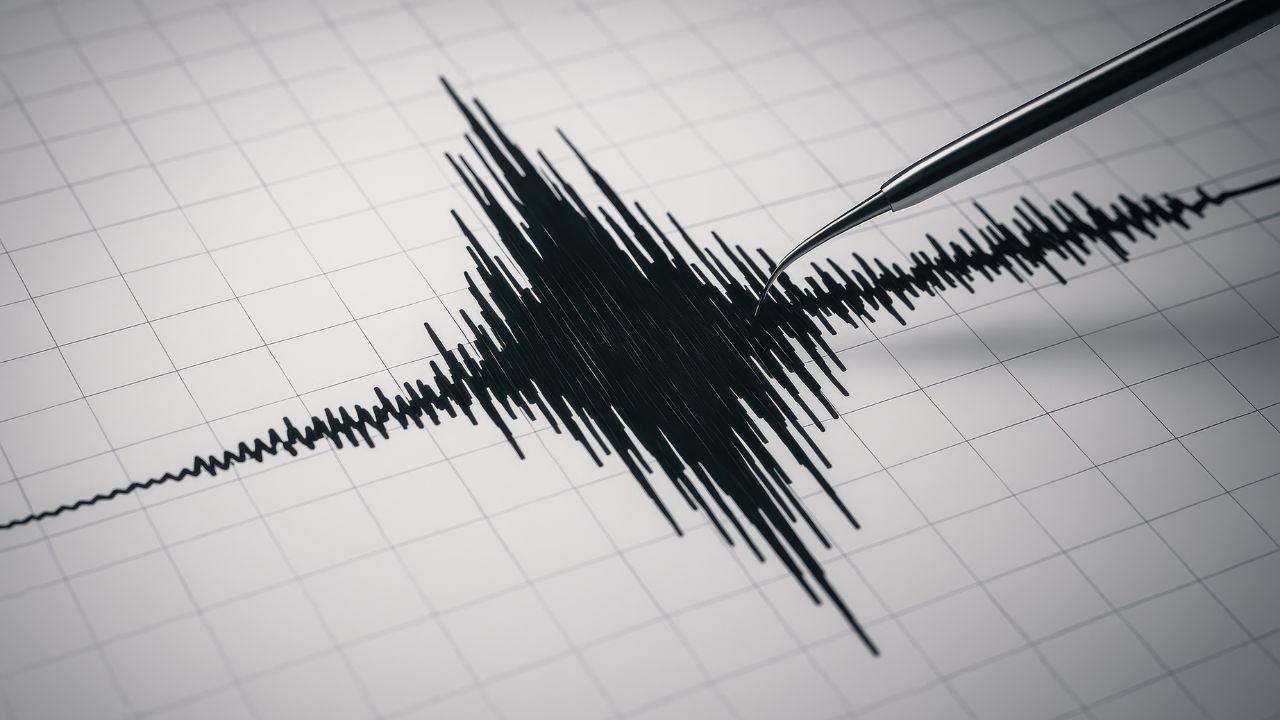
Chamba district in Himachal Pradesh witnessed two mild earthquakes on Tuesday, which caused slight tremors across the region. According to reports from the Meteorological Department, the first earthquake struck in the morning with a magnitude of 3.3 on the Richter scale. A few hours later, the second earthquake, measuring 4.0 magnitude, was felt in the same district. Both earthquakes were shallow, and while residents did feel the ground shake for a short while, there have been no reports of injuries or significant structural damage.
How Residents Felt the Tremors
Residents from Chamba town and nearby villages confirmed that they experienced the tremors for a few seconds. Many people said they felt household items such as utensils and windows rattling lightly. Some frightened residents rushed out of their homes and gathered in open spaces, worried about stronger shocks that might follow. Families also checked on children, elderly relatives, and those living alone to ensure their safety. However, daily life returned to normal quickly, and schools, shops, and offices remained open as usual.
Expert Observations on the Earthquakes
Seismologists explained that both tremors were shallow earthquakes, meaning they originated closer to the Earth’s surface. Shallow earthquakes, even when they are low in magnitude, are felt more strongly than deeper ones because the shaking travels quickly to the surface. According to experts, quakes of magnitude 3.3 and 4.0 are classified as “light to moderate.” Such earthquakes are generally noticeable indoors but do not usually cause heavy damage to buildings or infrastructure.
Specialists also mentioned that mild earthquakes like these serve as reminders of the region’s natural vulnerability. Even though the tremors caused no harm this time, repeated activity of this type shows why preparedness and awareness are important for residents of Himachal Pradesh.
Why Himachal Pradesh Is Prone to Earthquakes
Himachal Pradesh lies in what scientists call a “seismically active zone.” This is because the state falls in the Himalayan seismic belt, one of the most earthquake-prone regions in the world. The Himalayas were formed millions of years ago due to the collision of the Indian tectonic plate with the Eurasian plate, and this collision is still ongoing. The continuous pressure and movement beneath the Earth’s crust make the region prone to frequent tremors.
Districts such as Chamba, Kangra, and Kullu are especially vulnerable, as history shows several earthquakes of varying intensity have occurred here in the past. Some major earthquakes in the Himalayan belt have caused significant destruction in earlier decades, which is why even small quakes are taken seriously by authorities today.
Government and Safety Measures
Soon after the tremors were reported, local authorities assured residents that there was no immediate risk to life or property. The administration urged people to remain calm and avoid unnecessary panic. They advised residents not to stay close to tall buildings or weak structures for some time in case of aftershocks. Emergency services were also put on alert as a precaution, and monitoring teams were directed to keep watch over landslide-prone areas, especially in the hilly terrain.
Officials further reminded people to follow basic earthquake safety measures. These include standing away from glass windows, switching off gas connections during tremors, and taking cover under sturdy furniture if indoors. In open spaces, residents were advised to stay clear of electric poles, old trees, and unstable walls.
Precautionary Advice for Residents
Authorities also highlighted the importance of being prepared in advance. People were reminded to keep an emergency kit at home containing essentials like drinking water, dry food, a flashlight, basic medicines, and important documents. Families were encouraged to create a safety plan—deciding safe spots inside the house, identifying open spaces nearby, and teaching children how to react calmly during an earthquake.
Community awareness programs in Chamba and surrounding districts have previously taught residents these practices, and officials said such reminders are valuable whenever tremors are felt.
Possible Risks from Small Earthquakes
While Tuesday’s earthquakes were minor, experts pointed out that even small tremors in hilly terrain can sometimes trigger secondary risks such as loose rocks falling or small landslides. Therefore, continuous monitoring of slopes, riverbanks, and mountain roads is necessary. Local authorities confirmed that they are keeping a close watch on vulnerable areas and no unusual activity has been reported so far.
Public Reaction in Chamba
The tremors sparked mixed reactions among people. Some residents admitted that they were frightened, especially as the second earthquake was slightly stronger than the first. A few families said they rushed outdoors immediately, while others stayed inside and waited for the shaking to stop. Many schoolchildren shared that they felt their benches vibrate for a few seconds but were quickly reassured by their teachers.
Local shopkeepers said that business was not disturbed for long, and transport services continued normally throughout the day. Although the tremors caused brief panic, people gradually resumed their daily routines once the situation stabilized.
Importance of Preparedness in Seismic Zones
Experts and officials emphasized that while earthquakes cannot be predicted, preparedness can significantly reduce risks. Small quakes like the ones in Chamba act as natural reminders that people living in seismic zones should always stay alert. Past incidents in India and abroad have shown that even minor tremors can create fear, but being trained to respond calmly is the best way to ensure safety.
The twin earthquakes in the Chamba district of Himachal Pradesh—one measuring 3.3 and the other 4.0 magnitude—were mild but noticeable. They caused no damage or injuries but created temporary fear among residents. Authorities have assured that the risk remains low while continuing to monitor the situation.










George Russell Wins Dutch GP Sprint, Boosts Mercedes Morale
George Russell wins the Dutch GP Sprint from pole as Mercedes teammate Kimi Antonelli extends his F1

Australia 50/3 After Bangladesh Bowled Out for 64 in Second Test
Australia reached 50/3 after Bangladesh were bowled out for 64 in the second Test, with Mitchell Sta

Jordan Burroughs Returns to Wrestling with 2028 Olympic Dream
Jordan Burroughs returns to wrestling with Real American Freestyle as the Olympic champion eyes a po

Lamborghini Catches Fire on Singapore's ECP, Causing Heavy Traffic
A Lamborghini caught fire on Singapore's ECP, causing heavy traffic and bus delays. No injuries were

Bangkok Airport Duty-Free Area Flooded by Pipe Burst
A burst water pipe flooded the duty-free shopping area at Bangkok's Suvarnabhumi Airport on July 16,
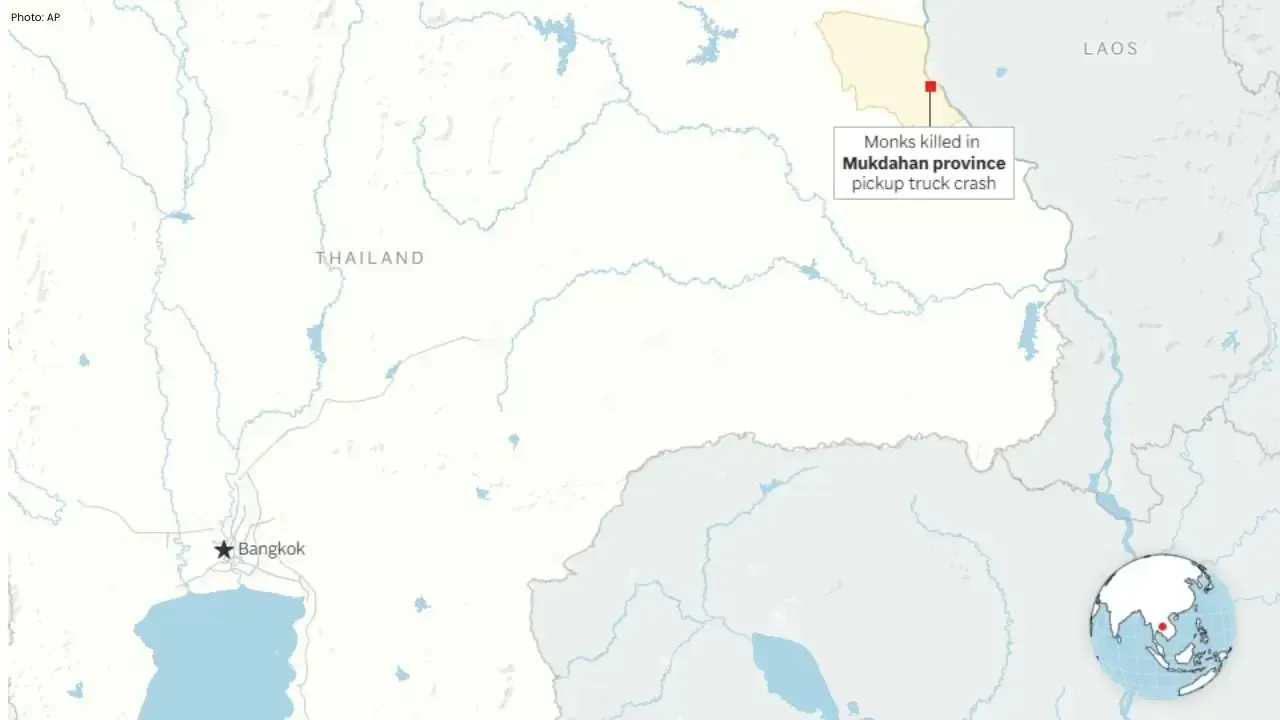
Nine Monks Killed in Thailand Pickup Truck Tragedy
An 11-year-old boy driving a pickup truck crashed into monks during a pilgrimage in northeastern Tha