
You have not yet added any article to your bookmarks!
Join 10k+ people to get notified about new posts, news and tips.
Do not worry we don't spam!
Post by : Meena Ariff
Photo: Reuters
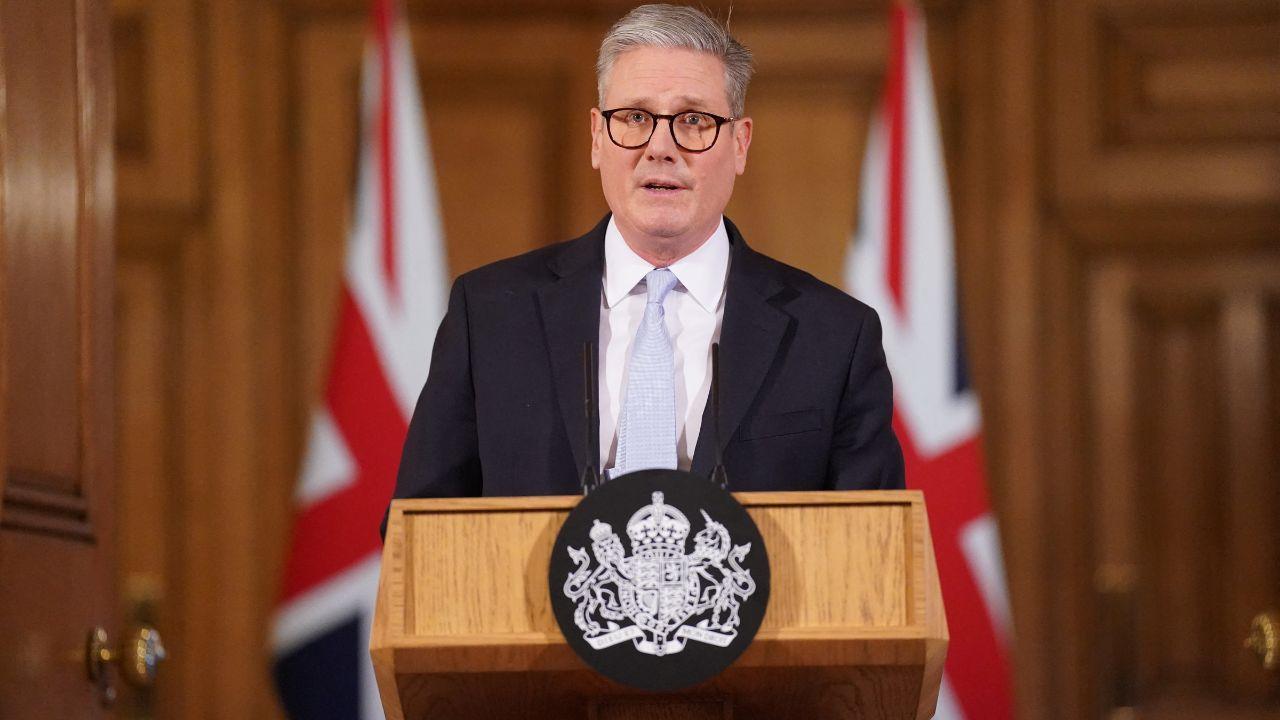
In a big and serious change to the United Kingdom’s foreign policy, Prime Minister Sir Keir Starmer has announced that Britain will now recognise Palestine as an independent state. This is the first time a UK government has taken such a bold step in support of Palestinian statehood. The announcement is a clear signal that Britain wants to support peace in the Middle East and give hope to those who still believe in a two-state solution—where both Israel and Palestine can live peacefully side by side.
Starmer’s Offer to Israel
Prime Minister Starmer said that the UK would be willing to delay the official recognition of Palestine—but only if Israel took serious and meaningful actions. These actions would include ending the violence in Gaza, agreeing to a ceasefire, and showing a strong commitment to long-term peace. In short, the UK was offering a chance for delay, not cancellation, if Israel helped ease the terrible humanitarian crisis in Gaza and moved towards peace.
Israel's Quick Rejection
But Israel did not agree. Just minutes after Starmer spoke from Downing Street, the Israeli government rejected the offer. Later that evening, Israeli Prime Minister Benjamin Netanyahu posted a strong and angry message on social media. He said that Britain was “rewarding terrorism” by recognising Palestine and claimed that creating a Palestinian state would lead to more violence and threats, not just for Israel, but also for Britain.
Netanyahu warned that “a jihadist state on Israel’s border today will threaten Britain tomorrow,” and that “appeasing terrorists always fails.” His message was loud and clear—Israel will not accept the UK’s decision.
The Story Behind the Recognition
According to senior British officials, Britain’s decision is now “irreversible.” This means that it cannot be easily taken back or changed. Prime Minister Starmer knows that this recognition will not suddenly lead to a new Palestinian state, but he believes it can bring some hope. He wants to give strength to moderate voices—on both the Israeli and Palestinian sides. The UK hopes that this move will push people to start believing again that peace is possible.
Why Peace Is So Hard to Achieve
It won’t be easy to reach peace. The conflict has a long and painful history. On 7 October 2023, the group Hamas carried out a deadly attack on Israel, killing around 1,200 people, including many innocent civilians. They also took hostages. In response, Israel launched heavy attacks on Gaza, killing tens of thousands of people and leaving much of the area in ruins. Homes, schools, and hospitals have been destroyed. Starvation and suffering have followed.
But the problem goes back even further. In the 1990s, there were peace talks between Israeli and Palestinian leaders, but they ended in violence. Every new attempt since then has failed. Many people, both in Israel and Palestine, no longer believe peace is possible.
Netanyahu's Long-Standing Opposition
Prime Minister Netanyahu has spent much of his career opposing the idea of a two-state solution. He believes that giving the Palestinians a state would only lead to more violence. Earlier this month, he said that a Palestinian state would be used as a “launchpad” for more attacks like the one on 7 October. He also said that accepting the UK’s conditions—such as stopping the war and working toward peace—would destroy his government.
That’s because his government includes ultra-nationalist politicians who want to take over more Palestinian land and force Palestinians to leave. These politicians are against giving Palestinians their own state and would pull out of the government if Netanyahu agreed to peace talks.
Still, Netanyahu is not just being controlled by these hardliners. He himself has always been against a two-state solution. His strong response to Britain’s decision shows that he has no plans to change his mind now.
United States and Global Reaction
Netanyahu is counting on strong support from the United States. The American government has said that recognising a Palestinian state right now is the same as rewarding Hamas, which they consider a terrorist group. Former U.S. President Donald Trump also said he does not agree with Britain’s move. He made that statement while returning to the U.S. after a visit to Scotland.
Because of this disagreement, there could be new tension between America and some of its closest allies in Europe. The issue of Palestinian statehood may even cause cracks in the transatlantic relationship, which has been strong for many years.
What Changed Starmer’s Mind?
Until recently, Prime Minister Starmer was not sure if the time was right to recognise Palestine. But things changed over the past few weeks. Starmer and his team saw heartbreaking photos and videos of Palestinian children starving in Gaza. The destruction, suffering, and high number of deaths finally pushed them to act. Officials in the UK’s Foreign Office and the Labour Party agreed—it was time to take a stand.
Growing Support in the UK and Europe
Britain is not alone in this decision. France has also said it will recognise Palestine. Both Britain and France are permanent members of the United Nations Security Council, and their decision sends a strong message. When the UN General Assembly meets in New York in September, both countries plan to go ahead with their recognition of Palestine, despite Israel’s protests.
This step also shows that Israel is becoming more isolated diplomatically. Some of its strongest Western allies are no longer willing to stay silent. They believe that too many people have died and that something must change.
What’s Next?
The road to peace will still be long and difficult. Britain’s recognition of Palestine is a big political move, but it won’t create a state overnight. Still, it gives new hope to millions of Palestinians who have been waiting for justice and freedom. It also puts pressure on Israel to consider a future where both peoples can live in peace.
Diplomatic experts say that the UK's goal is to support peace and fairness, not to punish Israel. Britain wants to show the world that even after years of conflict, countries can still choose to support justice and peace.
Whether this decision will lead to real peace remains to be seen. But one thing is certain—Britain has taken a clear stand. And by doing so, it has changed the conversation about the Israeli-Palestinian conflict in a powerful way.










PM Modi Pays Tribute to Mahatma Gandhi, Urges People to Support Khadi
PM Modi pays tribute to Mahatma Gandhi on Gandhi Jayanti and urges citizens to support Khadi and the

Amazon Seeks to Offload $8 Billion in Nvidia Chips to Investors
Amazon plans to move $8 billion in Nvidia chips to investors, using a new financing model to strengt

Samsung Raises Galaxy S26 Prices as Memory Chip Costs Rise
Samsung raises Galaxy S26 prices in South Korea as rising memory chip costs put pressure on smartpho

Lewis Hamilton Calls Singapore Grand Prix One of F1's Toughest Races
Lewis Hamilton discusses the demanding Singapore Grand Prix and brings Plus44 and Almave to Singapor

Denmark's Pandora Opens World's Largest Jewellery Factory in Vietnam
Pandora opens its largest jewellery factory in Vietnam, expanding global production, strengthening s

Gautam Gambhir Questions Batting-Friendly Pitches After India's Record ODI Chase
Gautam Gambhir questions batting-friendly ODI pitches after India’s record chase, calling for a bett

