You have not yet added any article to your bookmarks!
Join 10k+ people to get notified about new posts, news and tips.
Do not worry we don't spam!

Post by : Saif Rahman
A landmark international agreement focusing on ocean protection officially took effect on Saturday, marking a pivotal advancement in the effort to conserve the planet’s seas. The United Nations biodiversity treaty, referred to as Biodiversity Beyond National Jurisdiction, lays out specific guidelines aimed at protecting marine ecosystems in international waters, with a target to secure 30 percent of the world's oceans by 2030.
This treaty encompasses the high seas, areas that exist outside the jurisdiction of any single nation. These waters compose nearly two-thirds of the world's oceans and nearly half of Earth's surface. Historically, they lacked substantial legal safeguards, although they face dire challenges such as overfishing, pollution, and climate effects.
Following almost 15 years of challenging negotiations, the treaty was finalized in March 2023. It became legally effective after at least 60 nations ratified it, a milestone achieved in September of the previous year. Since then, over 80 nations, including China, Brazil, and Japan, have joined, with more expected to participate, though some significant countries, including the United States, have yet to finalize ratification.
This agreement empowers nations to establish marine protected areas within international waters, restricting damaging activities and aiding the recovery of sensitive ecosystems, such as coral reefs, deep-sea environments, and pivotal breeding zones for marine species. Experts assert that this marks the first instance of the high seas being governed by a robust and all-encompassing legal framework focused on conservation.
According to the treaty, nations are required to conduct environmental impact assessments prior to authorizing activities that may endanger ocean ecosystems. This obligation applies to fishing, shipping, and various commercial ventures. Additionally, the treaty introduces stipulations for the equitable sharing of advantages derived from marine genetic resources, which find uses in sectors like medicine, cosmetics, and biotechnology.
Environmental organizations recognize the treaty as a significant instrument but caution that extensive efforts remain to be undertaken. To achieve the “30 by 30” goal, over 190,000 marine protected zones would need to be established. Currently, roughly 8 percent of the oceans are safeguarded, underscoring the substantial work needed in the upcoming years.
Although the treaty is broadly celebrated, it does not resolve every peril confronting the oceans. Issues such as deep-sea mining, which many researchers regard as a substantial threat to marine habitats, fall under the jurisdiction of a different international body. Consequently, this new treaty has limited authority to regulate or prevent resource extraction from the ocean floor.
Nevertheless, experts maintain that the agreement sends a powerful signal underscoring the collective responsibility to safeguard the oceans. Amid increasing pressures on marine resources, the success of the treaty hinges on the commitment of nations to uphold their promises and the speed at which they act to protect vulnerable ecosystems.
As climate change and human interventions continue to harm marine environments, the treaty signifies hope that global collaboration can lead to the preservation of oceanic life for future generations. The achievement of its ambitious targets will rely on international cooperation, rigorous enforcement, and the political resolve to prioritize nature.






George Russell Wins Dutch GP Sprint, Boosts Mercedes Morale
George Russell wins the Dutch GP Sprint from pole as Mercedes teammate Kimi Antonelli extends his F1

Australia 50/3 After Bangladesh Bowled Out for 64 in Second Test
Australia reached 50/3 after Bangladesh were bowled out for 64 in the second Test, with Mitchell Sta

Jordan Burroughs Returns to Wrestling with 2028 Olympic Dream
Jordan Burroughs returns to wrestling with Real American Freestyle as the Olympic champion eyes a po

Lamborghini Catches Fire on Singapore's ECP, Causing Heavy Traffic
A Lamborghini caught fire on Singapore's ECP, causing heavy traffic and bus delays. No injuries were

Bangkok Airport Duty-Free Area Flooded by Pipe Burst
A burst water pipe flooded the duty-free shopping area at Bangkok's Suvarnabhumi Airport on July 16,
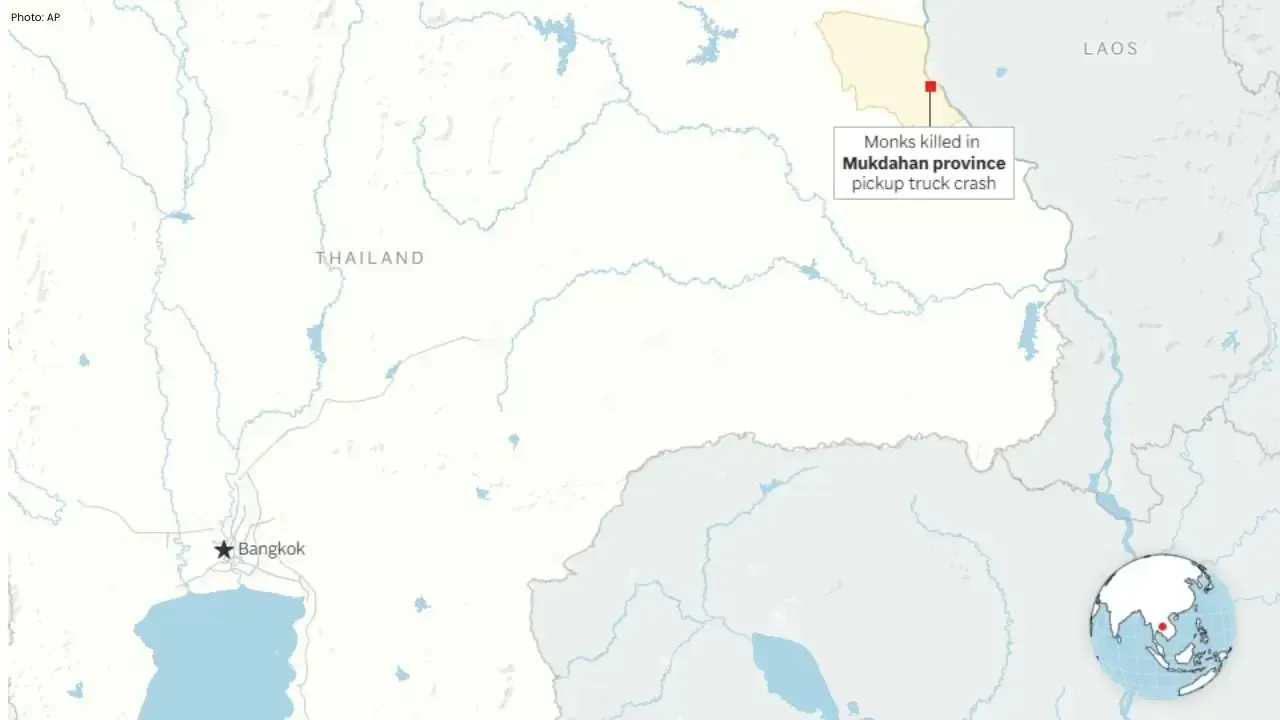
Nine Monks Killed in Thailand Pickup Truck Tragedy
An 11-year-old boy driving a pickup truck crashed into monks during a pilgrimage in northeastern Tha