You have not yet added any article to your bookmarks!
Join 10k+ people to get notified about new posts, news and tips.
Do not worry we don't spam!
Post by : Saif Rahman
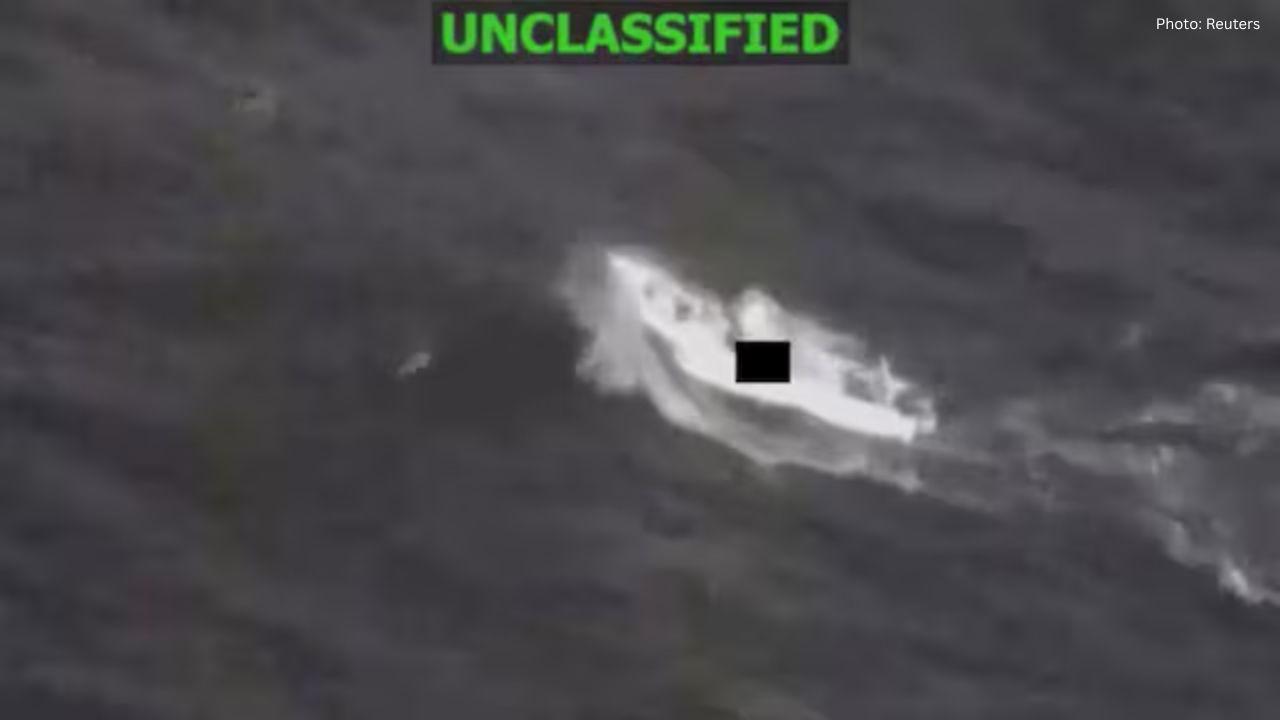
The United States Coast Guard has officially ceased its search for any survivors following a military operation targeting vessels suspected of drug trafficking in the Pacific Ocean. This decision was made after several days of exhaustive search efforts failed to uncover any trace of survivors or debris.
For over 65 hours, the Coast Guard conducted a search across more than 1,090 nautical miles, benefiting from favorable weather and visibility. Despite this, search teams found no evidence of life or wreckage, leading to the conclusion that the search was no longer viable.
This incident comes in the wake of a military strike aimed at a convoy believed to be engaged in narcotics trafficking. Images provided by U.S. Southern Command depicted the targeted boats linked to illegal drug transport. However, officials have yet to disclose how many individuals might have been aboard at the time of the strike.
Maritime drug trafficking continues to pose a significant challenge for U.S. authorities, who contend with smugglers utilizing high-speed boats and isolated ocean routes to transport illegal substances to North America. These operations are perilous not only for law enforcement but also for traffickers, who take immense risks to evade capture.
The Coast Guard's announcement underscores the harsh realities that accompany maritime search and rescue missions. While unwavering efforts are made to save lives, there inevitably comes a moment when the probability of finding survivors diminishes. Terminating a search operation is a difficult choice, especially when lives are at stake, but it is ultimately guided by professional assessment and existing information.
This situation prompts broader considerations regarding the persistent battle against drug trafficking. While military and law enforcement initiatives aim to dismantle criminal organizations, they can inadvertently result in loss of life. Striking a balance between security objectives and humanitarian issues is an ongoing challenge for authorities.
For the families of potential victims, the end of the search brings about devastating ambiguity. In the absence of confirmed survivors or remains, achieving closure becomes a daunting task. This reality sheds light on the unseen human toll of the illicit drug trade that traverses oceans and borders.
As the United States intensifies its crackdown on maritime drug trafficking, this incident serves as a sobering reminder of the inherent dangers and serious repercussions involved. While robust enforcement may impede criminal networks, it also emphasizes the urgent need for long-term strategies that tackle the fundamental causes of drug proliferation.








PSG Coach Luis Enrique Urges Players to Step Outside Comfort Zone
PSG coach Luis Enrique says players must leave their comfort zone and keep improving as the club tar

China’s Tiangong Sets New 400m Record at Robot Olympics
China’s Tiangong robot sets a new 400m record at the Robot Olympics, beating a South African robot i

George Russell Wins Dutch GP Sprint, Boosts Mercedes Morale
George Russell wins the Dutch GP Sprint from pole as Mercedes teammate Kimi Antonelli extends his F1

Australia 50/3 After Bangladesh Bowled Out for 64 in Second Test
Australia reached 50/3 after Bangladesh were bowled out for 64 in the second Test, with Mitchell Sta

Jordan Burroughs Returns to Wrestling with 2028 Olympic Dream
Jordan Burroughs returns to wrestling with Real American Freestyle as the Olympic champion eyes a po

Lamborghini Catches Fire on Singapore's ECP, Causing Heavy Traffic
A Lamborghini caught fire on Singapore's ECP, causing heavy traffic and bus delays. No injuries were