You have not yet added any article to your bookmarks!
Join 10k+ people to get notified about new posts, news and tips.
Do not worry we don't spam!
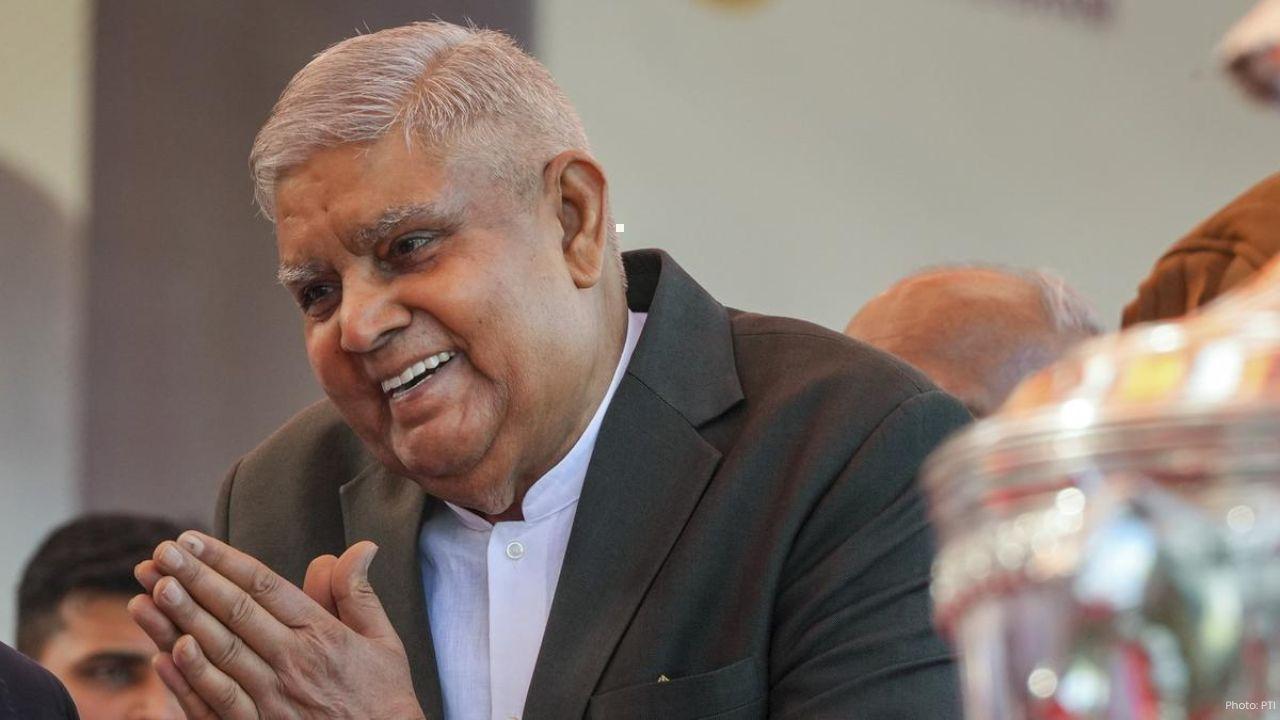
Post by : Meena Ariff
The Election Commission of India has officially issued the notification to begin the election process for the post of Vice-President of India. This marks the first major step in the electoral procedure, allowing candidates to start filing their nominations. The notification was released on Tuesday, August 6, as per the schedule announced earlier by the Commission.
The term of the current Vice-President is coming to an end soon, and the election process has been set in motion to ensure a timely and smooth transition. With the notification now issued, political parties, interested candidates, and the general public are preparing for this important constitutional event.
Important Dates for the Vice-Presidential Election
As per the notification released by the Election Commission, the following dates have been scheduled for the Vice-Presidential election process:
These dates ensure there is enough time for candidates to come forward, complete the formalities, and campaign for support if a contest takes place.
Who Elects the Vice-President?
Unlike the President of India, who is elected by a much wider electoral college including both Members of Parliament (MPs) and Members of Legislative Assemblies (MLAs), the Vice-President is elected only by Members of Parliament.
This includes:
They vote through a secret ballot system using the proportional representation method. The candidate who secures a majority of valid votes is declared the winner.
Constitutional Importance of the Vice-President
The Vice-President of India holds an important position in the constitutional framework of the country. According to Article 63 of the Indian Constitution, there shall be a Vice-President of India.
The Vice-President performs two main roles:
Hence, the Vice-President plays a vital backup role in the country’s democratic setup.
Tenure and Eligibility for Vice-President
The Vice-President is elected for a term of five years, but they can continue in office beyond that term until the new Vice-President takes office.
To be eligible to contest the Vice-Presidential election, a person must:
Also, the nomination of a candidate must be supported by at least 20 electors as proposers and 20 electors as seconders.
Security Deposit and Legal Provisions
Every candidate is required to deposit a sum of ₹15,000 as a security deposit with the Election Commission. If the candidate fails to secure a certain percentage of votes, the deposit is forfeited.
The election is conducted as per the Election Commission's guidelines and the Representation of the People Act, 1951.
The Role of Political Parties and Possible Contenders
With the notification now issued, major political parties are expected to start discussions and finalize their candidates soon. The ruling party and the opposition parties may either agree on a consensus candidate or field their nominees, leading to a voting contest on the scheduled poll date.
While the names of potential candidates are not yet confirmed, it is expected that parties will consider factors like seniority, experience, contribution to public life, and representation of different communities while choosing their candidates.
Election Commission Ensures Fair Process
The Election Commission of India, known for its neutrality and strict monitoring, has taken all necessary steps to ensure that the election is conducted smoothly and fairly. Adequate arrangements have been made for the safe and secret ballot process inside the Parliament House.
Senior officials from the Commission will oversee the entire process, right from nomination to counting of votes.
Why This Election Matters
Although the Vice-President does not have as many executive powers as the President, the post holds symbolic and legislative importance. The Vice-President is the second-highest constitutional authority in the country. The Vice-President plays a crucial role in maintaining the balance of the parliamentary system and ensuring the upper house of Parliament runs effectively.
This election, therefore, is not just a formality but a critical component of India’s democratic structure.
As the nomination process kicks off, all eyes will be on the political developments in the coming days. Will there be a unanimous choice, or will India witness a competitive election? The picture will become clearer as the deadline for nominations approaches.
The people of India, while not directly involved in electing the Vice-President, will be watching the developments closely, as the chosen leader will occupy an important seat in the governance of the country.









South Africa Paceman Anrich Nortje Ruled Out of Third Test
Anrich Nortje misses the third Test against Australia with a groin injury as South Africa prepare fo

Mumbai Indians Appoint Kieron Pollard as Head Coach for 2027 IPL
Mumbai Indians appoint Kieron Pollard as head coach for IPL 2027, replacing Mahela Jayawardene as th

Marquez Takes Australian MotoGP Pole After Early Qualifying Crash
Marc Marquez claims pole at the wet Australian MotoGP after a crash, with Alex Marquez second and Jo

MotoGP Qatar GP to Proceed Despite Regional Tensions and Safety Fears
MotoGP Qatar GP is scheduled for November 6-8 despite regional tensions, as Alex Marquez questions s

Fiji Appeals to Mark Nawaqanitawase’s Pride Ahead of Rugby World Cup
Fiji hopes Mark Nawaqanitawase will choose his ancestral homeland over Australia as the 2027 Rugby W

OpenAI and Poland’s NASK Team Up to Improve AI Safety
OpenAI and Poland’s NASK will research AI safety, security risks and stronger safeguards as concerns