You have not yet added any article to your bookmarks!
Join 10k+ people to get notified about new posts, news and tips.
Do not worry we don't spam!
Post by : Anis Farhan
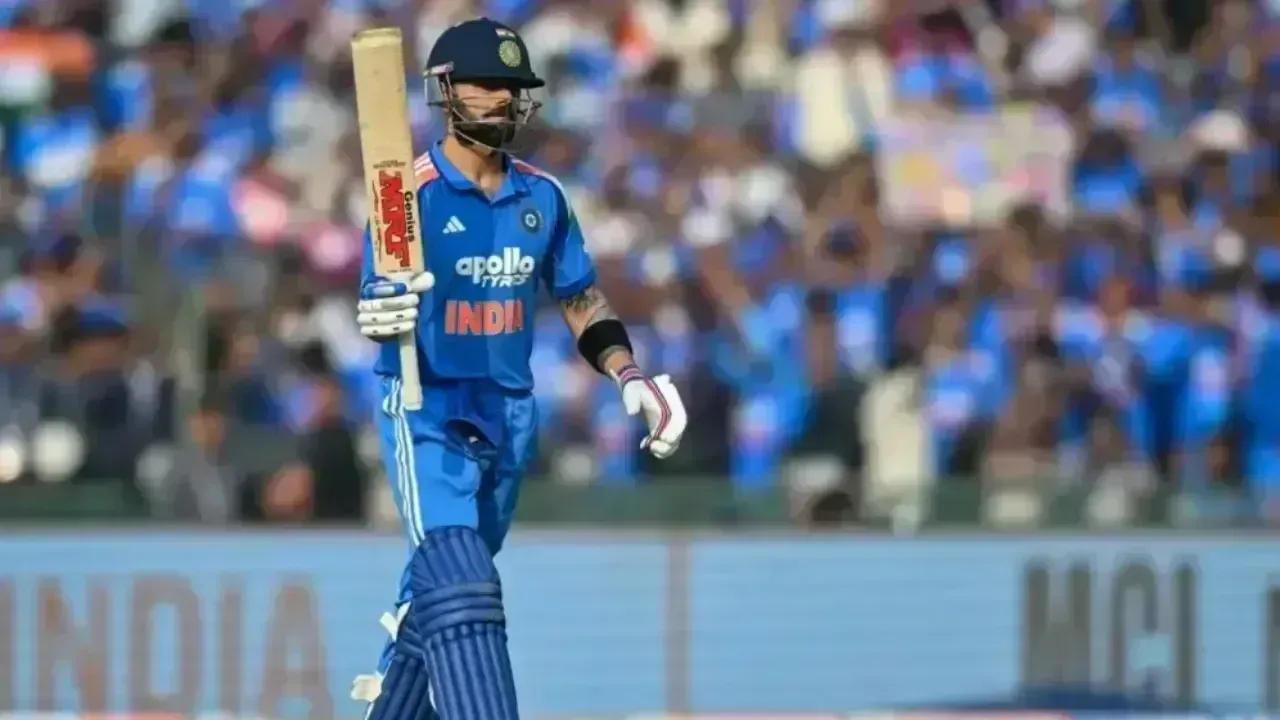
Few moments in modern cricket carry the emotional and sporting weight of a champion returning to the top. When Virat Kohli reclaimed the No.1 spot in the ICC One Day International batting rankings, it was not merely a statistical update. It was a reminder of resilience, discipline, and an unyielding hunger for excellence.
For nearly five years, the summit of the ODI rankings had eluded him. During that period, cricket evolved rapidly—new stars emerged, formats shifted priorities, and scrutiny intensified on senior players. Yet, through changing circumstances, Kohli’s commitment to his craft never wavered. His calm yet commanding half-century against New Zealand served as the catalyst that pushed him back to the pinnacle, silencing doubts and reaffirming his enduring relevance in world cricket.
Kohli’s defining innings against New Zealand was not about flamboyance or brute force. It was about control. Facing a disciplined bowling attack and a challenging match situation, he crafted his innings with surgical precision. Rotating strike effortlessly, punishing loose deliveries, and absorbing pressure, Kohli demonstrated why he remains one of the finest chasers the game has ever seen.
The half-century did more than stabilize India’s innings—it anchored it. While others played around him, Kohli dictated the tempo, ensuring that the chase never drifted out of control. Every run carried intent, every pause reflected awareness, and every boundary shifted momentum decisively in India’s favor.
This performance was not an isolated spark. It was the continuation of a sustained run of form that had quietly rebuilt Kohli’s ranking points over months. Consistent contributions against top-tier opponents, especially in pressure situations, formed the backbone of his rise. The New Zealand innings merely became the moment when preparation met opportunity.
Returning to the top after half a decade is no small feat in international cricket. During this period, Kohli faced phases that tested him mentally and technically. Bowling attacks became more analytical, field placements more aggressive, and public expectations more unforgiving. Yet, instead of resisting change, Kohli adapted.
He refined his shot selection, focused on fitness with renewed intensity, and embraced patience as a virtue. This evolution was crucial. Rather than chasing past glory, he built a version of himself suited for the present game—one that valued efficiency as much as elegance.
By reclaiming the No.1 ranking, Kohli entered an elite bracket once again. This marked his eleventh stint at the top of the ODI batting charts, placing him among a rare group of players who have dominated the format across different eras. More telling is the cumulative time he has spent as the world’s highest-ranked ODI batter—a testament to longevity in a sport that rarely offers it.
The modern ODI landscape is fiercely competitive. Several world-class batters consistently vie for supremacy, making every ranking change a product of razor-thin margins.
Kohli’s ascent pushed him back above a cluster of in-form international batters.
The gap between the top three remains narrow, ensuring that consistency, not just brilliance, determines longevity at the summit.
Each series now carries added weight, as performances directly influence the hierarchy at the top.
This competitive environment amplifies the significance of Kohli’s return. It underscores that his resurgence came not through decline elsewhere, but through outperforming peers at the highest level.
For India, Kohli’s return to No.1 is more than an individual accolade. It brings stability to the batting order and clarity to team strategy. In ODIs, where momentum can shift rapidly, having a batter capable of controlling an innings from start to finish is invaluable.
Kohli’s presence allows younger players to play with freedom. Knowing that the middle order has a dependable anchor reduces pressure and encourages positive intent from the rest of the lineup. This balance between assurance and aggression is critical for sustained success.
Even without the captain’s armband, Kohli’s influence remains profound. His preparation routines, intensity in the field, and refusal to settle for mediocrity set standards within the squad. Younger players often speak of how observing him in training teaches lessons no coaching manual can replicate.
His return to the top reinforces a culture of accountability—where form is earned, not assumed, and excellence is the minimum expectation.
One of the most noticeable aspects of Kohli’s recent batting is improved decision-making outside the off stump. By leaving more deliveries and trusting his defense early, he has reduced dismissals in vulnerable phases of his innings. This discipline has allowed him to build longer stays at the crease.
At an age when many batters begin to slow down, Kohli’s fitness remains exceptional. His speed between the wickets continues to convert singles into twos, subtly shifting pressure back onto bowlers. This physical advantage complements his technical prowess, making him a complete ODI batter even in the latter stages of his career.
While milestones inevitably follow a player of Kohli’s stature, his recent approach suggests a shift in focus. Rather than chasing numbers, he appears invested in match situations—valuing context over records. Ironically, this mindset has brought milestones naturally, reinforcing the idea that greatness follows purpose.
Perhaps the most underrated aspect of Kohli’s comeback is mental resilience. Navigating intense scrutiny, public debate, and personal expectations requires fortitude. His ability to stay process-driven amidst noise has been crucial in sustaining form across series.
In an era dominated by T20 leagues and rapid transitions, some have questioned the future of ODIs. Kohli’s resurgence offers a compelling counter-argument. His innings against New Zealand highlighted why the format still matters—it rewards patience, adaptability, and game awareness.
ODIs sit at the intersection of endurance and explosiveness. Kohli’s batting, rooted in balance, exemplifies what the format stands for. His success reinforces the idea that classical skills remain relevant, even as the game accelerates.
Remaining No.1 is often harder than reaching it. Upcoming series, varying conditions, and relentless competition will test Kohli’s consistency. Bowlers will adapt, strategies will evolve, and expectations will intensify.
Yet, if recent performances are any indication, Kohli appears prepared—not just technically, but mentally—for the challenge ahead.
For aspiring cricketers, Kohli’s journey offers a powerful lesson: setbacks are chapters, not conclusions. His return to the top at this stage of his career demonstrates that growth is continuous and that reinvention is possible with discipline and belief.
Virat Kohli reclaiming the No.1 ODI ranking is not merely about topping a list. It is about reaffirming relevance in a constantly changing sport. It is about adapting without losing identity, about evolving without abandoning fundamentals.
As cricket moves forward, this chapter will be remembered not just for the runs scored, but for the statement made—that true greatness is measured by the ability to return, again and again, to the highest level.
This article is based on publicly available match reports, official rankings updates, and widely reported developments in international cricket as of January 2026. Interpretations and analysis are intended for informational purposes only.









Danaher to Launch AI-Powered Autonomous Research Lab in 2027
Danaher plans an AI research lab for 2027, combining robotics and automation to speed up drug discov

Musk Welcomes German Support for Tesla Driver Assistance Tech as EU Approval Push Continues
Elon Musk welcomes Germany's backing for Tesla FSD as the company seeks EU approval amid speed, safe

Microsoft and Nvidia CEOs to Unveil AI Laptop at San Francisco Event
Microsoft and Nvidia showcase a new AI laptop with RTX Spark chips as they push powerful local AI co

Man to face charges over perfume thefts at Changi Airport
A 47-year-old man faces charges over perfume theft at Changi Airport after six items worth nearly S$

Google Signs 3.6-GW Power Deal With Constellation Energy in US
Google signs a 3.6-GW power deal with Constellation Energy, including nuclear power upgrades to supp

Harmanpreet Kaur Steps Down as India Captain Across All Formats
Harmanpreet Kaur steps down as India captain across all formats after a remarkable leadership journe