
You have not yet added any article to your bookmarks!
Join 10k+ people to get notified about new posts, news and tips.
Do not worry we don't spam!
Post by : Badri Ariffin
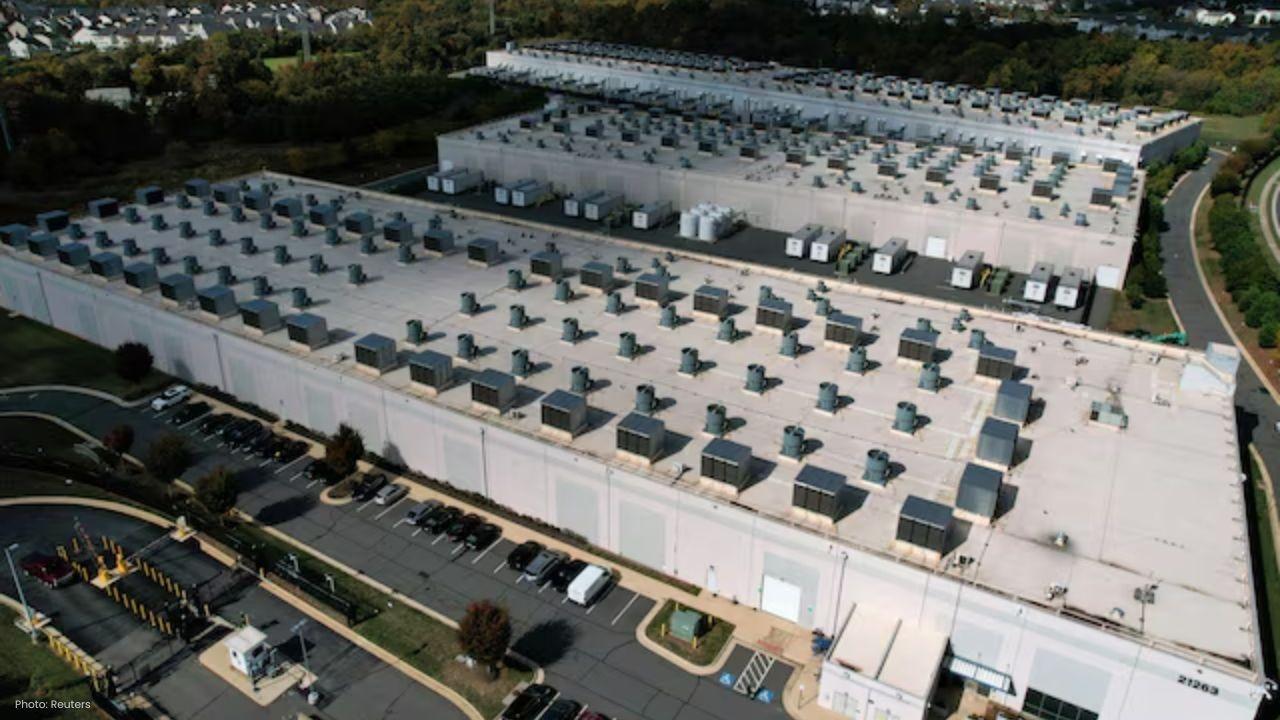
Global equity markets have been lifted by strong enthusiasm for artificial intelligence, hitting new highs. Behind that rally, however, the physical infrastructure — the data centres running AI workloads — is being financed through increasingly elaborate debt arrangements that are attracting scrutiny over potential hidden vulnerabilities.
Unlike earlier tech froths, much of today’s AI momentum is backed by profitable firms with solid balance sheets. Still, economists and regulators warn that stress may be accumulating in parts of the financial system where assets are illiquid or opaque.
Record Investment-Grade Borrowing
Bank of America data indicates U.S. Big Tech companies focused on AI sold about $75 billion of investment-grade debt during September and October—well above the sector’s 2015–2024 average annual issuance of $32 billion.
Meta accounted for roughly $30 billion, Oracle about $18 billion, and Alphabet has signalled fresh borrowing plans. Oracle’s linked $38 billion high-grade loan for Vantage data centres highlights the scale of financing now in play.
Even so, AI-related debt represents roughly 5% of the $1.5 trillion U.S. investment-grade market projected for 2025. Barclays analysts caution that such borrowing could meaningfully influence credit market supply dynamics into 2026.
New hybrid financing approaches are appearing too. For example, Meta’s $27 billion deal with Blue Owl Capital keeps much of the obligation off Meta’s balance sheet, illustrating creative structuring in the sector.
Oracle Shares Soar Amid Debt Concerns
Oracle’s stock has surged about 54% in 2025—its strongest advance since 1999—driven by AI-related revenue gains. At the same time, a notable rise in its credit-default swap levels suggests investors are wary of elevated leverage.
High-Yield Bonds Enter the AI Space
Companies tied to AI infrastructure are increasingly turning to the high-yield market. TeraWulf, which transitioned from bitcoin mining to data centres, issued a $3.2 billion BB- rated bond, and Nvidia-backed CoreWeave completed roughly $2 billion in high-yield debt.
These issuances offer larger yields but come with greater default risk, underscoring the trade-offs for investors financing AI capacity.
Private Credit Gains Ground
Private lenders are playing a growing role in AI financing. UBS estimates that AI-linked private loans nearly doubled in the year to early 2025, offering flexibility but limited liquidity in stressed markets.
Morgan Stanley forecasts private credit could provide more than half of the roughly $1.5 trillion needed to expand U.S. data centre capacity through 2028.
Asset-Backed Securities Join the Race
Securitisations such as asset-backed securities (ABS) are also being used to finance digital infrastructure, packaging rental streams and other cash flows into tradable products.
Digital infrastructure accounts for about $80 billion—near 5% of the $1.6 trillion U.S. ABS market—but has expanded eightfold in under five years. Bank of America notes roughly 64% of this segment is tied to data centres, and projections place the market around $115 billion by next year.
While ABS are established instruments, their complexity and limited liquidity echo concerns first seen during the 2008 crisis.
The Bottom Line
The AI boom is spawning unprecedented investment in data centre capacity, funded through a mix of investment-grade bonds, high-yield paper, private credit and securitisations. That diversity of funding fuels growth but also creates an intertwined set of risks tied to complex loans and illiquid assets, prompting close attention from investors and regulators.










PM Modi Pays Tribute to Mahatma Gandhi, Urges People to Support Khadi
PM Modi pays tribute to Mahatma Gandhi on Gandhi Jayanti and urges citizens to support Khadi and the

Amazon Seeks to Offload $8 Billion in Nvidia Chips to Investors
Amazon plans to move $8 billion in Nvidia chips to investors, using a new financing model to strengt

Samsung Raises Galaxy S26 Prices as Memory Chip Costs Rise
Samsung raises Galaxy S26 prices in South Korea as rising memory chip costs put pressure on smartpho

Lewis Hamilton Calls Singapore Grand Prix One of F1's Toughest Races
Lewis Hamilton discusses the demanding Singapore Grand Prix and brings Plus44 and Almave to Singapor

Denmark's Pandora Opens World's Largest Jewellery Factory in Vietnam
Pandora opens its largest jewellery factory in Vietnam, expanding global production, strengthening s

Gautam Gambhir Questions Batting-Friendly Pitches After India's Record ODI Chase
Gautam Gambhir questions batting-friendly ODI pitches after India’s record chase, calling for a bett

