You have not yet added any article to your bookmarks!
Join 10k+ people to get notified about new posts, news and tips.
Do not worry we don't spam!
Post by : Saif Rahman
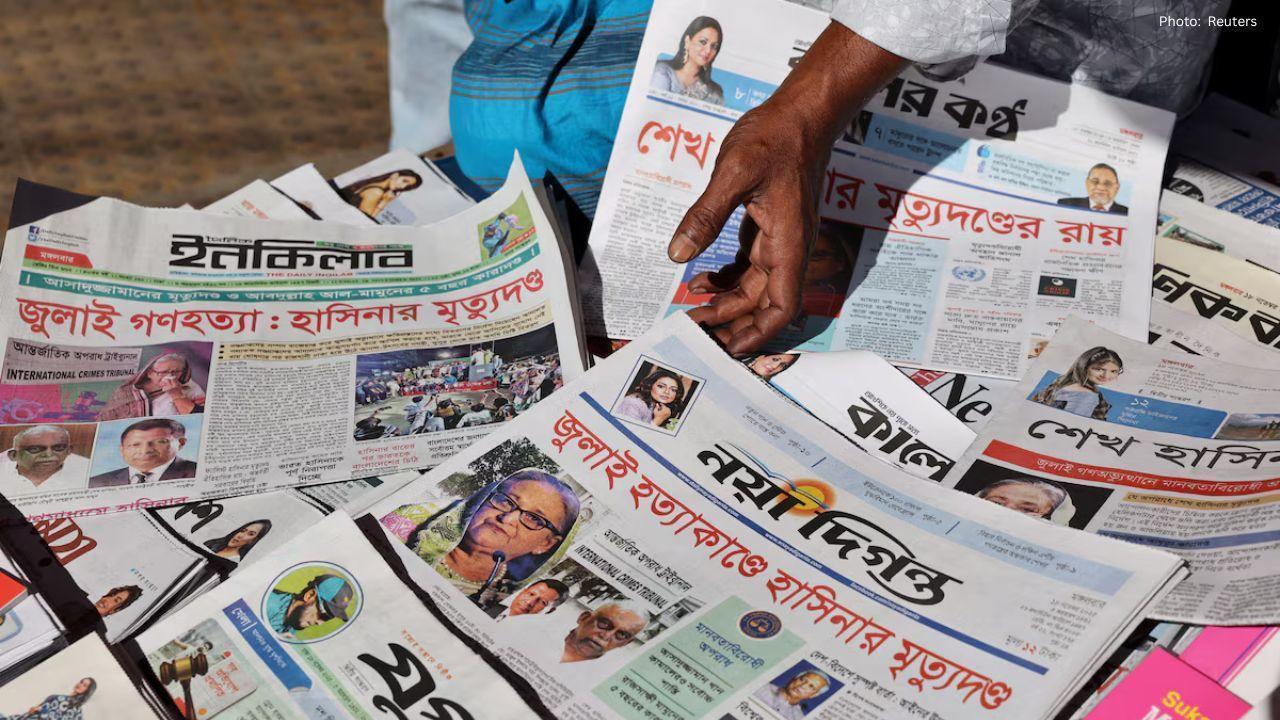
Bangladesh is witnessing a pivotal shift. The youth who played a key role in ousting Sheikh Hasina are now seeking formal political engagement. The National Citizen Party (NCP), born from a vibrant student movement, finds itself at a crossroads as the February elections loom. The initial fervor of protests now confronts the harsh realities of established political frameworks.
Upon its inception, the NCP attracted significant crowds eager to support the new leadership. Many believed this party could disrupt the long-standing dominance of political dynasties. However, translating public enthusiasm into electoral success remains a herculean task. NCP leader Nahid Islam, at just 27, acknowledges the party's limited organizational strength as it strives to expand its reach nationwide. The Dhaka office, still infused with protest vigor, symbolizes the fight against injustice—but sheer zeal isn't enough for electoral victories.
Current opinion polls indicate a troubling trend for the NCP, with only 6% support as it prepares to contest all 300 seats. The Bangladesh Nationalist Party (BNP) currently leads at 30%, followed by Jamaat-e-Islami at 26%. Despite their controversies, these traditional parties possess deep-rooted networks cultivated over decades. Disenchantment is spreading among former NCP supporters; activist Prapti Taposhi expressed disappointment over the party's hesitance to take decisive stances on critical issues such as women's and minority rights. This frustration was palpable when the NCP failed to secure any seats in the Dhaka University student elections, a stronghold of last year's activism.
Though the Awami League faces a ban in the upcoming election, it remains a formidable political entity, warning of potential unrest should the ban persist. This uncertainty impacts Bangladesh's critical garment industry, crucial for the economy. The BNP and Jamaat's extensive networks only further complicate the NCP's efforts.
Financial resources pose another significant hurdle. The NCP relies on modest donations, personal funds, and crowdfunding. Young candidates like Hasnat Abdullah are making heartfelt appeals to voters, emphasizing their commitment to integrity in governance despite a lack of financial incentives. Nevertheless, allegations of corruption against certain NCP figures—though firmly denied—have tarnished their clean image.
Faced with weak organizational skills and limited funding, the NCP is exploring potential alliances with larger entities like BNP and Jamaat. A senior NCP official privately conceded that without collaborations, the likelihood of securing any seats is slim. However, this move carries its risks; aligning with established parties could deprive the NCP of its 'revolutionary' character, potentially framing it as just another fixture in traditional politics. Analysts caution that if the NCP merges with older factions, it risks losing its appeal as a fresh alternative.
Nevertheless, optimism persists. Many young Bangladeshis still see the NCP as a beacon of hope, appreciating its commitment to engage everyday people in politics. Last month, the party undertook a notable effort to identify candidates, interviewing over 1,000 individuals, including a rickshaw puller and a student injured in protests, thereby drawing inspiring narratives to galvanize a new generation of voters who seek a fairer political system.
A standout among these voices is Tasnim Jara, a physician who traded a promising career in Cambridge for the NCP's ideals, aiming to foster a new political culture. Even entrenched parties like BNP and Jamaat acknowledge the importance of youth voices, recognizing that the future of Bangladesh's political landscape hinges on this emerging generation.
The NCP is casting a vision beyond the immediate electoral context. Its aspirations encompass long-term reforms, enhanced institutional integrity, and equitable governance. Yet, to achieve this vision, it must first navigate the current challenges of organizing, securing funding, and winning public faith.
Bangladesh stands at a crucial juncture. The youth who once inspired a nation through their courage must now decide if they can channel that revolutionary momentum into effective political leadership. The NCP’s journey illustrates that while igniting a revolution is a compelling endeavor, steering a nation toward democracy is a far more arduous and complex pathway.








Hyundai raises profit target, expands hybrid lineup in the US
Hyundai hybrid cars get a major boost as the automaker raises its profit margin target and plans new

Josh Kerr and Jakob Ingebrigtsen Set for 1,500m Rivalry Rematch
Josh Kerr and Jakob Ingebrigtsen will renew their 1,500m rivalry at the Ultimate Championship in Bud

PSG Coach Luis Enrique Urges Players to Step Outside Comfort Zone
PSG coach Luis Enrique says players must leave their comfort zone and keep improving as the club tar

China’s Tiangong Sets New 400m Record at Robot Olympics
China’s Tiangong robot sets a new 400m record at the Robot Olympics, beating a South African robot i

George Russell Wins Dutch GP Sprint, Boosts Mercedes Morale
George Russell wins the Dutch GP Sprint from pole as Mercedes teammate Kimi Antonelli extends his F1

Australia 50/3 After Bangladesh Bowled Out for 64 in Second Test
Australia reached 50/3 after Bangladesh were bowled out for 64 in the second Test, with Mitchell Sta