You have not yet added any article to your bookmarks!
Join 10k+ people to get notified about new posts, news and tips.
Do not worry we don't spam!
Post by : Saif Rahman
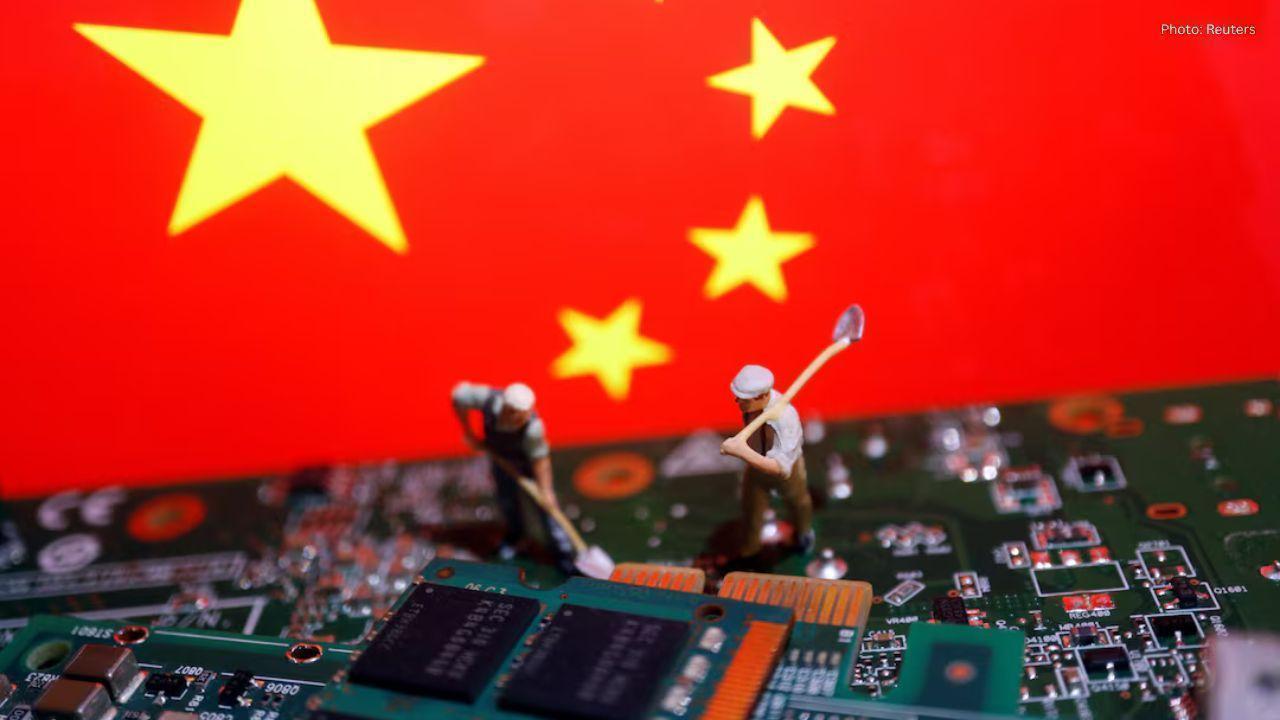
China is intensifying efforts to bolster its semiconductor sector by instituting a requirement for chip manufacturers to utilize a minimum of 50% domestically produced equipment when expanding their production capabilities. This initiative is part of Beijing’s broader agenda to diminish foreign technology reliance and to cultivate a self-sustaining chip supply chain.
Although the requirement is not formally announced, sources indicate it is enforced during the approval of new or expanded chip manufacturing facilities. Applicants must provide documentation showing that at least half of their equipment is sourced from local suppliers. Failure to meet this criterion typically leads to application rejections, although some leniency may be granted if local options are unavailable.
Historically, China has been dependent on semiconductor fabrication tools from the U.S., Japan, South Korea, and Europe. This reliance raised alarms following the United States' implementation of stricter export controls in 2023, which hindered the sale of advanced chips and crucial manufacturing tools to China. Consequently, domestic chip makers face increasing pressure to pivot to local sources, even when foreign alternatives are present.
Policy insiders indicate that the government aims for an even greater domestic equipment share than the mandated 50%. Ultimately, the objective is to achieve nearly total reliance on Chinese-made manufacturing tools. However, for cutting-edge chip production, the requirements are relaxed due to ongoing development of high-end domestic technologies.
President Xi Jinping has consistently urged a comprehensive national initiative to fortify China’s semiconductor capabilities. This strategy includes collaboration among thousands of engineers, scientists, firms, and research institutions. The government has provided substantial financial support via the state-sponsored “Big Fund,” which is set to enter a new phase in 2024, backed by capital in the hundreds of billions of yuan.
This policy is already yielding positive outcomes. Chinese manufacturing tool companies are receiving increasing orders and advancing their technologies rapidly. Firms such as Naura and Advanced Micro-Fabrication Equipment are now delivering critical manufacturing tools like etchers, which create intricate circuits on silicon wafers. Some of these innovations are currently in evaluation phases on advanced production lines, demonstrating how swiftly local companies are bridging the gap with global competitors.
State-affiliated purchasers are placing unprecedented orders for domestic lithography machines and components this year, indicating robust demand for indigenous technology. Concurrently, Chinese enterprises are registering more patents and reporting significant revenue increases, showcasing the favorable effects of government backing and assured demand.
Though this policy bolsters Chinese suppliers, it has generated concerns among foreign entities that are losing their foothold in one of the largest semiconductor markets globally. Analysts suggest that China is approaching approximately 50% self-sufficiency in specific equipment segments formerly dominated by international firms.
In summary, the mandate for 50% domestic equipment signifies a decisive pivot in China’s semiconductor strategy. By integrating local tools into factories now, Beijing anticipates cultivating the necessary skills, scale, and confidence to compete on a global stage in the future, maintaining resilience against ongoing foreign pressures.









PSG Coach Luis Enrique Urges Players to Step Outside Comfort Zone
PSG coach Luis Enrique says players must leave their comfort zone and keep improving as the club tar

China’s Tiangong Sets New 400m Record at Robot Olympics
China’s Tiangong robot sets a new 400m record at the Robot Olympics, beating a South African robot i

George Russell Wins Dutch GP Sprint, Boosts Mercedes Morale
George Russell wins the Dutch GP Sprint from pole as Mercedes teammate Kimi Antonelli extends his F1

Australia 50/3 After Bangladesh Bowled Out for 64 in Second Test
Australia reached 50/3 after Bangladesh were bowled out for 64 in the second Test, with Mitchell Sta

Jordan Burroughs Returns to Wrestling with 2028 Olympic Dream
Jordan Burroughs returns to wrestling with Real American Freestyle as the Olympic champion eyes a po

Lamborghini Catches Fire on Singapore's ECP, Causing Heavy Traffic
A Lamborghini caught fire on Singapore's ECP, causing heavy traffic and bus delays. No injuries were