
You have not yet added any article to your bookmarks!
Join 10k+ people to get notified about new posts, news and tips.
Do not worry we don't spam!
Post by : Rameen Ariff
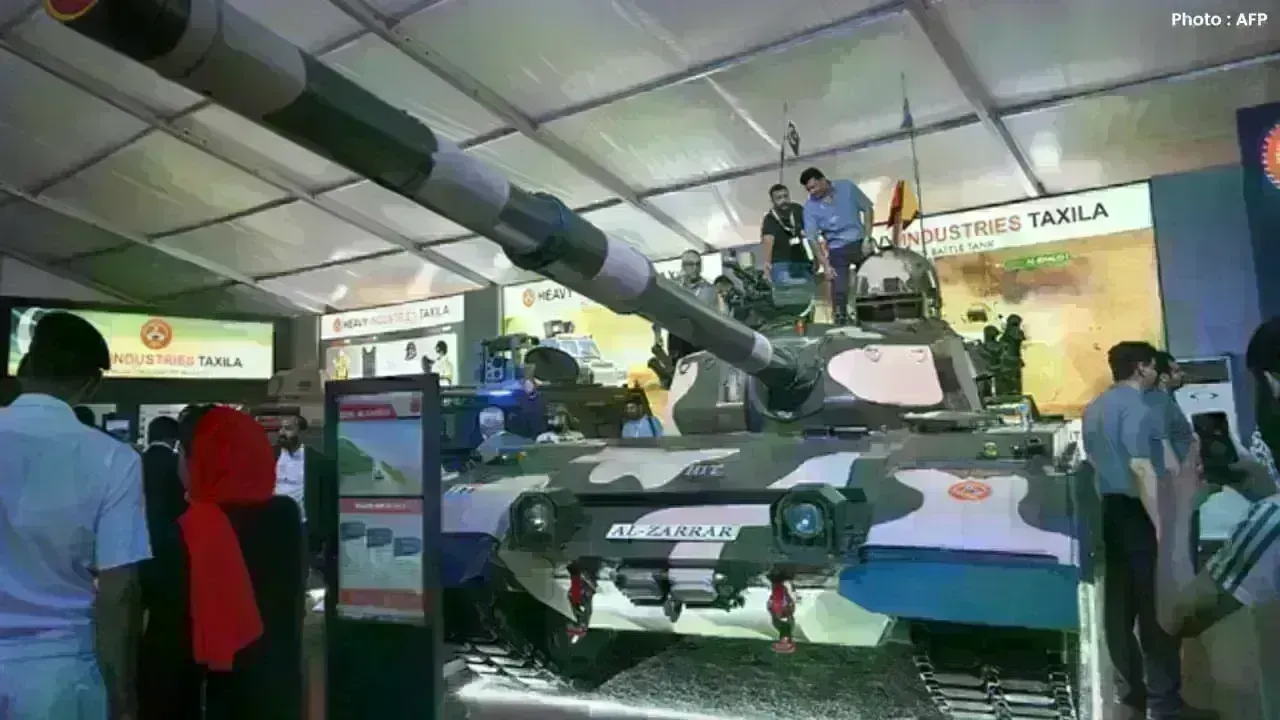
A bipartisan US commission has revealed that China capitalized on the May India-Pakistan conflict to evaluate its modern weaponry in actual combat scenarios.
The newly released report states that Beijing utilized the brief clash as a setting to “trial and market” its defense technologies. It noted that this conflict served as a genuine laboratory for monitoring the performance of its latest military systems under combat pressures.
The commission indicated that China deployed a range of advanced systems during the encounter, including:
HQ-9 air defense system
PL-15 long-range air-to-air missiles
J-10 fighter jets
This marked the first known deployment of these advanced systems in active combat. The report highlights that China used this period as an opportunity to assess their capabilities and display the advancement of its defense sector.
Following the conclusion of the India-Pakistan hostilities, reports indicate that China extended a significant offer of military equipment to Pakistan, which included:
40 J-35 fifth-generation fighter jets
KJ-500 early-warning aircraft
Ballistic missile defense systems
According to the commission, China leveraged the conflict to showcase its military strengths while simultaneously pushing for an increase in arms sales to Pakistan.
In the aftermath of the conflict, it is reported that Chinese embassies globally touted the successful performance of these military systems as part of a larger initiative to enhance international interest in Chinese arms.
However, the commission noted that labeling the conflict as a “proxy war” would be overstating the situation, asserting that China did not instigate the confrontation.
The report also highlights that China allegedly engaged in a disinformation campaign post-conflict aimed at tarnishing the reputation of the Indian-utilized Rafale jet.
Findings revealed that:
Fake social media accounts were reportedly used to distribute misleading images and AI-generated content.
These visuals displayed purported “debris” from Rafale jets claimed to have been destroyed by Chinese weaponry.
The objective was to undermine Rafale transactions while promoting China’s J-35 fighters.
According to the report, Chinese officials supposedly influenced Indonesia into halting a Rafale purchase in progress.
In response, China has categorically rejected these assertions, claiming the report lacks credibility.
The India-Pakistan hostilities were triggered following a deadly terrorist attack on April 22 in Pahalgam, Jammu and Kashmir, which resulted in 26 fatalities. India subsequently initiated Operation Sindoor on May 7, aiming at multiple terror camps within Pakistan and Pakistani-occupied Kashmir.
Pakistan responded with missile and drone assaults, though India reported successful interceptions of these threats, later conducting strikes on key airfields within Pakistan.
The four-day confrontation concluded with a ceasefire on May 10.










PM Modi Pays Tribute to Mahatma Gandhi, Urges People to Support Khadi
PM Modi pays tribute to Mahatma Gandhi on Gandhi Jayanti and urges citizens to support Khadi and the

Amazon Seeks to Offload $8 Billion in Nvidia Chips to Investors
Amazon plans to move $8 billion in Nvidia chips to investors, using a new financing model to strengt

Samsung Raises Galaxy S26 Prices as Memory Chip Costs Rise
Samsung raises Galaxy S26 prices in South Korea as rising memory chip costs put pressure on smartpho

Lewis Hamilton Calls Singapore Grand Prix One of F1's Toughest Races
Lewis Hamilton discusses the demanding Singapore Grand Prix and brings Plus44 and Almave to Singapor

Denmark's Pandora Opens World's Largest Jewellery Factory in Vietnam
Pandora opens its largest jewellery factory in Vietnam, expanding global production, strengthening s

Gautam Gambhir Questions Batting-Friendly Pitches After India's Record ODI Chase
Gautam Gambhir questions batting-friendly ODI pitches after India’s record chase, calling for a bett

